
A 30-Day Recovery Plan
Sunday morning. I woke up without an alarm. 9:30.
Three months ago, I would have been waiting for the casino to open already. Now I’m making coffee.
The debt’s still there. The relationship with my wife is still awkward. But I slept last night. I got out of bed. That’s different from three months ago.
This is the last chapter. Grab a pen and a notebook. In this chapter, you write the 30-day plan in your own words.
It doesn’t have to be perfect. Write what you can. Skip what you can’t.
Why 30 days
Recovery doesn’t finish in 30 days. Addiction recovery is a months- and years-long process.
Still, 30 days is useful as a unit.
The first stretch of brain change
As Chapter 4 covered, the first 30 days after stopping are when the brain is most unstable. Getting through these 30 makes the next 30 a little easier. Thirty days is a reasonable marker for the first brain changes.
A plannable length
A year is too long to plan. A week is too short to see change. Thirty days (about four weeks) is a good length to plan and to actually see shifts in.
”First 30” can be drawn again
When 30 days are done, start a new 30. If you relapse inside the 30, a new 30 starts the next day. “First 30 days” is a unit you can redraw however many times you need.
Week 1: Physical cutoffs
The first week is about physical cutoffs. Don’t try to master something new this week. Just make it so gambling isn’t possible.
What to do (in priority order)
- Cut off access to money (Chapter 6)
- At least one thing done today
- As many as possible inside one week
- Set up emergency contacts (Chapter 8)
- Save crisis resources on your phone
- Write out a safety plan on one page
- Build a personal map (Chapter 24)
- Put all five sections on one sheet
- “Report” to your family (Chapter 19)
- Short, three lines
- Pick a morning routine (Chapter 7)
- One thing, under five minutes
Week 1 checklist
□ 1. Set credit card cash advance limits to $0 □ 2. Destroy or hand over cards used for gambling □ 3. Lower daily ATM withdrawal limit □ 4. Uninstall all gambling apps and delete bookmarks □ 5. Save crisis resources on phone □ 6. Write a one-page safety plan □ 7. Draw a one-page personal map □ 8. “Report” to family □ 9. Pick a morning routine □ 10. Once a day, name one feeling (Chapter 22)
You don’t have to do all ten. Check off what you did. Look at the count. Even one check is evidence of movement.
Week 2: Know your triggers
The second week is about knowing your triggers. Skills come after you know the triggers.
What to do
- Make HALT a habit (Chapter 11)
- When a craving hits, check the four
- Draw your trigger map (Chapter 13)
- Place, people, time, emotion: fill in your triggers
- Observe cognitive distortions (Chapter 12)
- Practice catching “this is a distortion” in your own head
- Make three if-then plans (Chapter 14)
- Three “if X, then Y” pairs
- Build an alternative activity list (Chapter 11)
- Five alternatives to gambling
Week 2 checklist
□ 1. Run the HALT check three times a day □ 2. Draw your trigger map □ 3. Write down five of your own “distortion lines” □ 4. Make three if-then plans □ 5. Make a list of five alternative activities □ 6. Talk to one person once this week (Chapter 10) □ 7. Move your body for 10 minutes a day □ 8. Once a day, name one feeling
Week 3: Face reality
The third week is about facing the realities you’ve been avoiding. It has a high chance of being the hardest week. Set up your safety plan and your contact list before starting.
What to do
- Get your total debt (Chapter 17)
- Put every creditor’s balance in one table
- Research legal options (Chapter 18)
- Call a non-profit credit counselor or a legal aid clinic
- Mental health self-check (Chapter 15)
- Screen for depression, anxiety, ADHD
- Write out your denial lines (Chapter 16)
- Find your denial patterns
- One real conversation with family (Chapter 19)
- In “report” form
Week 3 checklist
□ 1. Get your total debt □ 2. Call a non-profit credit counselor (or save the number, at minimum) □ 3. Do a mental health self-check □ 4. Book a psychiatric appointment if needed □ 5. Write your denial lines □ 6. Have a “report” conversation with family □ 7. Once a day, name one feeling □ 8. Keep the safety plan visible every day
Week 3 often hits hardest. If it gets painful, activate the safety plan. Don’t carry it alone. Call the person you said you’d call.
Week 4: Start rebuilding
The fourth week is for organizing what you’ve done and preparing for the next 30.
What to do
- Inventory your recovery capital (Chapter 23)
- Write down what you have in each of the four categories
- Revise your personal map (Chapter 24)
- Add new contacts to the map from Week 1
- Post-relapse action list (Chapter 25)
- Seven actions for the day after a relapse, on one page
- Keep the morning routine (Chapter 7)
- Write a letter to yourself 30 days from now (next section)
Week 4 checklist
□ 1. Inventory your recovery capital □ 2. Revise your personal map with new contacts □ 3. Write a post-relapse action list □ 4. Keep doing the morning routine every day □ 5. Write a letter to your future self 30 days out □ 6. Plan the next 30 days □ 7. Once a day, name one feeling □ 8. Pick one chapter you want to reread
A letter to yourself 30 days from now
Grab the pen and notebook. This is the most important exercise in the book.
What to write
Write to the version of yourself 30 days from now.
-
What is the “me” of 30 days ago (now) like
- State of mind
- State of body
- Debt picture
- Family relationships
- Where gambling is
-
What did I learn or try in 30 days
- What worked
- What didn’t
- What I noticed
-
What do I want to tell my 30-day-later self
- What to keep doing
- What to watch out for
- A sentence from the present me to the future me
An example template
To my future self,
Right now I’m writing this at ___ (place), at ___ (time). I’ve been struggling with gambling, and I just finished this book.
Over these 30 days, I did ___. What worked was ___. What didn’t work was ___. What I noticed was ___.
To the you 30 days from now: Keep doing ___. Watch out for ___. Don’t forget ___.
___ (my name) ___ / ___ / ___
Open it 30 days later
Put the letter in an envelope, seal it. Write “open in 30 days” on the outside. Put it somewhere you’ll see. Mark “open the letter” on your calendar.
Thirty days later, open it. Your future self will read the words of your present self. It lands harder than you expect.
”One thing a day” is the rule
Looking at the 30-day checklist, it can feel like too much. That’s a normal reaction.
Do one thing a day. That’s all.
Trying to do multiple things perfectly in a day doesn’t sustain. One a day is enough. If, at the end of the day, you can say “I did ___ today,” that’s enough.
30 days × 1 = 30 things. 30 things done is a lot of forward motion.
”Nothing” days are okay too
Some days in the 30, you won’t do anything. Days you’re in bed, days you fight with your family, days you relapse, days of despair, days with no energy. These are normal.
Don’t punish yourself on nothing days. Don’t punish. Do one thing tomorrow instead. The 30 doesn’t have to be consecutive. 30 “doing” days, even interrupted, is still 30.
To the person who read this far
Thank you for reading this far.
You don’t have to understand everything. Getting here means you’re already on the starting line.
This book isn’t a one-read book. Thirty days from now, three months from now, a year from now, rereading it can land differently. If a chapter catches your eye, come back whenever.
What we couldn’t cover (long-term recovery, detailed cognitive behavioral therapy, trauma treatment, medication), leave to clinicians, support groups, and specialists. This book is a map that opens a door.
One last thing, which I already wrote in Chapter 5.
Whether you recover is not something anyone can predict right now. But the people who kept trying are the ones who got there.
Relapse as many times as you need to. Start again. Only the people who “start again” meet the turning point someday.
References
- DiClemente, C.C., & Velasquez, M.M. (2002). Motivational interviewing and the stages of change. In W.R. Miller & S. Rollnick (Eds.), Motivational Interviewing: Preparing People for Change (2nd ed., pp. 201-216). Guilford Press.
- Prochaska, J.O., DiClemente, C.C., & Norcross, J.C. (1992). In search of how people change: Applications to addictive behaviors. American Psychologist, 47(9), 1102-1114.
- Marlatt, G.A., & Donovan, D.M. (Eds.) (2005). Relapse Prevention: Maintenance Strategies in the Treatment of Addictive Behaviors (2nd ed.). Guilford Press.
- Miller, W.R., & Rollnick, S. (2012). Motivational Interviewing: Helping People Change (3rd ed.). Guilford Press.
- White, W.L. (2007). Addiction recovery: Its definition and conceptual boundaries. Journal of Substance Abuse Treatment, 33(3), 229-241.
- Vaillant, G.E. (1995). The Natural History of Alcoholism Revisited. Harvard University Press.
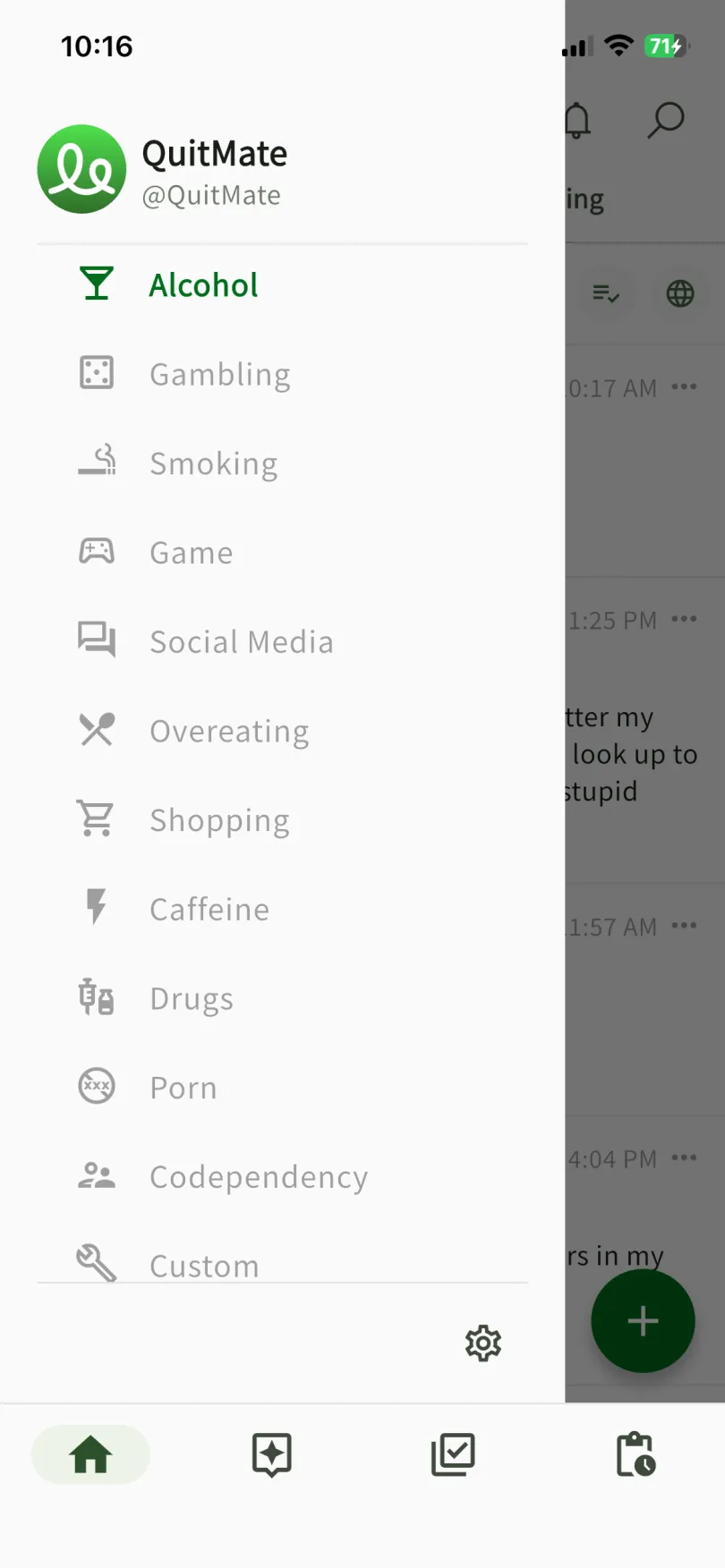
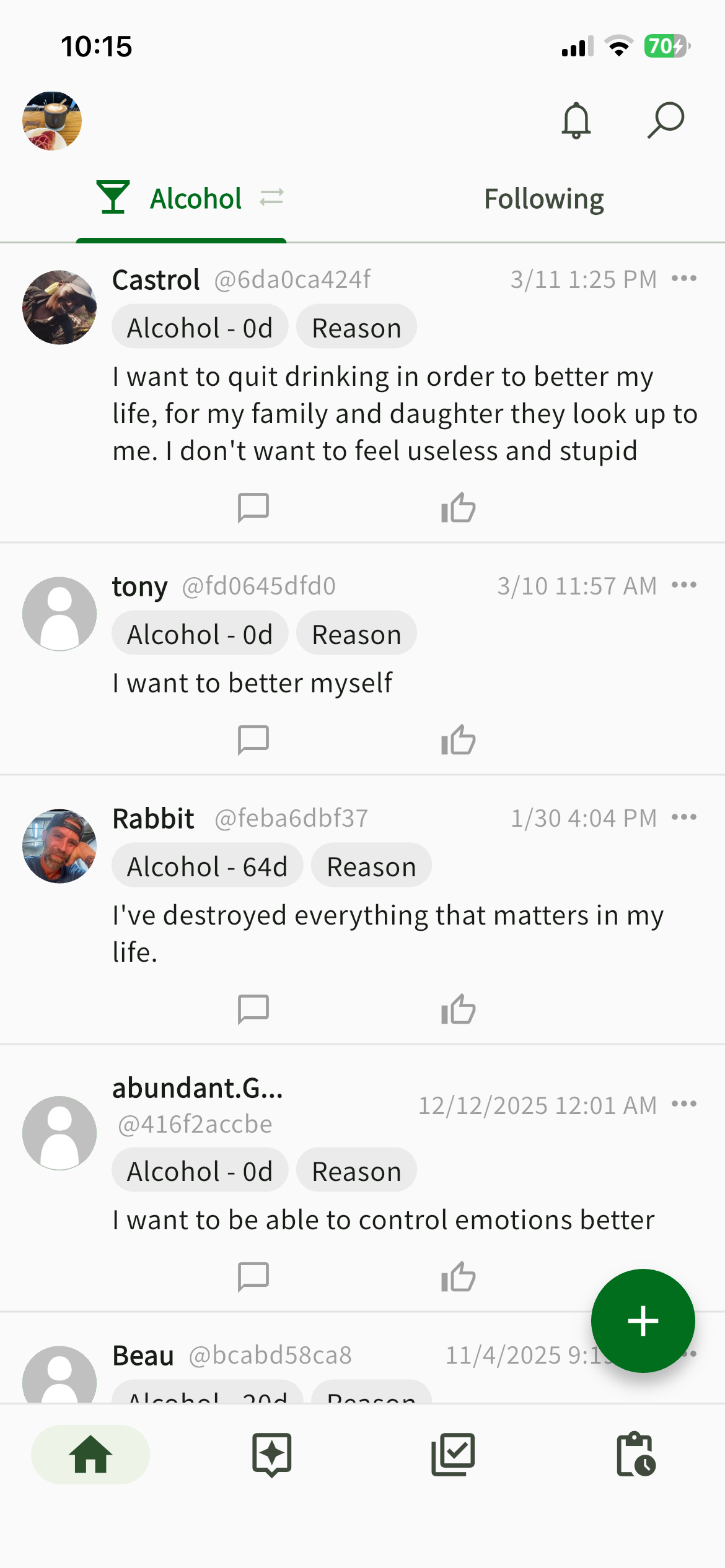
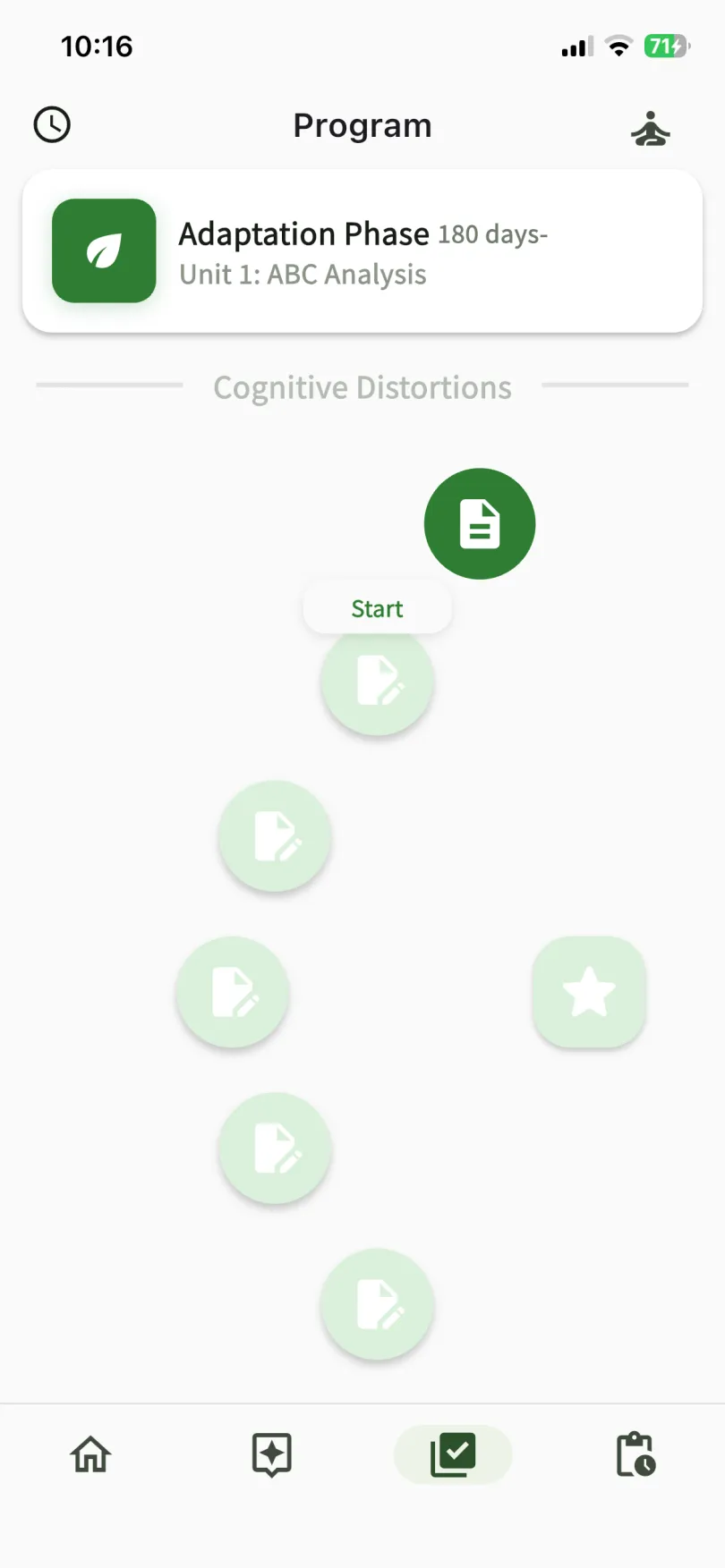

QuitMate
Together, you can quit
Connect anonymously with others who share your struggle. Whether it's alcohol, smoking, gambling, or other habits, you're not alone.