The Brain Recovers
6 a.m. I get up, open the blinds, and see the lit-up casino sign across the freeway.
A year ago, just seeing that sign pulled me toward the car. Six months ago, my body didn’t move, but there was a pull, a brief tug. Three months ago, I didn’t feel anything, but I noticed my eyes had followed it. This morning, I registered the sign, thought “huh,” and went to put on coffee.
I don’t know what’s happening, exactly. But something is definitely shrinking. Maybe this is what “the brain coming back” means.
Your brain changes by design
Your brain is not a fixed machine. It physically changes based on how you use it. The term for this is neuroplasticity.
Gamble for years, and your brain shifts into a “gambling brain.” Stop, and it shifts the other direction. It slowly moves away from the gambling brain.
This isn’t optimism. It’s been shown in animal studies and in human brain imaging: sustained abstinence allows brain function to recover in stages.
The point isn’t “it changed, so it’s stuck.” The point is “it changes by nature, so it can also change back.”
A rough timeline
Recovery in the addicted brain tends to follow a loose timeline. The variation between people is large, so read this as a rough map, not a schedule.
First 72 hours
The most dangerous stretch.
- Frequent cravings
- Insomnia, irritability, anxiety, restlessness
- Moments where “I shouldn’t have stopped” hits hard
- This is when the most people relapse
The biggest weapon in the first 72 hours is physically cutting off access. Not willpower. Block the ability to get money and the ability to gamble. Practical steps are in Chapter 6.
Week 1
Cravings peak around this time.
- Your body calms down a bit
- Appetite starts to come back
- Sleep partly returns
- But your mood stays flat, “nothing feels good”
This is the start of the “liking is thin” period described in the dopamine trap chapter. Some people relapse here, because “I stopped and it’s not even fun” kicks in.
Month 1
Cravings come less often.
- Sometimes “this is a pain” wins out over “I want to”
- Sleep and appetite are mostly normal
- Mood is still flat
Some people at this point decide they’re “cured” and drop their guard. That’s dangerous. The brain is only beginning to change. A strong cue can bring the craving back instantly.
Month 3
Changes start to show up on brain imaging.
- Dopamine overrelease is quieting down
- The brakes (prefrontal cortex) start working again
- You can start feeling a small amount of “liking” from food, exercise, and time with people
Cravings can still hit hard out of nowhere at this point. The brain’s conditioning to cues (sounds, logos, smells) takes longer to undo than basic function. Slot sounds or the smell of a casino can still produce a response here.
Month 6
A lot of people describe this as “the world looks slightly different.”
- Interest in things other than gambling comes back
- Attention returns to hobbies, work, family
- “I’ve actually stopped” becomes something you can feel
Many people only realize here that time has opened up in their lives again. Cravings still come when the cues are strong.
Year 1
The brain changes are starting to settle.
- Most people’s lives have shifted as a whole
- You no longer want to go back to who you were
- “I stopped” becomes something you don’t actively think about
You get closer to the “huh, there’s a casino sign” state from the opening of this chapter. Relapse is still possible if you drop your guard. Plenty of people who hit the one-year mark relapse shortly after.
Year 2 and beyond
Structural brain changes continue on a deeper level.
- Brain imaging of people who’ve abstained five or more years has been shown to move close to a pre-addicted state
- “Not gambling” becomes “the way I live”
- Some people’s cravings disappear entirely; others still get occasional ones
Even here, we don’t say “cured.” Addiction is not something you get rid of. It’s something you learn to keep in a managed state. That said, the lives of people who’ve been here for years look nothing like their gambling years.
Getting through the “I feel nothing” period
Almost everyone in recovery hits one specific wall. The period where nothing feels good.
In the first weeks to months after you stop, you don’t feel pleasure from things that used to bring it. Food tastes neutral. Days off feel long and empty. You’re with your family but only half your head is present.
This is a brain issue, not a character issue. The addicted brain has strong “wanting” and weak “liking.” Stopping gambling doesn’t instantly restore “liking.” The circuits need time.
This is where a lot of people think “if quitting is this empty, what’s the point,” and relapse.
Things to know for getting through it:
- Pleasure doesn’t come back “suddenly one day.” It comes back slowly
- Early on, it’s so thin you won’t notice
- By the time you notice it’s coming back, it’s already been coming back for a while
- The only thing you can do is wait
- While waiting, keep doing the other things (move, see people, make things, sleep, eat, get outside)
Don’t expect pleasure to come back quickly. Knowing in advance that “there’s a period where nothing feels good” is what gets you through that period.
Recovery isn’t a straight line
Recovery doesn’t look like a steadily rising curve. It looks like waves moving forward.
Good days, bad days. A month of feeling solid, then three bad days in a row. Around the six-month mark you’ll think “I’m completely fine,” and then a hard craving will hit. This happens to everyone.
Some people relapse. Relapse doesn’t end it. We’ll go deeper into “relapse is not failure” in a later chapter, but the same thing applies on the recovery timeline too.
Recovery isn’t defined as “never relapsing.” It’s defined as not giving up.
Know where you are on the timeline
Knowing where you are on the timeline helps you interpret what’s happening.
| Phase | What happens | What to do |
|---|---|---|
| First 72 hours | Strong cravings, insomnia, irritability | Physical cutoffs, HALT check |
| Week 1 | Cravings peak | Craving surfing, talk to someone |
| Month 1 | Fewer cravings, but flat mood | Lower expectations, keep doing other things |
| Month 3 | Brain changes start | Notice small shifts |
| Month 6 | ”I’ve stopped” feeling | Don’t drop your guard |
| Year 1 | Life as a whole shifts | Accept the new you |
| Year 2+ | Stability | ”Not gambling” becomes normal |
If you know “I’m in week two, flat mood is expected,” you don’t panic. If you know “I’m in month three, a strong craving can show up,” you’re ready to handle it.
Knowing the timeline is knowing where you are. And knowing where you are tells you where you’re heading.
References
- Doidge, N. (2007). The Brain That Changes Itself: Stories of Personal Triumph from the Frontiers of Brain Science. Viking.
- Volkow, N.D., Koob, G.F., & McLellan, A.T. (2016). Neurobiologic Advances from the Brain Disease Model of Addiction. New England Journal of Medicine, 374(4), 363-371.
- Goldstein, R.Z., & Volkow, N.D. (2011). Dysfunction of the prefrontal cortex in addiction: neuroimaging findings and clinical implications. Nature Reviews Neuroscience, 12(11), 652-669.
- Koob, G.F., & Volkow, N.D. (2016). Neurobiology of addiction: a neurocircuitry analysis. The Lancet Psychiatry, 3(8), 760-773.
- Joutsa, J., Johansson, J., Niemelä, S., Ollikainen, A., Hirvonen, M.M., Piepponen, P., et al. (2011). Mesolimbic dopamine release is linked to symptom severity in pathological gambling. NeuroImage, 60(4), 1992-1999.
- Patzelt, E.H., Kurth-Nelson, Z., Lim, K.O., & MacDonald III, A.W. (2014). Excessive state switching underlies reversal learning deficits in cocaine users. Drug and Alcohol Dependence, 134, 211-217.
- Berridge, K.C., & Robinson, T.E. (2016). Liking, wanting, and the incentive-sensitization theory of addiction. American Psychologist, 71(8), 670-679.
- Bartzokis, G., Beckson, M., Lu, P.H., Edwards, N., Bridge, P., & Mintz, J. (2000). Brain maturation may be arrested in chronic cocaine addicts. Biological Psychiatry, 48(7), 605-611.
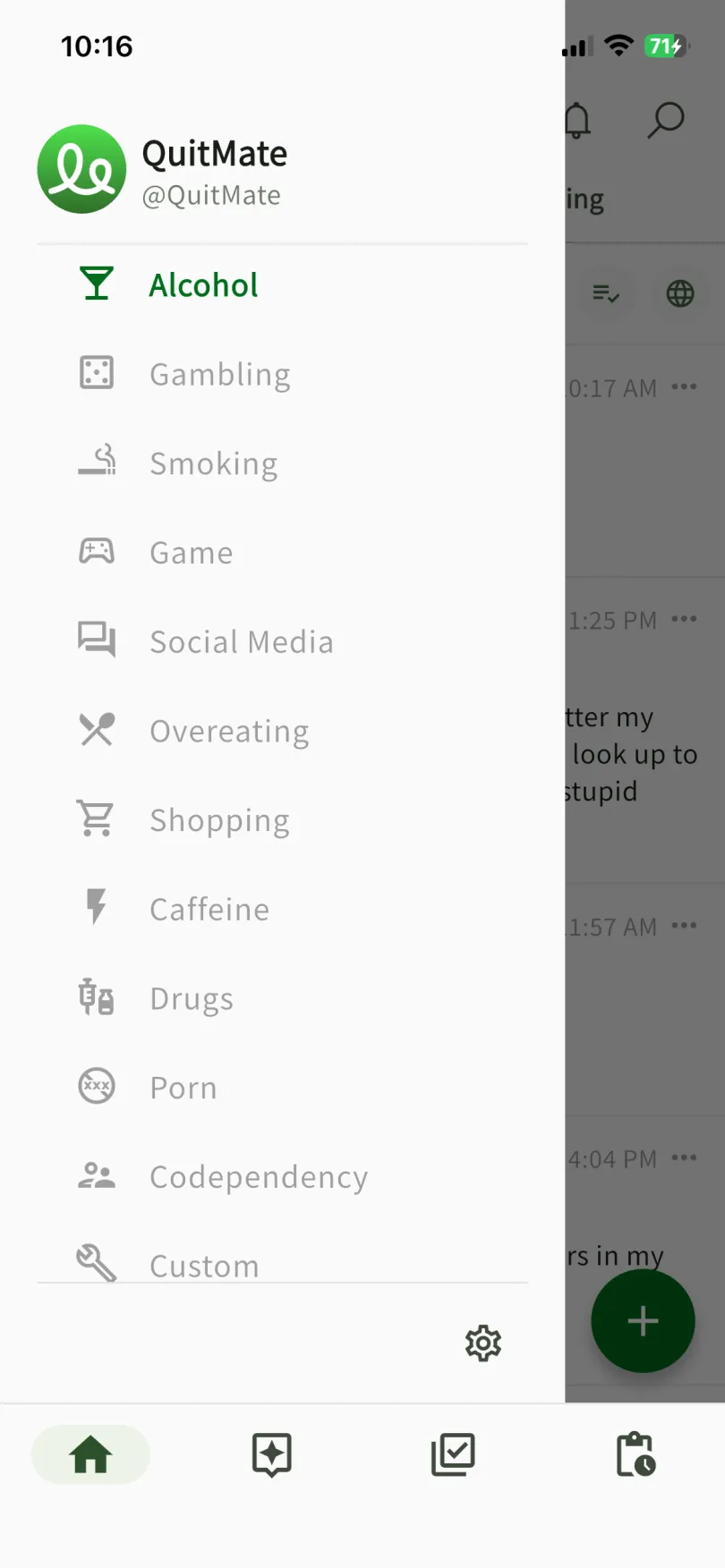
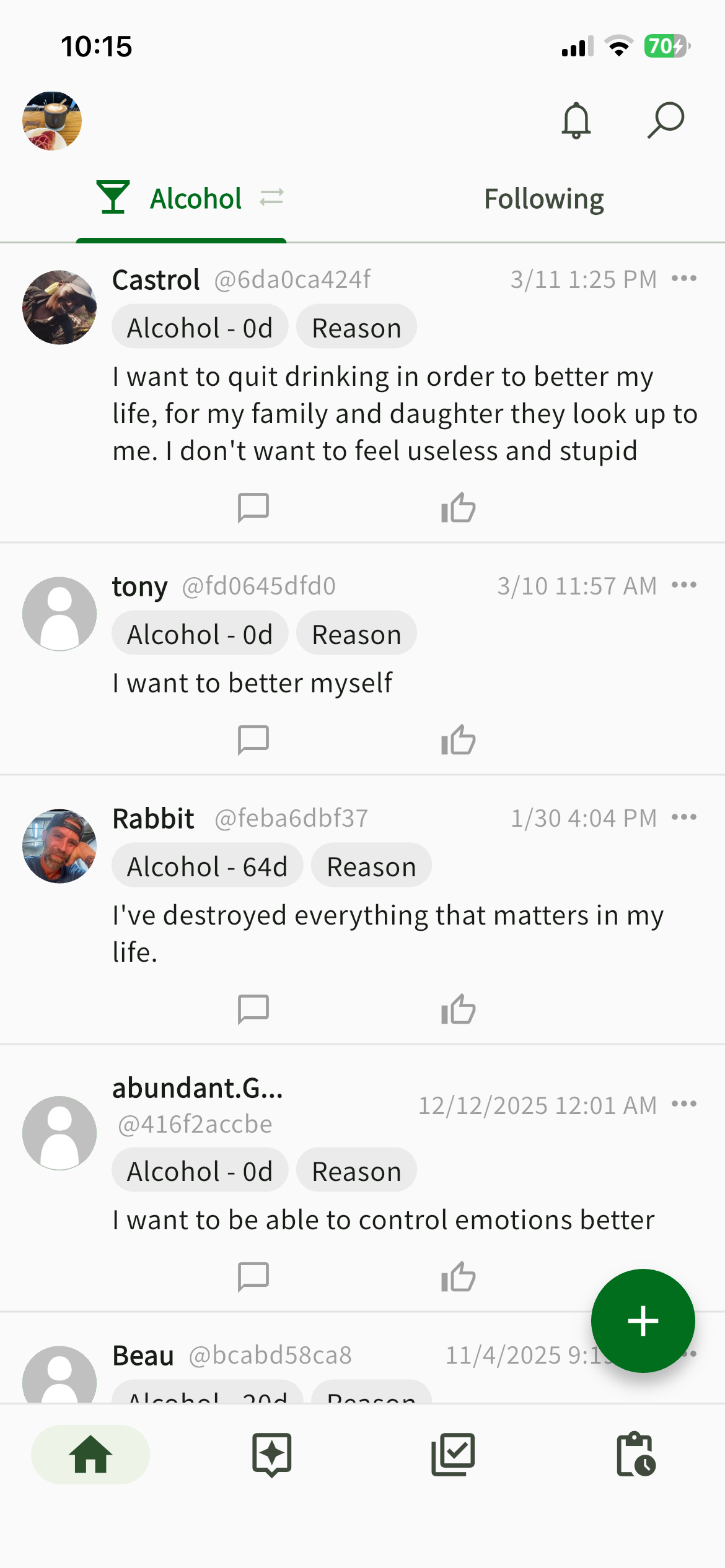

QuitMate
Together, you can quit
Connect anonymously with others who share your struggle. Whether it's alcohol, smoking, gambling, or other habits, you're not alone.