The Dopamine Trap: Why You Can't Stop Even When It's Not Fun
Day after payday. I stopped at the casino on the way home. Out of the $300 I had on me, $200 got swallowed by the machines.
Walking back to the car, I couldn’t make sense of it. Losing was nothing new, but this time, even the moment of a win didn’t land. “Hit,” my head said, but I felt nothing. I still moved to the next machine, and the next.
It wasn’t because it was fun. So why was I still there?
I kept turning that over in my head all the way home.
What dopamine actually is
Dopamine is a chemical in your brain that’s tied to reward. It gets called the “pleasure chemical,” and that’s half right, half wrong.
What dopamine actually does is fire when your brain senses a reward is coming. It fires on the anticipation, and it pushes you to act on it. It’s the mechanism that keeps you repeating behaviors your body needs to survive: eating, exercising, connecting with other people.
Pleasure itself is made by a different system. A separate circuit in the brain (scientists call it the opioid system, among others) produces the “that felt good, I’m satisfied” sensation.
“Dopamine = pleasure” is the myth. “Dopamine = wanting, craving” is closer to the truth.
”Wanting” and “liking” are separate in the brain
Recent research has shown that “wanting” and “liking” run on different circuits in the brain.
- Wanting: the pressure that drives “more, more”
- Liking: the sensation of “that felt good, I’m satisfied”
Normally these two move together. You want to eat something good (wanting), you eat it, it tastes good (liking), you feel satisfied. In normal life these are so tightly coupled that you don’t need to separate them.
But in gambling addiction, they split apart.
You can’t stop, even though it’s not fun
In an addicted brain, the “wanting” circuit fires strong, but the “liking” circuit has gone quiet. So you feel the pull to act, but when you act, the payoff is thin. It’s not satisfying, so you do it again to try to get the satisfaction. It’s still not satisfying. Again. Again.
“Can’t stop even though it’s not fun” is not a character issue or a willpower issue. It’s the physical result of “wanting” and “liking” being disconnected in your brain.
The scene at the start of this chapter, “‘Hit,’ my head said, but I felt nothing,” is exactly what that disconnection feels like. Many people in recovery describe the same thing.
The more you do it, the louder “wanting” gets
Normally, when you get the same stimulus over and over, your brain dulls to it. That’s tolerance. In gambling addiction, the opposite happens. The “wanting” response to cues grows stronger the longer you keep going. The medical term is “sensitization,” which just means getting more sensitive.
In practice:
- The sound of slot machines, the jingle when you open a betting app, the push notification for kickoff
- Your brain’s response to these cues grows stronger month by month, year by year
- The first time you walked past a casino, you felt nothing. A year later, your feet slow down. Five years later, seeing a casino sign from across the street is enough to raise your pulse
“Wanting” keeps getting louder. “Liking” keeps getting quieter. The gap widens as the addiction deepens.
”The feeling of your first big win” is not coming back
Something most people in recovery have felt:
“I just want to feel the way I did the first time I hit big.”
That feeling isn’t coming back. Two reasons.
- The “liking” circuit in your brain has been dulled by repetition.
- Only “wanting” runs out in front now, and no matter how much you feed it, it doesn’t get full.
If you chase “how it felt back then” without knowing this, you’ll burn through money and time. You eventually realize you’re trapped in a loop of doing something you don’t even enjoy.
Chasing something that isn’t coming back is exhausting. Admitting “it’s not coming back” hurts, but it’s also the doorway out of the trap.
What helps you get out
Understanding the dopamine trap isn’t an instant cure. But it changes two things.
First, you can stop beating yourself up. “Can’t stop even though it’s not fun” is not a personality defect. It’s the physical result of “wanting” and “liking” being disconnected. A lot of people with gambling addiction have driven their self-worth into the ground because they blame themselves. Once you believe “my will is weak,” you lose the energy you need to do the things that actually help. Knowing the mechanism breaks that cycle.
Second, you can start moving toward other forms of “liking.” The “liking” you lost to gambling, you need to rebuild somewhere else. Move your body. See people. Make something. Learn something. Sleep. Eat well. Get some sun.
In the beginning, these things feel thin. Compared to the intensity of gambling, they barely register. But if you keep at them, the “liking” circuit in your brain slowly starts to come back. It takes time. Weeks. Months. For some people, a year or more.
The highs from gambling are not coming back. But your ability to feel small everyday pleasures can.
References
- Berridge, K.C., & Robinson, T.E. (2016). Liking, wanting, and the incentive-sensitization theory of addiction. American Psychologist, 71(8), 670-679.
- Robinson, T.E., & Berridge, K.C. (1993). The neural basis of drug craving: an incentive-sensitization theory of addiction. Brain Research Reviews, 18(3), 247-291.
- Robinson, T.E., & Berridge, K.C. (2008). The incentive sensitization theory of addiction: some current issues. Philosophical Transactions of the Royal Society B, 363(1507), 3137-3146.
- Schultz, W. (1997). Dopamine neurons and their role in reward mechanisms. Current Opinion in Neurobiology, 7(2), 191-197.
- Volkow, N.D., Koob, G.F., & McLellan, A.T. (2016). Neurobiologic Advances from the Brain Disease Model of Addiction. New England Journal of Medicine, 374(4), 363-371.
- Koob, G.F., & Volkow, N.D. (2016). Neurobiology of addiction: a neurocircuitry analysis. The Lancet Psychiatry, 3(8), 760-773.
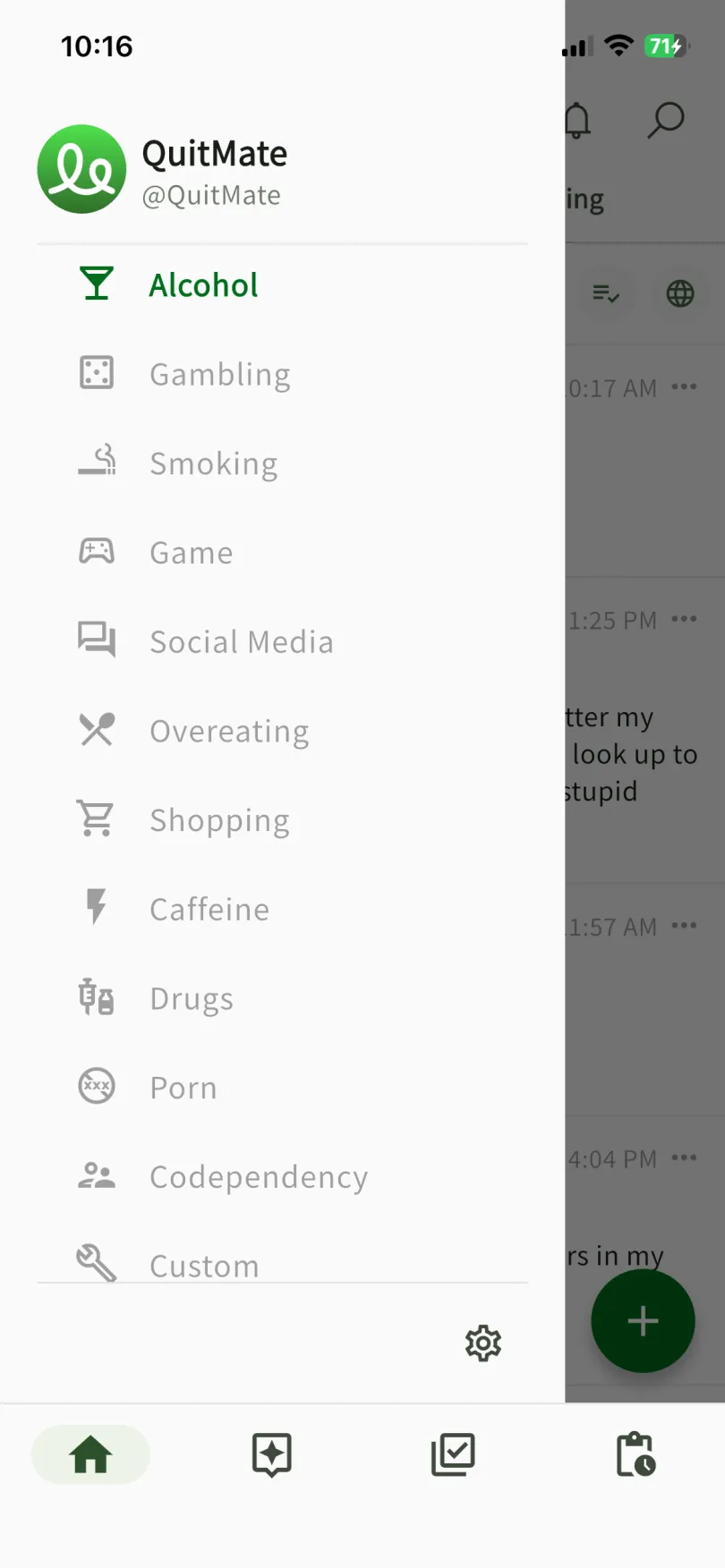
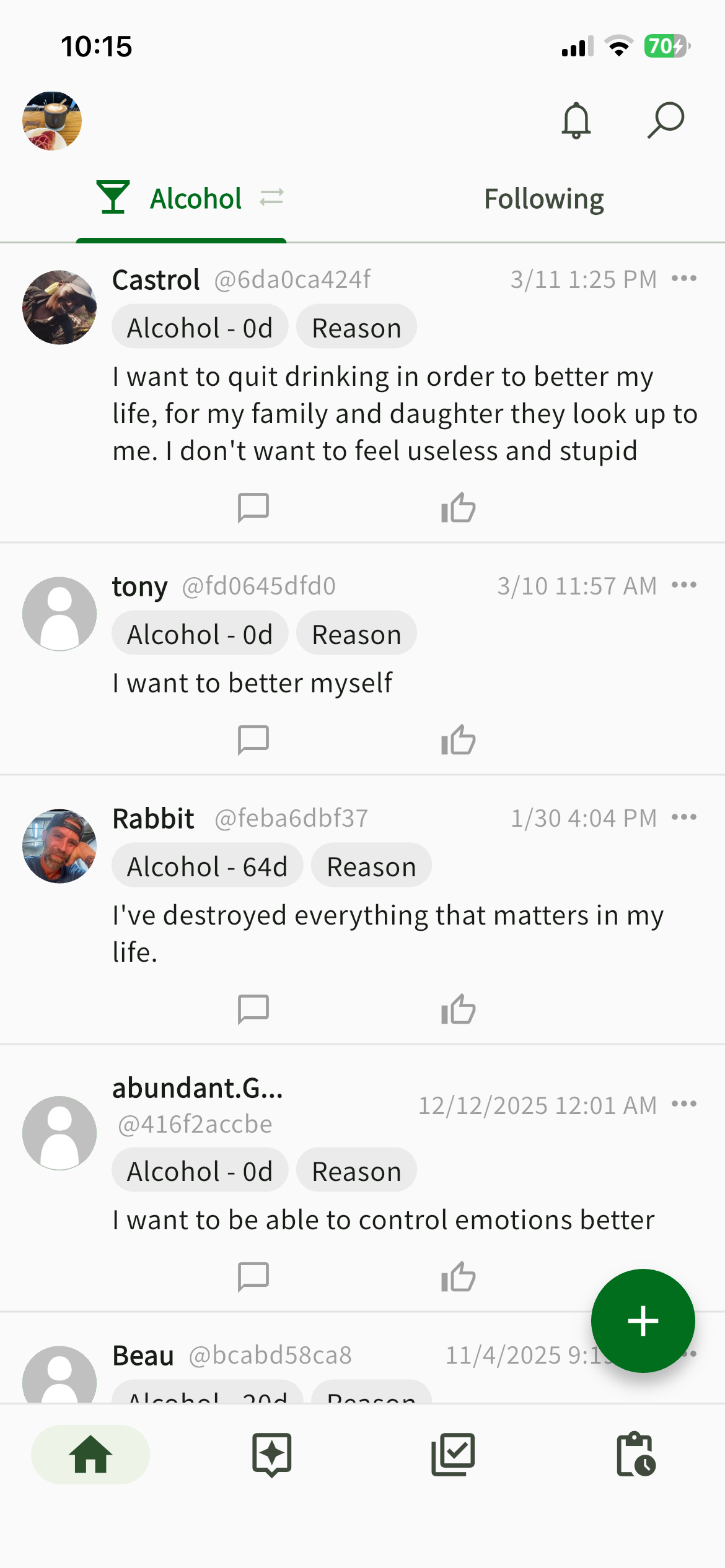

QuitMate
Together, you can quit
Connect anonymously with others who share your struggle. Whether it's alcohol, smoking, gambling, or other habits, you're not alone.