Mental Health and Addiction: Overlapping Struggles
This chapter is general information, not a diagnosis. If any of these symptoms concern you, see a psychiatrist or primary care provider.
7 a.m. Getting out of bed took thirty minutes. Every step of getting ready for work, my body felt heavy. On the commute I thought “eight more hours today,” and I started crying.
Talking to people at work is exhausting. At lunch, I don’t want to see anyone, so I go outside alone. Without deciding to, I end up standing in front of a casino. Inside, playing slots for two hours, I finally stopped thinking.
“Maybe it’s depression.” I’d thought it before, but not enough to go to a doctor. I believed gambling was the whole problem. I believed that without the gambling, I’d be fine.
Addiction doesn’t usually travel alone
Gambling addiction often shows up with other mental health conditions.
Research shows that more than half of people with gambling disorder have co-occurring depression, anxiety disorders, ADHD, other addictions, or similar conditions.
In other words, having only gambling addiction is the minority case. Most people with the disorder are carrying at least one other thing. This doesn’t get talked about much. Even the person affected often doesn’t know.
If you believe “the moment I stop gambling, I’ll be normal,” you miss the other conditions entirely. Some people find that depression or anxiety emerges after they stop gambling. That’s not “it got worse when I stopped.” That’s “gambling was covering up the other conditions.”
Depression and addiction
Rates
Depending on the study, 25% to 75% of people with gambling disorder also have depression. Somewhere around half is a reasonable working estimate. Depression in the general population runs around 10%. The gambling population is clearly higher.
Signs of depression
If any of the following have lasted two weeks or more, depression may be involved:
- Hard to get up in the morning
- Nothing feels enjoyable anymore
- Loss of appetite (or overeating)
- Can’t sleep (or oversleeping)
- Body feels heavy, easy fatigue
- Can’t focus
- Self-critical thoughts that won’t let go
- “I want to die” or “I want to disappear” crossing your mind
- Seeing people is exhausting
Some of these overlap with gambling addiction symptoms. So from inside, you can’t cleanly separate “addiction symptom” from “depression symptom.” Separating them is the doctor’s job.
The gambling-depression loop
Depression and gambling reinforce each other.
- Depression drops your mood → you reach for gambling to change how you feel
- You lose → guilt and shame deepen the depression
- Depression deepens → you reach for gambling again
Both conditions worsen inside the loop. Which came first is often unknowable, but both need treatment.
Anxiety disorders and addiction
Rates
Roughly 30 to 50 percent of people with gambling addiction also have an anxiety disorder. Anxiety disorders include generalized anxiety, social anxiety, panic disorder, PTSD, and others.
Signs
- Low-level worry about small things won’t let up
- Pounding heart, difficulty breathing, panic episodes
- Extreme fear of being in public or being judged
- Avoiding specific places or situations
- Intrusive memories of a distressing past event
- Hard to fall asleep, waking in the middle of the night
The connection
For someone with strong anxiety, the “focused zone” inside gambling is a break from anxiety. While gambling, past anxieties and future worries go quiet. That’s why people with anxiety disorders get especially stuck on gambling.
When you stop, the suppressed anxiety often floods back. That period is the hardest, and it’s where relapse hits. Getting connected to treatment at this stage lets anxiety be treated alongside the addiction.
ADHD and addiction
Rates
Research has found meaningful overlap between ADHD and gambling disorder. Roughly 20 to 40 percent of people with gambling addiction have ADHD or significant ADHD traits. The general population rate is a few percent, so this is a large jump.
Adult ADHD signs
- Trouble sustaining attention, easily distracted
- Difficulty planning and executing
- Frequent small mistakes
- Struggle with waiting
- Impulsive actions
- Chasing strong stimulation
- Intolerance for boredom
The connection
ADHD brains have particular dopamine signaling patterns. Day-to-day life feels understimulating, so stronger stimulation pulls hard. Gambling’s “immediate results,” “strong audiovisual input,” and “unpredictability” are especially attractive to an ADHD brain.
Combine that with higher impulsivity, and the brakes are weaker. “Just a little” becomes playing to the absolute limit.
ADHD is treatable. A specialist evaluates and, as appropriate, combines medication and behavioral therapy. Treating ADHD has been shown to help gambling addiction treatment move forward.
Other overlapping conditions
Other addictions
Many people with gambling addiction carry another addiction too.
- Alcohol use disorder
- Nicotine dependence
- Caffeine dependence
- Sexual addiction
- Gaming addiction
- Compulsive shopping
This reflects a shared “addicted brain” state across conditions. Stopping one addiction can shift into another, a pattern sometimes called “addiction swapping.”
Trauma and PTSD
Past trauma (abuse, accidents, military service, major losses) is often in the background of addiction. Trauma and addiction are tightly linked. If trauma seems to be in the background for you, look for a psychiatrist, psychologist, or licensed therapist with trauma expertise. This book doesn’t cover trauma treatment itself, but connecting to care is a big step in recovery.
Bipolar disorder
Bipolar disorder, with its swings in mood, has been linked to gambling addiction in the research. The pull toward gambling often gets especially strong during elevated-mood (manic or hypomanic) phases. Bipolar requires evaluation and, in most cases, medication.
Overlapping conditions corner you faster
In the safety-plan chapter (Chapter 8), we said that people with gambling addiction often feel “this is unbearable.” That feeling deepens when conditions pile up.
Depression keeps you still. Anxiety keeps you from sleeping. Debt won’t leave your mind. When all of it hits at once, “this is unbearable” moments come more often.
That’s why co-occurring conditions need to be treated alongside the gambling. Being seen for the whole picture is what reduces the load.
Catching your own signs
Self-check as an entry point
Simple self-checks can surface overlapping conditions. Look at the last two weeks and count how many of these fit:
- □ Hard to get up in the morning
- □ Nothing feels enjoyable
- □ Appetite changed (up or down)
- □ Sleep problems (insomnia or oversleeping)
- □ Body feels heavy, easy fatigue
- □ Can’t focus
- □ Self-critical thoughts won’t stop
- □ Being around people is painful
- □ “I want to die” or “disappear” has crossed your mind
- □ Restless, unsettled by small things
- □ Panic symptoms (pounding heart, trouble breathing)
- □ Intrusive memories of a distressing event
Three or more, or any “want to die” at all, is a reasonable threshold for seeing a psychiatrist or primary care provider.
Self-checks aren’t diagnoses
They’re a way in, not a conclusion. Diagnoses come from clinicians.
Don’t decide “I have depression” from a self-check, and don’t decide “I’m fine” from one either. If something concerns you, bring it to a clinician.
”I’m here for gambling” is enough
At a psychiatrist’s office or addiction clinic, “I’m here to talk about gambling” is a complete opening. The clinician will also evaluate depression, anxiety, and other conditions as part of the intake. You don’t need to say “I think I might have depression.” Describe what’s happening and let them do their job.
References
- Lorains, F.K., Cowlishaw, S., & Thomas, S.A. (2011). Prevalence of comorbid disorders in problem and pathological gambling: systematic review and meta-analysis of population surveys. Addiction, 106(3), 490-498.
- Petry, N.M., Stinson, F.S., & Grant, B.F. (2005). Comorbidity of DSM-IV pathological gambling and other psychiatric disorders: results from the National Epidemiologic Survey on Alcohol and Related Conditions. Journal of Clinical Psychiatry, 66(5), 564-574.
- Kessler, R.C., Hwang, I., LaBrie, R., Petukhova, M., Sampson, N.A., Winters, K.C., & Shaffer, H.J. (2008). DSM-IV pathological gambling in the National Comorbidity Survey Replication. Psychological Medicine, 38(9), 1351-1360.
- Crockford, D.N., & el-Guebaly, N. (1998). Psychiatric comorbidity in pathological gambling: A critical review. Canadian Journal of Psychiatry, 43(1), 43-50.
- Brewer, J.A., & Potenza, M.N. (2008). The neurobiology and genetics of impulse control disorders: Relationships to drug addictions. Biochemical Pharmacology, 75(1), 63-75.
- Faraone, S.V., Asherson, P., Banaschewski, T., et al. (2015). Attention-deficit/hyperactivity disorder. Nature Reviews Disease Primers, 1, 15020.
- Karlsson, A., & Håkansson, A. (2018). Gambling disorder, increased mortality, suicidality, and associated comorbidity. Journal of Behavioral Addictions, 7(4), 1091-1099.
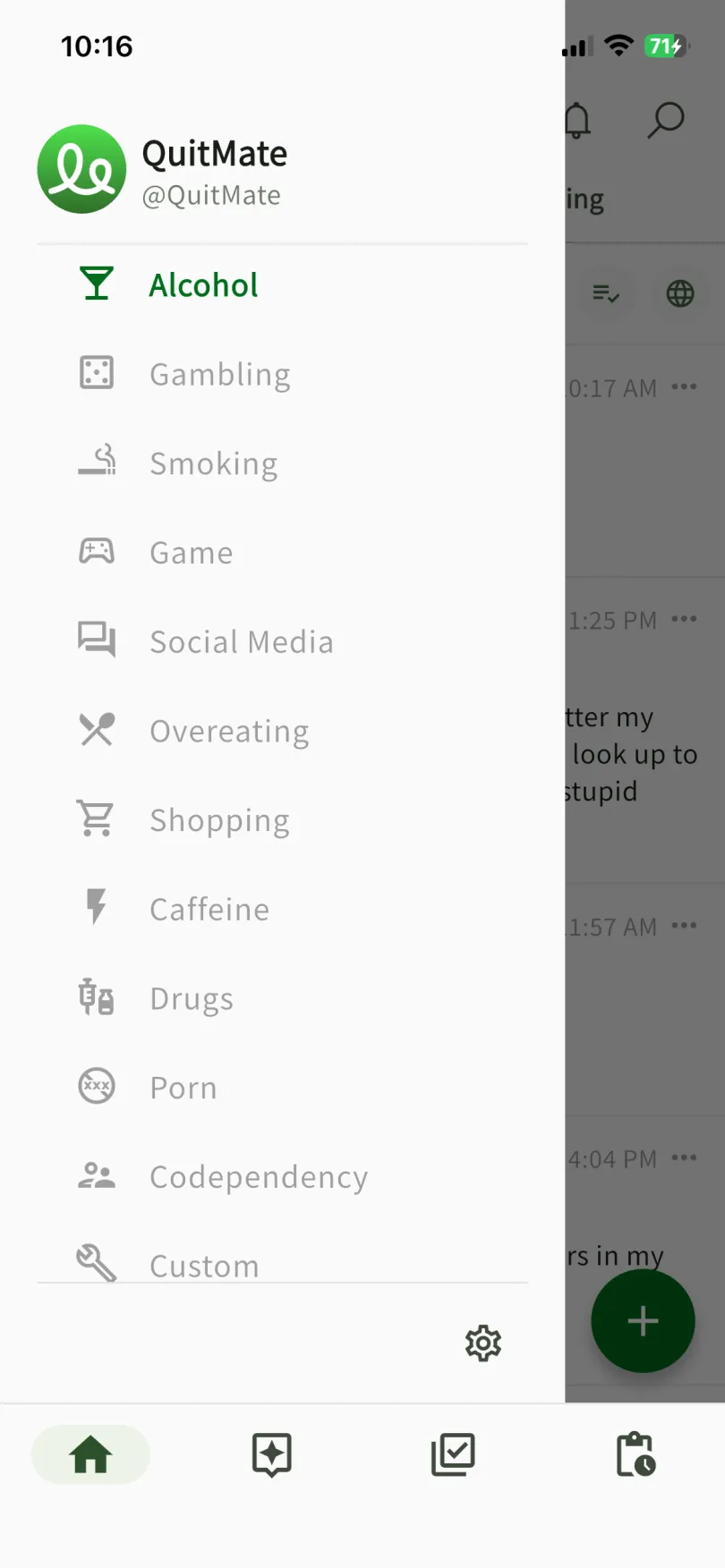
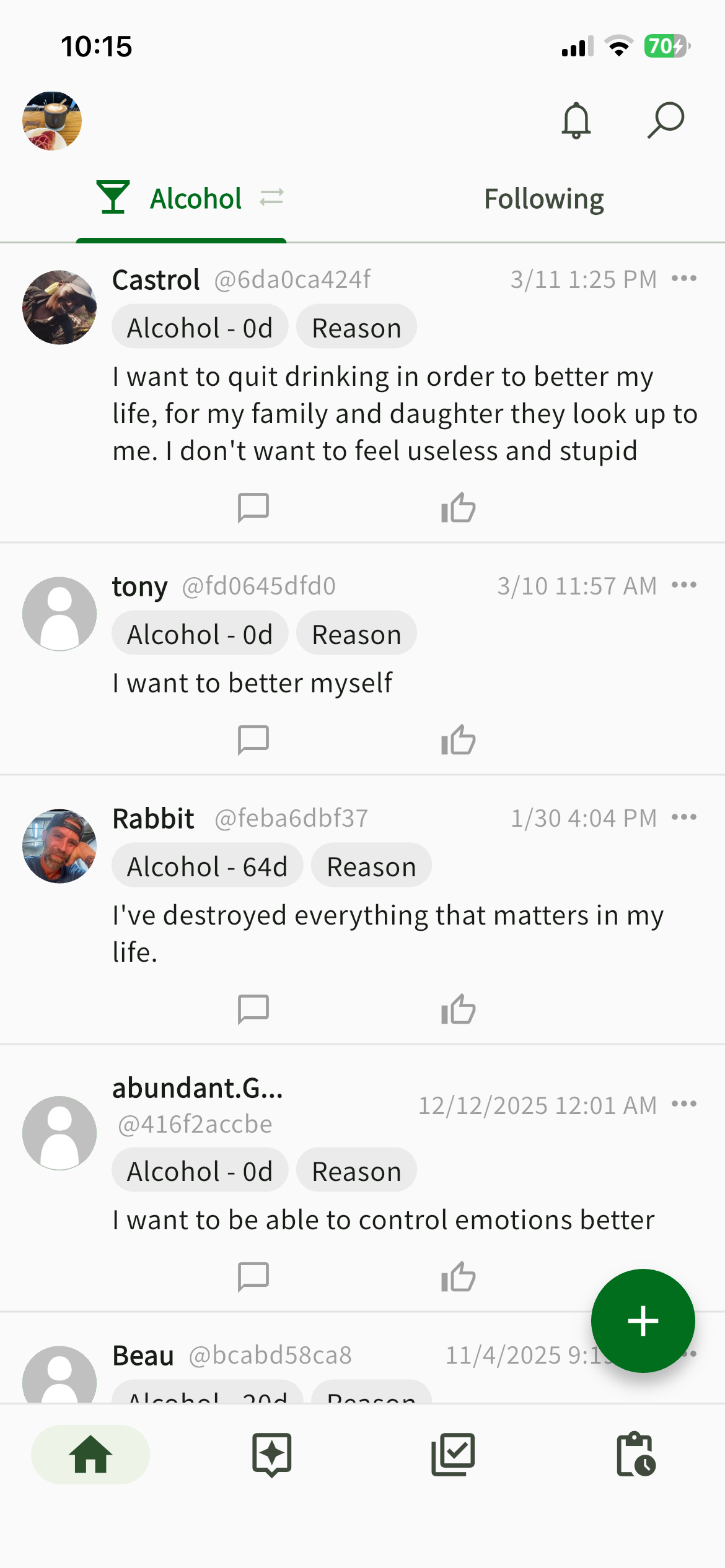

QuitMate
Together, you can quit
Connect anonymously with others who share your struggle. Whether it's alcohol, smoking, gambling, or other habits, you're not alone.