Cognitive Distortions: Three Illusions the Gambling Brain Creates
6 p.m. Inside the casino. Four hours in. $300 gone.
“I’ve been on this machine this long, a hit has to be coming” “If I quit now, I lock in a $300 loss. One more round and I’ll get it back” “This machine’s been tight all day. It’s due”
Three thoughts, running at the same time. From the outside, they all look wrong. Sitting at the machine, they all feel like facts.
What cognitive distortions are
A cognitive distortion is a pattern of thought that drifts away from reality. It’s not unique to addiction. Everyone has them. But in the gambling brain, specific patterns get especially loud.
Why do they get loud in a gambling brain? Two reasons.
- The dopamine trap: dopamine is overreleased. The brain wants a reason to act
- Loss aversion: people hate locking in a loss. When a loss is about to be final, the distortions whisper “you can still win it back”
So cognitive distortions are “reasons to go” and “reasons not to stop,” manufactured after the fact by your brain. And they don’t feel manufactured from the inside. They feel like sound judgment.
This chapter covers three distortions that hit gambling addiction especially hard: the gambler’s fallacy, the sunk cost effect, and the illusion of control.
The gambler’s fallacy: “the next one is coming”
What it looks like
- “I’ve been losing a while, I’m due”
- “Three near-misses in a row. The next one hits”
- “Five blacks in a row. Red has to be next”
- “Been losing for a month. The streak is turning”
All of these are the gambler’s fallacy. The belief that past results affect future probability.
The reality
In most gambling, outcomes are what statisticians call “independent trials.” The result of this trial has nothing to do with previous trials.
Example: a slot machine with a 1-in-319 chance of hitting. If the machine has missed 500 spins in a row, the 501st spin is still 1-in-319. The 501st isn’t more likely to hit than the first.
“I’ve been losing so I’m due” is, at the level of probability, false.
(While we’re here: 1-in-319 doesn’t mean “you’ll hit if you spin 319 times.” Spin 319 times and your chance of having hit at least once is about 63%. Roughly 37% of people spinning 319 times will never hit.)
Why the brain feels it
The human brain is bad at processing randomness. When the same result happens in a row, your brain expects the opposite next. This is a side effect of our pattern-recognition ability, which evolved to be useful elsewhere.
It’s useful most places. On a gambling floor, it backfires.
How to break it
Carry the fact: “the next trial’s probability is the same, no matter the streak.” Pull it up when you’re in front of the machine.
Say it out loud if you have to. “This is the gambler’s fallacy. The probability doesn’t change.” Even saying it in your head weakens the distortion a little.
Sunk cost: “if I quit now, it’s all wasted”
What it looks like
- “I’ve lost $300. If I quit I eat the whole loss. One more round to win it back”
- “I’ve been on this machine for hours, can’t give it up now”
- “I’ve come this far, I have to keep going”
- “I’ve been here 8 hours. After 8 hours, what’s another 2”
This is the sunk cost effect. Trying to recover money already spent by spending more.
The reality
The reality is simpler than the feeling. The $300 you already spent isn’t coming back whether you stop or continue.
Money you’ve already spent is called a sunk cost. It’s gone. It has no bearing on future decisions. The only thing to decide is “what happens if I keep going from here.”
If you put in another $100, what does probability say will happen? Almost always, that $100 is gone too. And you become harder to stop.
Why the brain feels it
People hate locking in a loss. Admitting “that $300 is gone” carries a strong psychological pain. To avoid that pain, the brain writes a story: “it’s not over yet, you can still get it back.”
You believe the story, and you put more money in. The loss grows instead of reversing.
How to break it
“The money I already spent doesn’t come back, whether I stop or continue.” Write this in a notebook or your phone notes.
Then tell yourself: “the only thing to decide now is what happens from here.” This is a general principle, not just for addiction. It matters in work and in relationships, too. A lot of people get trapped in “I’ve come this far” and can’t turn around.
Illusion of control: “there’s always a good bet somewhere”
What it looks like
- “There’s a hot machine somewhere today, I just have to find it”
- “That slot by the corner hits on weekends”
- “I’ve got an eye for the flow”
- “I can read the data and pick the right bet”
This is the illusion of control. Believing you can predict something that’s actually unpredictable.
The reality
The reality is harsh. The odds on casino machines are fixed in advance by the manufacturer and regulated by gaming authorities. Whether any individual machine is “about to hit” isn’t something a player can know. Hours of studying a screen don’t reveal “the next winner.”
The people most convinced they “have an eye” are, as a rule, the ones losing the most. Behavioral economics has shown this directly. Losing continuously doesn’t dissolve the feeling of “I can see it.”
Why the brain feels it
People overestimate their own judgment. Past accidental wins reinforce the sense of “I have an edge.” The brain remembers the hits and forgets the misses.
That feeling then drives the next bet.
How to break it
Write out, honestly, your last month’s or last year’s wins and losses. “On this date, won X; on that date, lost Y.” All of them.
Almost everyone ends up deeply negative. The “I have an edge” feeling conflicts with the numbers on the page. The conflict weakens the feeling.
Three distortions at once
The three don’t run independently. They run together in the same moment.
Look back at the opening scene:
- “I’ve been on this machine this long, a hit has to be coming” → gambler’s fallacy
- “If I quit now, I lock in a $300 loss” → sunk cost
- “This machine’s been tight all day, it’s due” → illusion of control + gambler’s fallacy
All three are firing simultaneously in your head. One by itself is easy to catch. Three at once produce a strong sense that “my judgment is right.”
Knowing the three gives you more chances to catch “hey, all three distortions are running right now.” When you catch it, there’s a moment of space to choose differently.
How to notice them
Watch your own lines
“The next one is coming.” “Can’t walk away now.” “I know what I’m doing.” When these start running in your head, that’s the sign.
On a calm day, write down five “distortion lines” you tend to say. When one of them shows up at the machine, you can flag it: “oh, that’s the distortion.”
Put them on paper
In your head, a distortion feels true. On paper, it objectifies.
Write “I’ve been losing so it’s due.” Then write next to it: “is this a fact?” It becomes easier to see that it isn’t.
Borrow an outside view
“If a friend were in this exact situation, saying this exact thing, what would I tell them?” With a friend, you’d say it calmly. “That doesn’t add up.” Point that same calm view at yourself.
References
- Ladouceur, R., & Walker, M. (1996). A cognitive perspective on gambling. In P.M. Salkovskis (Ed.), Trends in Cognitive and Behavioural Therapies (pp. 89-120). Wiley.
- Tversky, A., & Kahneman, D. (1971). Belief in the law of small numbers. Psychological Bulletin, 76(2), 105-110.
- Kahneman, D. (2011). Thinking, Fast and Slow. Farrar, Straus and Giroux.
- Arkes, H.R., & Blumer, C. (1985). The psychology of sunk cost. Organizational Behavior and Human Decision Processes, 35(1), 124-140.
- Thaler, R.H. (1999). Mental accounting matters. Journal of Behavioral Decision Making, 12(3), 183-206.
- Toplak, M.E., Liu, E., MacPherson, R., Toneatto, T., & Stanovich, K.E. (2007). The reasoning skills and thinking dispositions of problem gamblers: A dual-process taxonomy. Journal of Behavioral Decision Making, 20(2), 103-124.
- Goodie, A.S. (2005). The role of perceived control and overconfidence in pathological gambling. Journal of Gambling Studies, 21(4), 481-502.

QuitMate
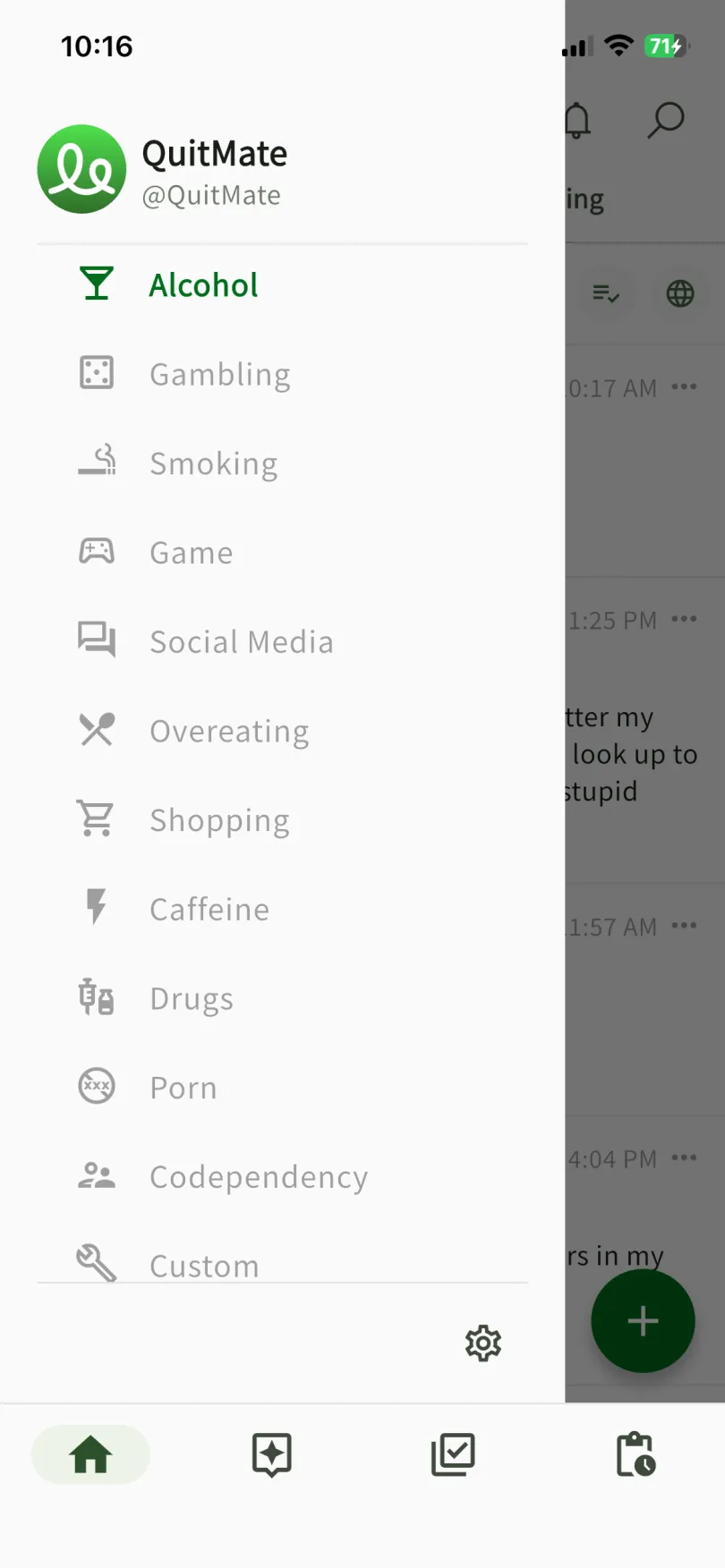
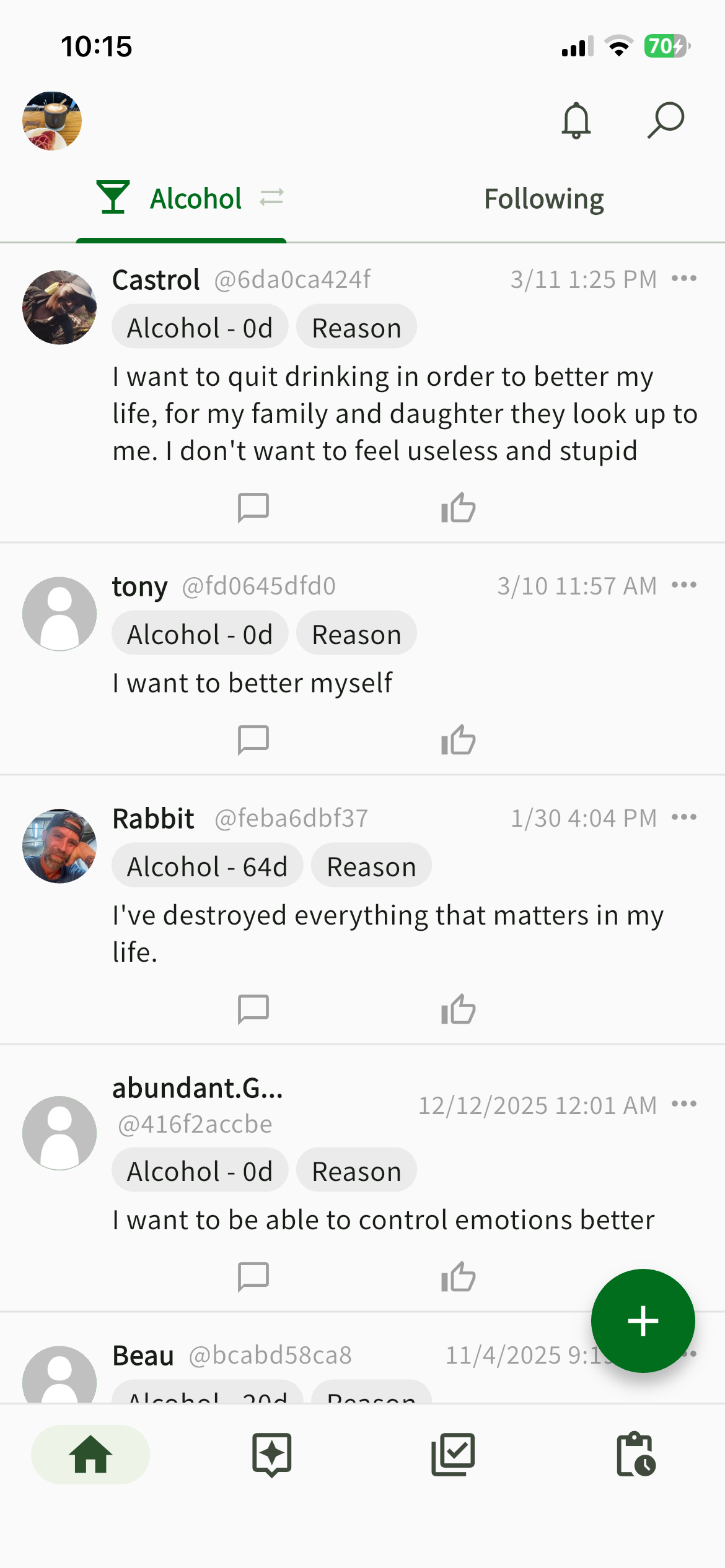
Together, you can quit
Connect anonymously with others who share your struggle. Whether it's alcohol, smoking, gambling, or other habits, you're not alone.