What a Craving Is, and How to Ride It Out
Saturday, 10 a.m. A notification lights up my phone. “NFL kickoff in 15 min.” It was an app I’d forgotten to delete. My thumb tapped it without thinking. The screen opened. My pulse picked up. “I’m just looking, I won’t bet,” I told myself, already scrolling to the lines. Before I knew it, I’d placed a $30 three-leg parlay on the first game. I’d decided to quit three days earlier.
What a craving is
A craving is what happens when a cue sets off a sudden dopamine release. In the addicted brain, this response overshoots easily, triggered by small signals.
The body gives consistent signs.
- Heat in the back of your neck or chest
- Pulse climbs
- Mouth goes dry
- Palms sweat
- Breathing gets shallow
- Tunnel vision
At the same time, “justification” starts running in your head.
- “Just today”
- “Just once is fine”
- “I’m just trying to get my stake back”
- “Tonight’s the night, I can feel it”
These are all conditioned reflexes built into your brain over years of use. You can’t stop them from firing.
Cravings end
The single most important thing about cravings: they always end.
A craving moves like a wave:
- Something triggers it
- It intensifies
- It peaks
- It weakens
- It passes
Peak typically hits in a few minutes to 15 minutes. Full passage is usually 20 to 30 minutes. This is consistent across studies.
If you do nothing, the wave still passes. The problem is: most people can’t “do nothing.” Somewhere mid-wave, they decide “I can’t take this” and act.
So the skill you need isn’t “fighting the wave.” It’s “watching the wave.”
Watching: craving surfing
Craving surfing was developed in the U.S. in the 1980s and is now used across mindfulness-based relapse prevention programs.
It’s simple.
-
Acknowledge it arrived. Notice the craving. Say “there it is” in your head. Don’t suppress it. Don’t try to push it away.
-
Observe what’s happening in your body. Heat in the neck. Fast heart. Sweaty palms. Label each one.
-
Watch it like a wave. “It’s getting stronger.” “Peak is close.” “Peak.” “Weakening.” “It’s passing.” Take the observer position. Don’t become the wave.
-
Check the clock. Peak in 5 to 10 minutes. Full passage in 20 to 30. Watching the clock gives you a felt sense that this thing ends.
It’s hard at first. You’ll try to watch and get pulled under. With practice, the part of you that watches grows.
“Don’t fight, observe.” That’s the core of craving surfing.
Back to the senses: 5-4-3-2-1 grounding
When the craving is too strong to observe, there’s another basic skill. 5-4-3-2-1 grounding, used for anxiety attacks and strong cravings.
How to do it:
- Five things you can see, said out loud or in your head. “Wall, poster, vending machine, someone’s shoes, my shadow.”
- Four sounds you can hear. “Cars outside, voices, an announcement, my breathing.”
- Three things you’re touching. “My shirt against my skin, my feet in my shoes, the phone in my hand.”
- Two smells. “Coffee, the laundry detergent on my sleeve.”
- One taste. “The leftover coffee in my mouth.”
When it’s done, run through it again. You’re forcibly switching your brain’s attention away from “the past experience (gambling)” and “the future fantasy (winning back)” toward “the senses happening now.”
The same technique is used for anxiety and trauma care.
Physical handling: minimal skills for a crisis
When you can’t observe, can’t ground, the simplest methods:
Physically leave
The single most effective move. Walking past a casino? Turn and walk the other way. About to open the sports betting site on your laptop? Put the laptop in another room and walk outside.
When the cue goes away, the wave weakens. The brain’s physical response gets broken by a physical action. That’s the fastest way out.
Call someone
Talking out loud flips your brain’s state. Topic doesn’t matter. You can say “I’m in a craving.” You can talk about anything else. The point is shifting from “alone” to “in a conversation.”
Decide who you’ll call in advance. Trying to pick in the middle of a craving is hard.
Use a strong physical sensation
A strong sensation redirects attention. Cold water on your face. Ice in your hand. Strong mint gum. A strong scent. These are temporary, but they get you past the peak.
Things not to do
Some attempts backfire.
Trying to suppress
The more you tell yourself “don’t think about it,” the stronger the thought gets. This is the “white bear effect.” Tell someone not to think about a white bear, and they can’t stop. Trying to make a craving “not exist” makes it rebound harder. You have to observe, not suppress.
Trying to hold out alone forever
“I’ll tough it out myself” is a recipe for burnout. Cravings come many times. Holding out once isn’t the problem. Combine: lean on people, physically leave, let time pass. Keep picking “endure alone” and eventually you break all at once.
Praying for cravings to stop
The more you’ve stopped, the more they come. It takes time before they really fade. “Please don’t come” is less useful than “be ready when they come.”
References
- Marlatt, G.A., & Gordon, J.R. (Eds.) (1985). Relapse Prevention: Maintenance Strategies in the Treatment of Addictive Behaviors. Guilford Press.
- Bowen, S., Chawla, N., & Marlatt, G.A. (2010). Mindfulness-Based Relapse Prevention for Addictive Behaviors: A Clinician’s Guide. Guilford Press.
- Witkiewitz, K., Marlatt, G.A., & Walker, D. (2005). Mindfulness-based relapse prevention for alcohol and substance use disorders. Journal of Cognitive Psychotherapy, 19(3), 211-228.
- Tiffany, S.T., & Wray, J.M. (2012). The clinical significance of drug craving. Annals of the New York Academy of Sciences, 1248(1), 1-17.
- Wegner, D.M. (1989). White Bears and Other Unwanted Thoughts. Viking Press.
- Najavits, L.M. (2002). Seeking Safety: A Treatment Manual for PTSD and Substance Abuse. Guilford Press.
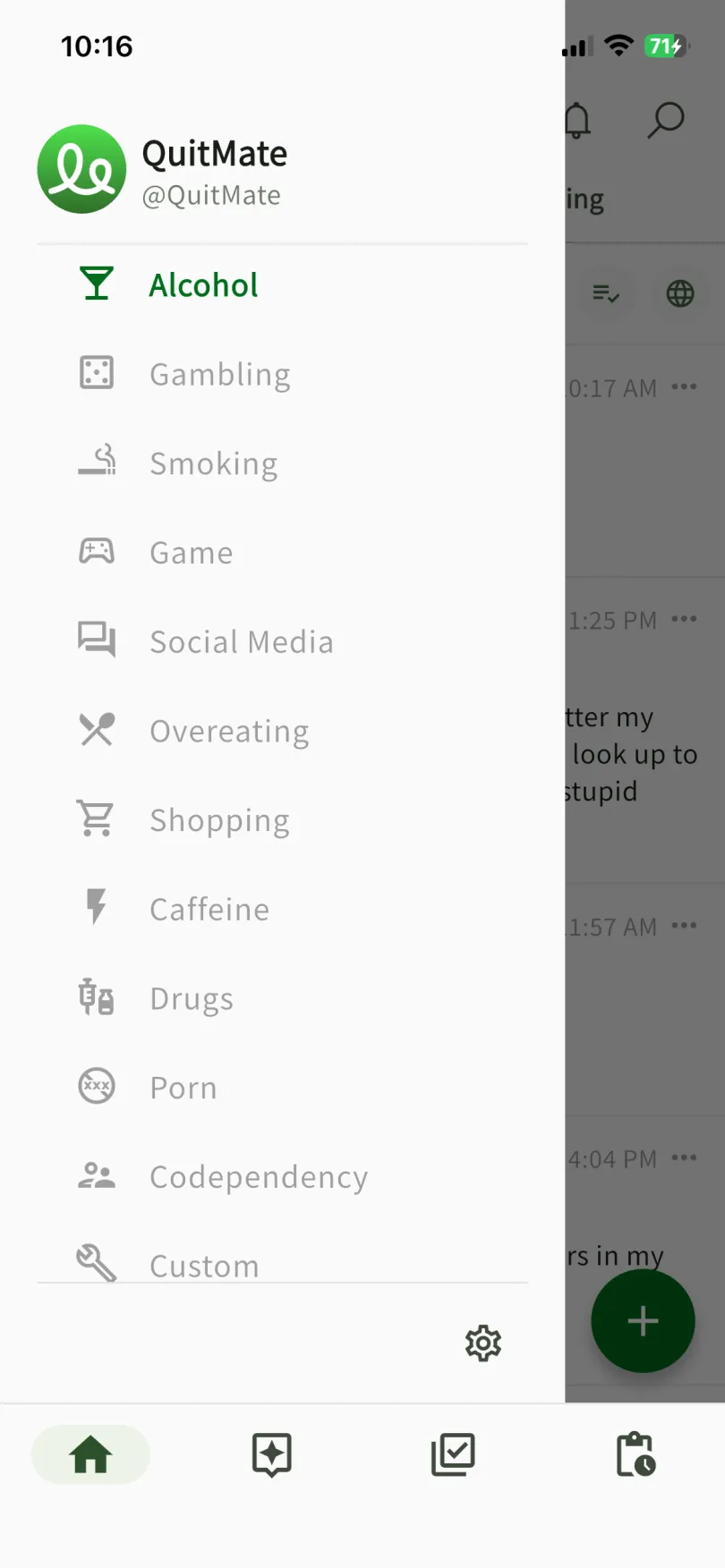
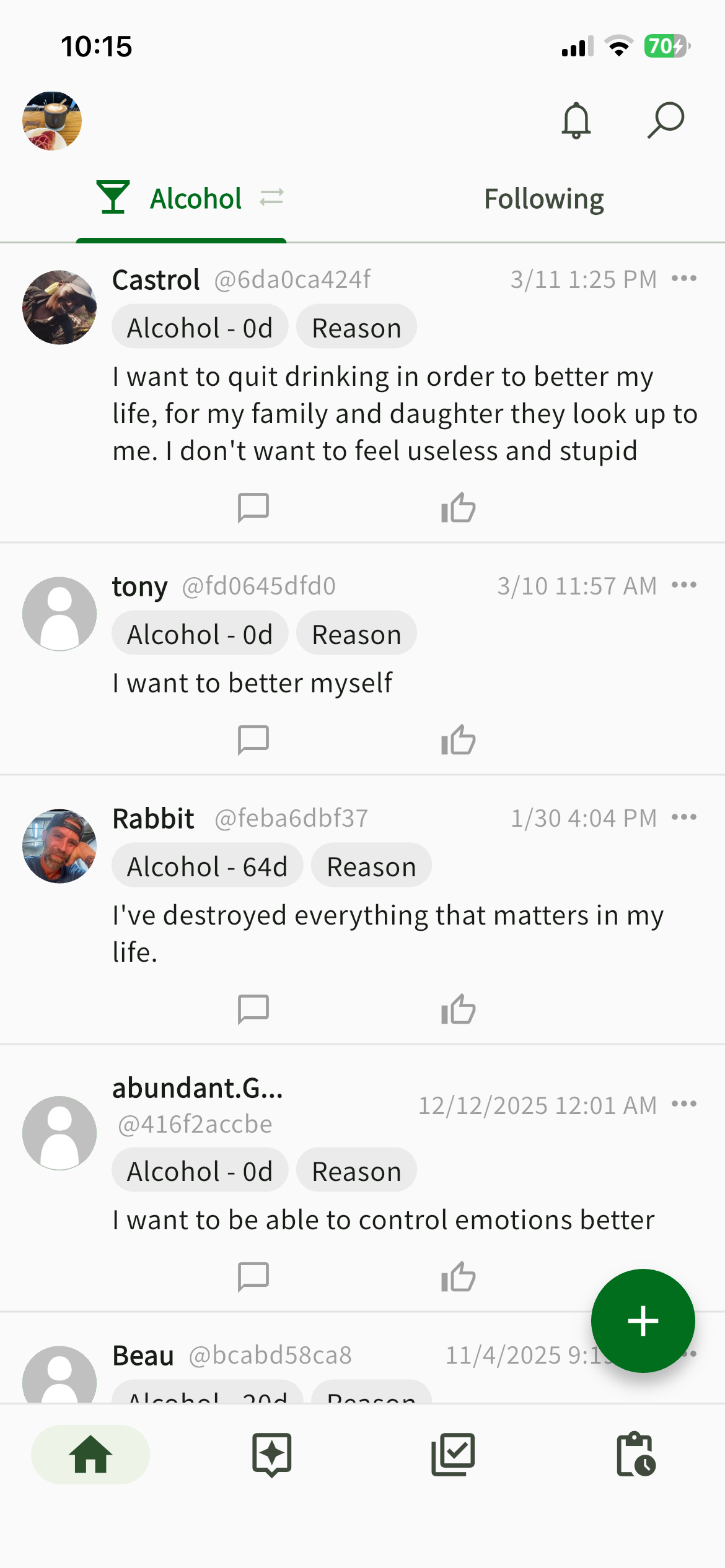

QuitMate
Together, you can quit
Connect anonymously with others who share your struggle. Whether it's alcohol, smoking, gambling, or other habits, you're not alone.