HALT: Hungry, Angry, Lonely, Tired
Friday, 9 p.m. Late at the office. Haven’t eaten since noon. A client’s mistake cost us, and my manager unloaded on me over it. My family is asleep by now. My socks are damp inside my shoes.
The walk from the subway to my apartment. Passing a neon “SPORTSBOOK / SLOTS” sign, I stopped. Of course it was tonight that I’d notice it.
The math starts in my head. “Still hours until close.” “A quick session just to reset.” “Nobody’s up at home anyway.”
What HALT is
HALT is an initialism for four words:
- Hungry
- Angry
- Lonely
- Tired
It came out of Alcoholics Anonymous and now gets used across all kinds of addiction recovery.
The idea is simple: “When any one of these is true, the trigger for addictive behavior gets pulled more easily.” In reverse: “when a craving hits, first check whether one of these is happening.”
In the opening scene, all four were going at once. Relapses often involve two or more of these at the same time.
What each one does to the brain
Hungry
When your blood sugar drops, the brain’s brakes weaken. Judgment drops. Impulses get harder to contain.
This isn’t specific to addiction. Anyone with low blood sugar makes sloppy decisions. Shopping and overspending, sending impulsive texts, snapping at people. An addicted brain is already starting with weakened brakes. Hunger compounds that.
Nights that follow skipped meals are especially dangerous.
Angry
Anger and frustration push you toward “I need a break” or “I need to let off steam.” That feels like a reason to gamble. Stress-elevated cortisol pushes the brain to chase dopamine harder. It isn’t stress relief. It’s a stronger craving.
The ride home after being yelled at. The minutes after a fight with a family member. The evening of a failure at work. These windows are especially risky.
Lonely
Loneliness lights up a part of the brain close to the region that processes physical pain, according to imaging studies. We’re social animals. Losing connection is processed as pain.
To fill that pain, the brain reaches for addictive behavior. Inside a casino or inside a sportsbook, the noise and activity temporarily plug the hole of loneliness. Alone on the way home. An empty apartment. A weekend with nobody to talk to. These are triggers.
Tired
When you’re tired, the brain’s decision-making fuel is depleted. You can’t make new decisions. Only habitual behaviors come out. Addictive behavior is a long-practiced habit. A tired brain slides onto that track without deciding.
Sleep deprivation is especially dangerous. Consecutive all-nighters. The morning after a night shift. Nights without sleep because of a new baby. Pass a casino in this state and your feet take you in on their own.
If you can’t sleep for stretches, start with sleep hygiene basics: no caffeine before bed, same sleep and wake times daily, dark and cool bedroom. If it’s been three weeks or more of bad sleep, see a psychiatrist or sleep physician.
Combinations get dangerous fast
HALT’s four pieces look independent, but they reinforce each other.
- Tired means no energy to cook → skipped dinner, so hungry
- Hungry means you’re irritable at home → angry
- Angry with no one to talk to → lonely
- All of this stacked up makes you sleep poorly → more tired
Multiple at once means the brain’s brakes are essentially offline.
In the Friday-night scene at the top of this chapter, all four were running. Three weeks of resolve was thin paper against that state.
The judgment center was about as close to shut down as it gets.
The basics of HALT-based prevention
When a craving hits, start with a HALT check
Before you do anything, check the four in order.
- Hungry: when did you last actually eat?
- Angry: did something upset you today?
- Lonely: when did you last really talk to someone?
- Tired: how many hours did you sleep?
If one of them is true, solve that first.
Filling the underlying need often makes the craving vanish
When “I want to gamble” arrives, sometimes what’s actually needed is something else.
- Hungry → grab food at a convenience store
- Angry → walk, talk to someone, write it out on paper
- Lonely → text a friend, post in QuitMate
- Tired → lie down, sleep
Fill the actual need, and often the craving goes with it. What looked like “I want to gamble” was “I was hungry.” Or angry. Or lonely. Or tired. That’s the whole story, sometimes.
Prevention beats response
HALT is stronger as prevention than as response.
- Don’t skip meals (lunch happens, no matter what)
- Don’t let stress pile up (discharge it the same day)
- Reduce alone time on purpose (one human per day, at least once a week in person)
- Protect sleep (6 hours minimum, 7 ideally)
These are just human basics. For an addicted brain, they matter more than for anyone else. On days when the basics break down, the danger always rises.
Know your own HALT pattern
Not all four hit everyone equally. People tend to have a specific weak combination.
- Hungry + Tired (day you worked through lunch and pulled overtime)
- Lonely + Angry (alone commute after a manager argument)
- Tired + Lonely (night after a late shift, going home to an empty place)
Look back at past relapses. Your pattern shows up. Knowing the pattern lets you pre-flag the days where it’s likely to line up.
References
- Alcoholics Anonymous. The Big Book. Alcoholics Anonymous World Services. (Origin of the HALT concept)
- Eisenberger, N.I., Lieberman, M.D., & Williams, K.D. (2003). Does rejection hurt? An fMRI study of social exclusion. Science, 302(5643), 290-292.
- Cacioppo, J.T., & Hawkley, L.C. (2009). Perceived social isolation and cognition. Trends in Cognitive Sciences, 13(10), 447-454.
- Vohs, K.D., Baumeister, R.F., Schmeichel, B.J., Twenge, J.M., Nelson, N.M., & Tice, D.M. (2008). Making choices impairs subsequent self-control: A limited-resource account of decision making, self-regulation, and active initiative. Journal of Personality and Social Psychology, 94(5), 883-898.
- Sinha, R. (2008). Chronic stress, drug use, and vulnerability to addiction. Annals of the New York Academy of Sciences, 1141, 105-130.
- Walker, M.P. (2017). Why We Sleep: Unlocking the Power of Sleep and Dreams. Scribner.
- Kahneman, D. (2011). Thinking, Fast and Slow. Farrar, Straus and Giroux.
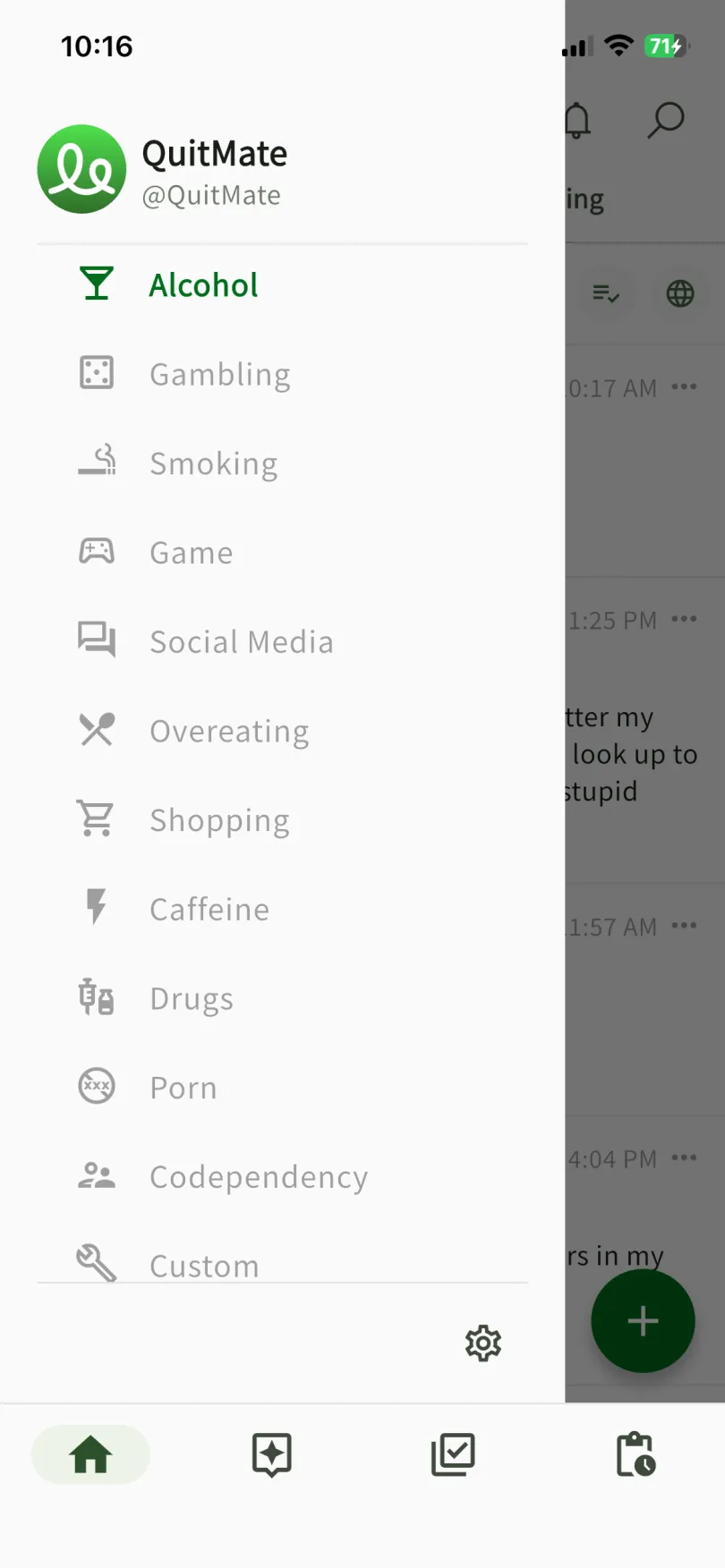
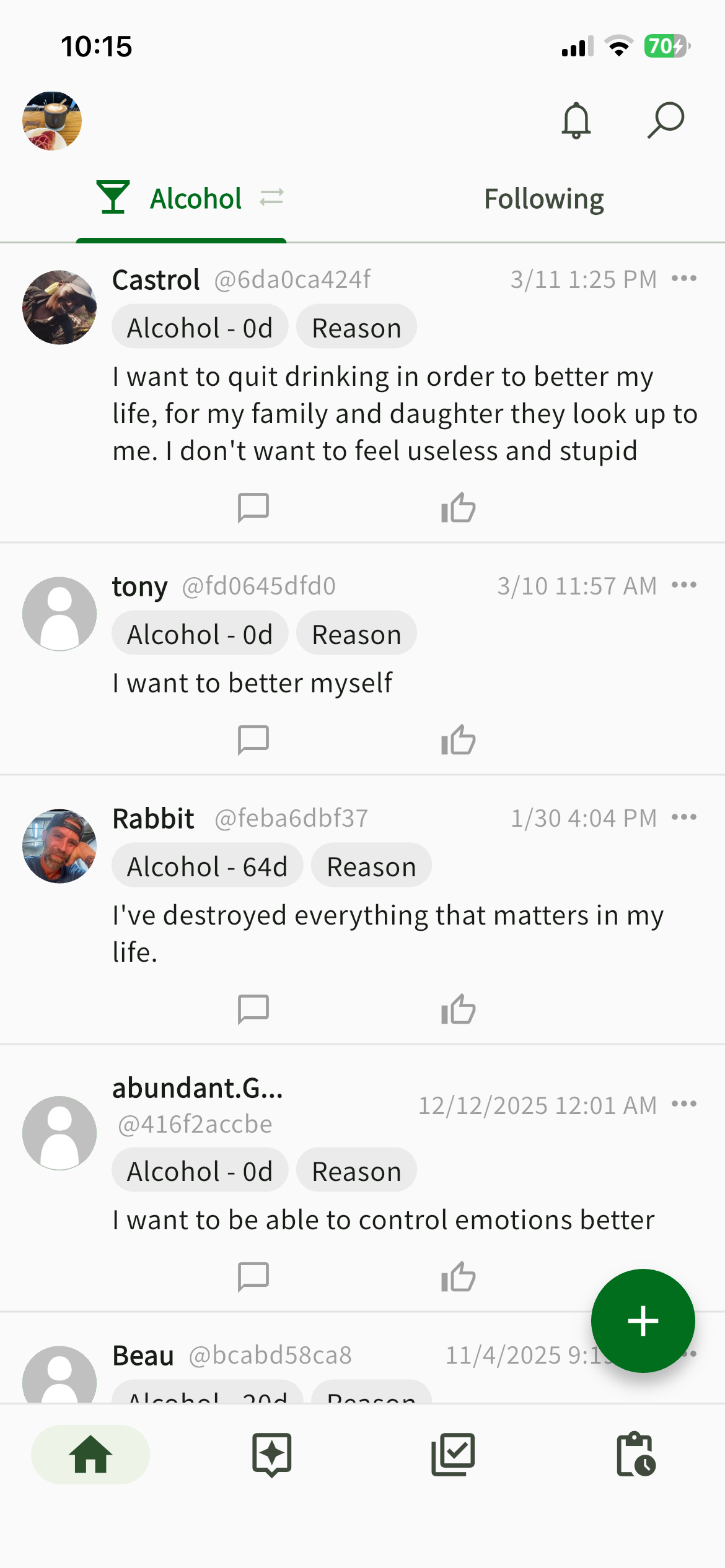

QuitMate
Together, you can quit
Connect anonymously with others who share your struggle. Whether it's alcohol, smoking, gambling, or other habits, you're not alone.