
The Escape Plan: Acting Automatically in a Crisis
9:30 a.m. Just dropped my son at daycare. Back home. Nobody else will be here until pickup.
Put away the dishes, started a load of laundry, sat down on the couch. Hours of empty time until I need to leave. This empty stretch is always where it goes wrong.
“Alone during the day is dangerous,” I know it. Knowing it doesn’t move my feet. Before I realized, I had my wallet in hand, standing at the door.
”Decided” stops working in certain moments
In calm moments, decisions feel solid. The you who said “not today” in the shower that morning. The you who said “I’m done with this life” at lunch. Those were real. You weren’t lying.
But after you drop off your kid, alone in the quiet house. The morning version of you isn’t there anymore. What’s there is a brain with weakened brakes and amplified “I want to.”
“I know” and “I can act on it” aren’t the same thing. Knowing doesn’t move your legs. We’ve covered this throughout the book: the physical state of the addicted brain.
Instead of decisions, you need a system you don’t have to think about.
If-then planning: “if X, then Y”
Psychology research has identified a simple method that dramatically raises how often people hit their goals. The name is technical (“implementation intention”), but the practice is simple.
Pre-decide “if X happens, I will do Y.”
That’s it. Decades of research across health behavior, diet, exercise, studying, chronic disease management, and addiction recovery all show it works.
Why:
- In a crisis, the brain is bad at thinking
- But it’s good at running automatic responses
- If “if X, then Y” is pre-linked, X triggers Y without a decision
- “Decision” becomes “automatic”
You’re pre-wiring a conditional response, so the crisis moment doesn’t need fresh judgment.
Gambling-addiction if-then examples
Concrete examples:
| If (X) | Then (Y) |
|---|---|
| I’m about to walk past the casino | Cross to the opposite side of the street |
| It’s the morning of payday | Auto-transfer the paycheck out of checking within minutes of the deposit landing |
| I’m alone at home in the evening | Send a text to a friend by 7 p.m. |
| A craving has lasted more than 10 minutes | Leave the house and walk for 10 minutes |
| Two of my HALT items are hitting | Go to bed early that night |
| Empty time opens up after drop-off | Leave the house and spend it at a coffee shop |
| I’m about to open a betting app | Put the phone in another room, open a book in the living room |
Two things to remember:
-
X should be a specific condition
- No: “if I feel risky” (too vague)
- Yes: “Sunday morning with no plans” (specific)
-
Y should be a concrete action your body can do
- No: “change my mindset” (not a behavior)
- Yes: “put $10 in my wallet and go to a coffee shop” (concrete)
Build your own
Pen and notebook. Go in order.
Step 1: List triggers from past relapses
Think back to past relapses and write down five situations that triggered them. Examples:
- The day after payday
- An evening when my partner was traveling
- A day I bombed a big work thing
- Empty afternoon after dropping my kid off
- A day with a lot of month-end bills
Step 2: Decide a Y (action) for each
For each trigger, pick one “here’s what I do.” Make it concrete. Make it something your body can do.
Examples:
- Day after payday → morning: drop ATM limit to $60 in the banking app
- Partner traveling → 6 p.m.: video call my mom
- Work failure → walk one stop past mine on the way home
- Empty afternoon → leave the house, work from a coffee shop or library
- Big-bills day → morning: go over the budget with my partner
Step 3: Write it down
Put it somewhere visible. Fridge, bathroom wall, wallet, phone lock screen. In the crisis, it’s not “remember” but “see.”
Step 4: Review weekly
After a week of using it, log what worked and what didn’t. Swap the Y on the ones that didn’t.
Conditions for if-then to work
- X has to be specific: “when I’m anxious” is weaker than “when Friday passes 8 p.m.”
- Y has to be something you can start right now: actions that require supplies or travel have higher friction
- If Y involves asking someone, tell them in advance: “I might reach out in certain moments” is enough
- Rehearse in your head: on calm days, run “if X, then Y” in your head a few times
- Doesn’t have to be perfect: start with one
Relationship to HALT and the safety plan
The three skills we’ve covered so far have different roles.
| Skill | Role |
|---|---|
| HALT (Chapter 11) | A sensor for checking your state |
| If-then plan (this chapter) | A reflex action when a trigger hits |
| Safety plan (Chapter 8) | Last line when a crisis escalates |
They’re not independent. They layer.
- Use HALT to check your state regularly
- If-then fires automatically when a trigger hits
- If it still escalates, activate the safety plan
There are moments if-then won’t hold
If-then isn’t bulletproof. On days with especially strong cravings, or when several triggers hit at once, you might not run the plan.
When that happens:
- Don’t blame yourself
- Record that “it didn’t hold”
- Revisit the plan in detail
- Update: “next time I’ll change Y to this”
If-then isn’t magic. But it’s a lot stronger than nothing. Standing in the crisis moment with a written plan is different from standing there without one.
References
- Gollwitzer, P.M. (1999). Implementation intentions: Strong effects of simple plans. American Psychologist, 54(7), 493-503.
- Gollwitzer, P.M., & Sheeran, P. (2006). Implementation intentions and goal achievement: A meta-analysis of effects and processes. Advances in Experimental Social Psychology, 38, 69-119.
- Webb, T.L., & Sheeran, P. (2006). Does changing behavioral intentions engender behavior change? A meta-analysis of the experimental evidence. Psychological Bulletin, 132(2), 249-268.
- Marlatt, G.A., & Donovan, D.M. (Eds.) (2005). Relapse Prevention: Maintenance Strategies in the Treatment of Addictive Behaviors (2nd ed.). Guilford Press.
- Adriaanse, M.A., Vinkers, C.D.W., De Ridder, D.T.D., Hox, J.J., & De Wit, J.B.F. (2011). Do implementation intentions help to eat a healthy diet? A systematic review and meta-analysis of the empirical evidence. Appetite, 56(1), 183-193.
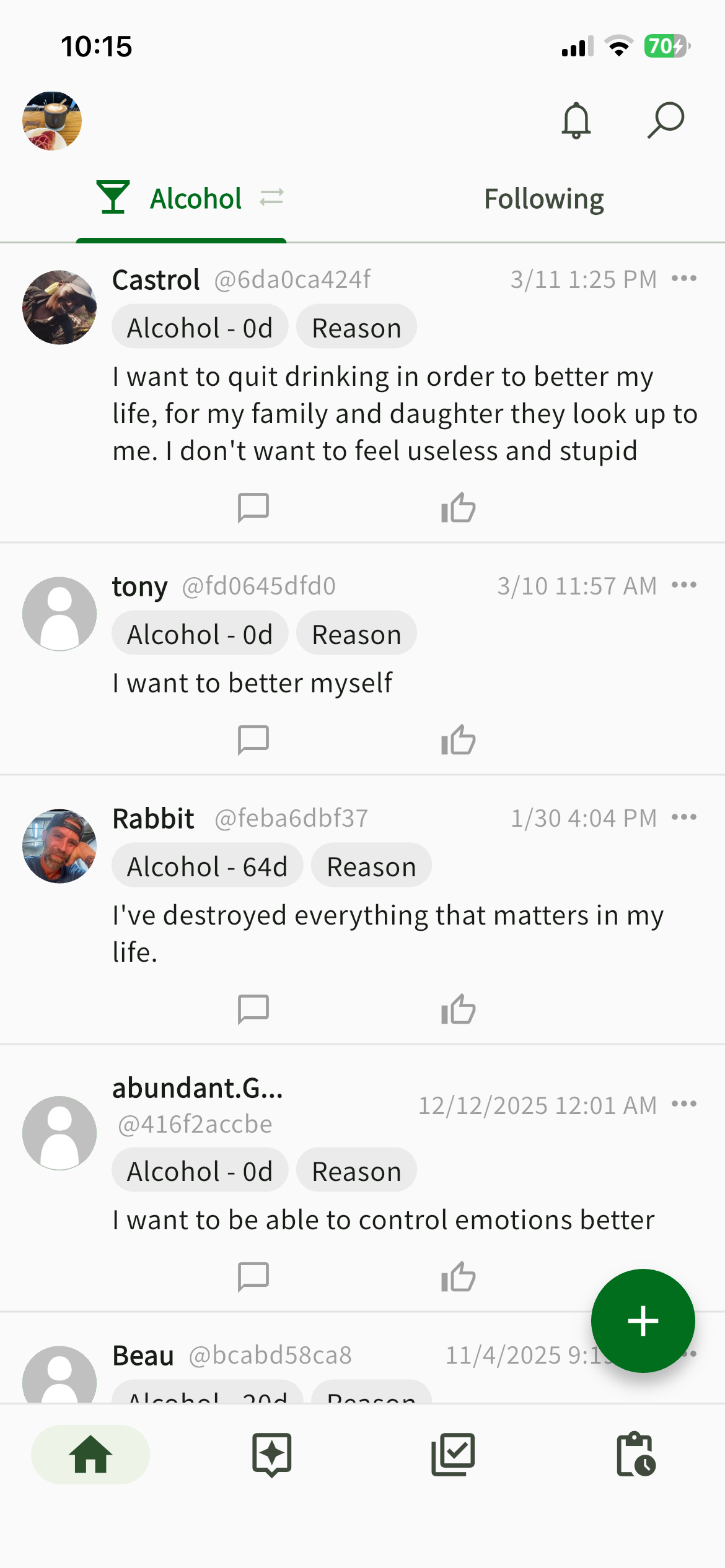

QuitMate
Together, you can quit
Connect anonymously with others who share your struggle. Whether it's alcohol, smoking, gambling, or other habits, you're not alone.