The Near-Miss Trap: How 'Almost Won' Tricks Your Brain
Late afternoon. Two hours on the slots. $300 gone, and I still couldn’t get up from the machine.
All day, “almost” kept happening. Two symbols lined up, the third didn’t. My head knew it was a loss. My body wouldn’t move. “The next one is coming” sat in me like a physical weight.
Driving home, I realized something. Every spin had been a loss, but I’d felt “so close” again and again. Somehow, that feeling kept me lifted. Losing had given me a strange kind of satisfaction.
What a near-miss is
A near-miss is, formally, a loss that “came close to a win.”
- Two slot symbols lining up, the third one off
- A four-leg parlay missing by one leg
- A game where you bet the over, and it missed by a point
- A horse losing by a head
These are all losses. But inside your brain, they don’t register as plain losses. They set off a reaction much closer to an actual win.
What’s happening in the brain
Brain imaging studies have shown that when you see a near-miss, dopamine releases at a level close to what happens during an actual win.
In other words, your brain isn’t processing the near-miss as a loss. It’s processing it as “I was about to get a reward.”
The moment of the almost-win fires the reward system. Even though the outcome was a loss, the system stays activated, leaving behind a strong “next one is coming” signal. And so you reach for one more.
A loss starts working like encouragement.
Machines and apps design near-misses on purpose
The almost-wins on slot machines are not accidental. They’re designed.
The companies that build them know that near-misses push people to keep playing. The overall win probability is fixed by rules, but how often near-miss patterns show up and how dramatic they look is controlled by the designers.
Research has shown that tuning the frequency of near-misses lets operators maximize both time-on-device and money spent. Most slot machines on a casino floor are built around this principle.
The same logic runs inside online casinos and sports betting apps. Near-miss animations, betting slips that show you just missed by a point, push notifications that say “you were X points from winning.” None of it is random. It’s engineered to make your brain say “the next one is coming."
"Almost” is a trick your brain plays
After a near-miss, thoughts like these appear:
- “The next one’s coming”
- “The streak is about to turn”
- “It’d be stupid to quit now”
- “Just one more try”
These are all tricks your brain is playing on you. In fact, nothing about the probability has changed. No matter how many near-misses have happened, the odds of hitting on the next spin are the same as the first one.
Feeling like “it’s about to hit” after a streak of misses comes from the fact that the human brain is bad at processing randomness. This is a classic cognitive distortion called the gambler’s fallacy, covered in detail in Chapter 12.
How to break out of the trap
There are a few practices that help.
First, when a near-miss happens, say “that’s a loss” out loud or in your head. Just that one word. It switches your brain over to recognizing a loss before “the next one’s coming” takes hold.
Second, count. At the end of a session, tally how many near-misses you had, and how many of those turned into wins. In almost every case, the vast majority were losses. Seeing the actual number thins out the feeling of “the next one’s coming.”
Third, leave before a near-miss happens. This is the most reliable method. Once you’re on the floor or in the app, near-misses are guaranteed. Don’t try to outthink the trap. Stay out of it.
Fourth, remember the near-miss is designed. Knowing this by itself gives you a little resistance. The more often you can catch yourself thinking “this machine was built to make me feel this way,” the more chances you have to change what you do next.
References
- Clark, L., Lawrence, A.J., Astley-Jones, F., & Gray, N.A. (2009). Gambling near-misses enhance motivation to gamble and recruit win-related brain circuitry. Neuron, 61(3), 481-490.
- Clark, L. (2010). Decision-making during gambling: an integration of cognitive and psychobiological approaches. Philosophical Transactions of the Royal Society B, 365(1538), 319-330.
- Côté, D., Caron, A., Aubert, J., Desrochers, V., & Ladouceur, R. (2003). Near wins prolong gambling on a video lottery terminal. Journal of Gambling Studies, 19(4), 433-438.
- Parke, J., & Griffiths, M.D. (2007). The role of structural characteristics in gambling. In G. Smith, D. Hodgins, & R. Williams (Eds.), Research and Measurement Issues in Gambling Studies (pp. 211-243). Academic Press.
- Dixon, M.R., MacLin, O.H., & Daugherty, D. (2006). An evaluation of response allocations to concurrently available slot machine simulations. Behavior Research Methods, 38(2), 232-236.
- Habib, R., & Dixon, M.R. (2010). Neurobehavioral evidence for the “Near-Miss” effect in pathological gamblers. Journal of the Experimental Analysis of Behavior, 93(3), 313-328.
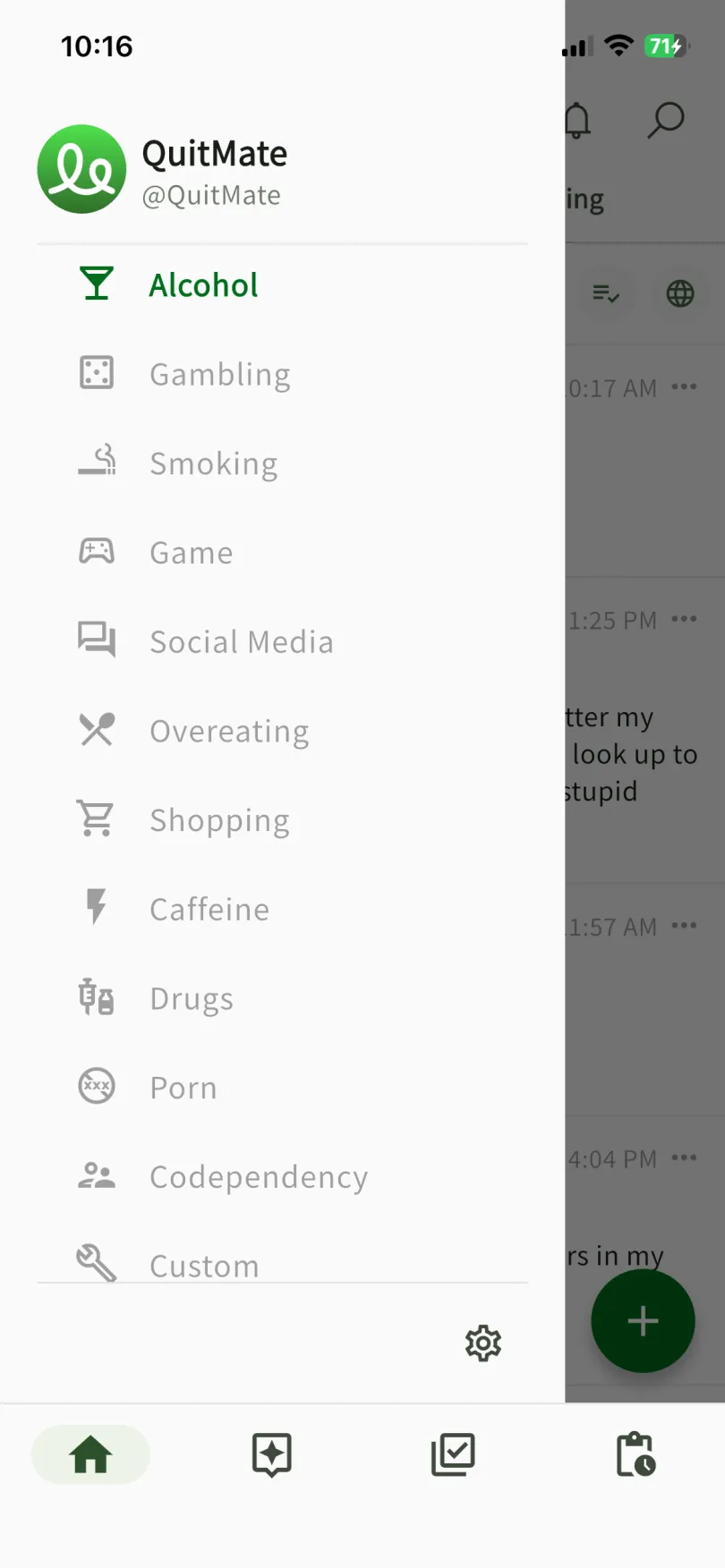
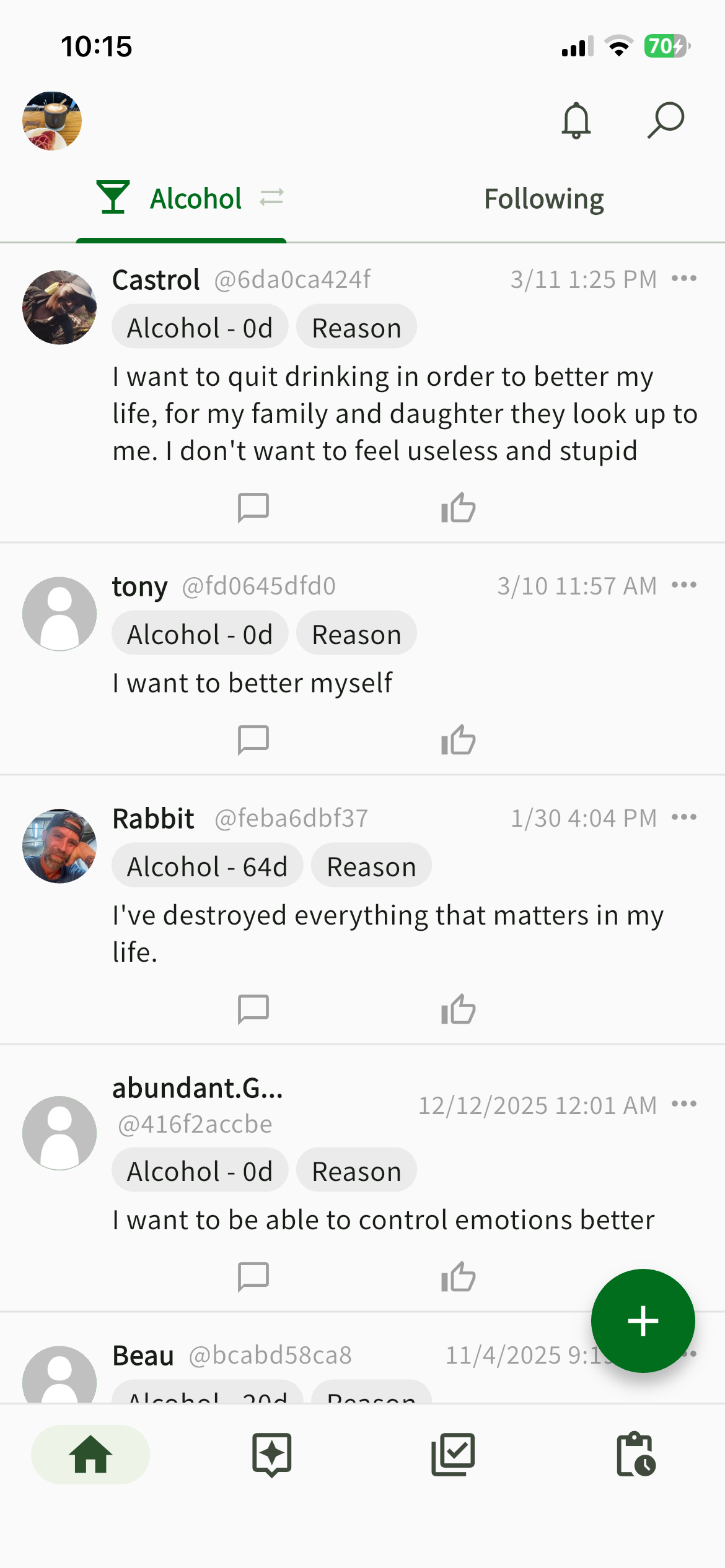

QuitMate
Together, you can quit
Connect anonymously with others who share your struggle. Whether it's alcohol, smoking, gambling, or other habits, you're not alone.