
NoFap Day 30: Reviewing a Month Without Porn
A month is enough to look at the habits you changed. Review sleep, time, urges, and remaining difficulties without treating day 30 as a medical milestone.
Insights, stories, and updates to support your recovery journey
A year of records tracing the non-linear process of recovery, through observed data.
Read the report →
A month is enough to look at the habits you changed. Review sleep, time, urges, and remaining difficulties without treating day 30 as a medical milestone.
No libido, no morning erections, no motivation, feeling nothing at all. These experiences are often called the NoFap flatline. We look at what the term means, why there is no fixed recovery timeline, and when symptoms need medical attention.
Erection difficulties with a partner can have several causes. We examine research on pornography and ED, the limits of recovery stories, and what to discuss with a clinician.
Day 7 testosterone spikes, day 14 superpowers, day 30 transformation. The timelines online read like a schedule nobody actually follows. Here's what people really report, week by week, including the walls and the flatline that the hype charts leave out.
Accounts near three months describe debt payments, different priorities, and urges that remain. Use them to plan the months ahead without assuming a guaranteed recovery milestone.
A month can bring a different phone bill or spending pattern. Use those details to review payments, gambling access, and the support you need before the next payday.
A quieter bank account can coexist with sudden urges. Individual records show why a cancelled plan or payday deserves preparation, even after two weeks without betting.
Wanting an old life back can sit alongside fear of repeating a harmful pattern. One person's change of plan shows how recovery can involve new choices and support.
A flat or empty day can be difficult in recovery. Personal records offer ways to notice daily life, while persistent loss of interest deserves care rather than a dopamine deadline.
The answer depends on what you want to change. Look at loss of control and disruption to daily life, and separate those concerns from claims about testosterone or semen retention.
The often-cited day-seven figure came from a study of 28 men that was retracted in 2021. Here is what the percentage meant and why it cannot establish lasting benefits.
Some people improve without formal treatment, but that is not a reason to wait for a crisis. Understand natural recovery and find a first step toward gambling support.
A community can offer a place to write between appointments. Learn how that differs from clinical care, what digital-support research covers, and how to plan for times when no one replies.
Recovery apps can offer records and connection, but more engagement is not automatically progress. A practical way to decide what you want from an app and when to close it.
Examples of open questions, listening, and boundaries when a family member has an alcohol or gambling problem, with the limits of what a conversation can do.
Why a discussion about gambling losses can turn defensive, and ways to raise concerns, check the figures, and protect your own boundaries.
CRAFT helps family members consider communication, daily situations, treatment invitations, and their own wellbeing. Learn what a treatment-entry result means and what it does not guarantee.
“Stop enabling” does not tell you what to do about a debt, a missed shift, or safety. Work through specific choices while protecting your own needs and access to support.
An almost-win is still a loss, but it can increase the urge to continue. What a slot-machine study found, and how to respond when “so close” pulls you toward another bet.
In a selected group of 599 users, early comments written on others’ posts were associated with longer maximum streaks. The figures, selection criteria, and limits of the comparison.
Find articles on early sleep difficulties, daily routines, one-month checkups, and longer-term changes. Personal records and research offer context without a guaranteed recovery schedule.
Longer-term records describe spending decisions, relationships, and cravings that can remain. Explore those changes without treating three months or one year as a guaranteed turning point.
Selected posts trace how Nene described setbacks, alcohol, rest, and everyday life. Her words offer a personal account of change, rather than a treatment formula or proof of an app’s effect.
Sleep, mood, appearance, and health measurements do not improve on one schedule. Learn what to observe, which symptoms need help, and how to compare your own changes.
As drinking routines change, empty evenings and social invitations may need a new plan. We look at personal records and what a one-month abstinence study can actually show.
Appetite, sleep, and daily routines may change at different speeds. Individual records show why two weeks is a useful time to review your experience without expecting every symptom to resolve.
The first week can include poor sleep as well as welcome changes. Read individual QuitMate accounts, recognize withdrawal concerns, and plan for the hours when you usually drink.
We examine whether 'my gray hair decreased after quitting drinking' stories hold any truth, looking at research on stress and hair pigmentation. Real QuitMate user reports of less hair loss and restored hair volume, plus skin changes, are considered separately from gray hair.
Edward Khantzian proposed that substance use can serve a coping function. Understanding that role can help with treatment, without making pain the only cause of addiction.
An ABC record separates the situation, the behavior, and its consequences. Use a concrete example to identify what needs repair and what you could prepare differently next time.
A useful reflection ends with a response you can try in a specific situation. Learn how if–then plans turn a recent experience into something practical to review.
Chasing losses, easy access on payday, and gambling to escape stress can keep the cycle going. Recognize the pattern and choose a practical point to interrupt it.
Shared experience can be useful during recovery. Learn the difference between peer groups and treatment, what research supports, and what to ask before joining a group.
Repeatedly agreeing to more than you can manage can crowd out rest and recovery. Look at what you can offer, how to set a limit, and when support for yourself would help.
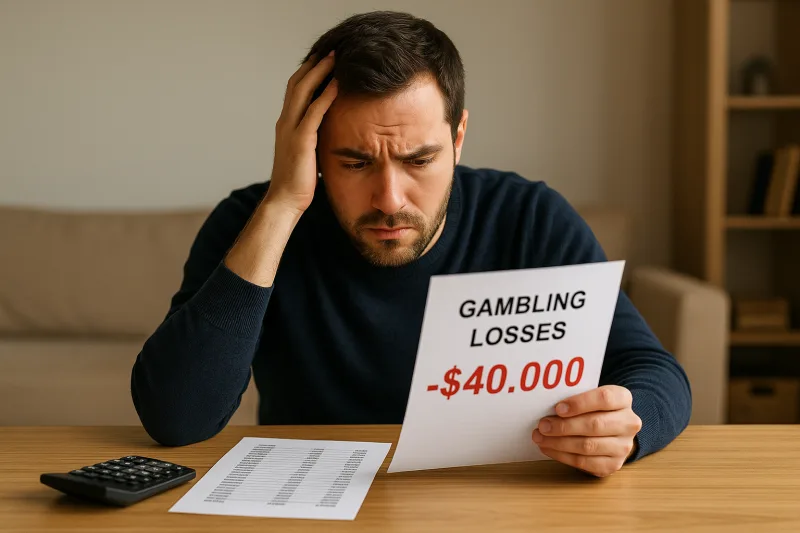
A memorable payout is not the same as a profit. Use a complete record of stakes and returns to check your gambling balance, then look at the time and money still at risk.
Paper betting uses no real money, but the routine may still make stopping harder. How to assess what happens afterward, and what cue-response research can actually tell us.
A practical plan for match days: reduce betting cues, restrict access, protect essential money, and decide what to do when watching sport brings back the urge to bet.
Addiction develops through interacting biological and environmental factors. How reward learning, relief from distress, and access can make stopping difficult, with practical implications for getting help.
Protect essential money, restrict access to betting, find support, and prepare for urges. Five practical starting points you can adapt to your situation.
The Rat Park studies asked whether housing affects morphine use in rats. Here is what the experiments tested, what later work questioned, and why environment matters in recovery.
No posts in this category yet