QuitMate QuitMate

The Suffering of Gambling Addiction Stays Hidden

Gambling 日本語で読む

A man in his 40s. $30,000 in gambling debt. Can’t tell his family. Can’t quit his job either.

He’s never been to a treatment center or a 12-step meeting. “It’s my problem. I have to handle it on my own,” he keeps thinking.

He’s not an outlier. Most adults in the U.S. with severe gambling problems live the same way. Not connected to treatment, not connected to self-help, and not telling anyone.

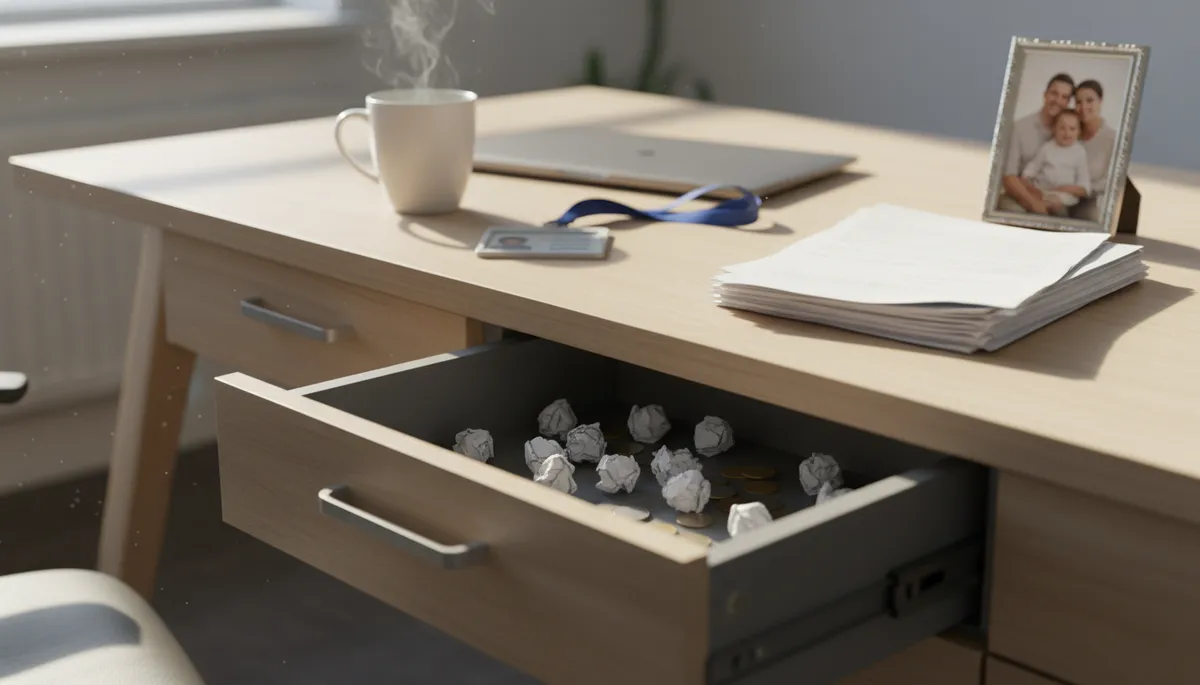
A tidy office desk with an open drawer revealing crumpled paper and coins inside

Fewer than 1 in 10 ever seek treatment

The National Council on Problem Gambling estimates around 2.5 million U.S. adults have a severe gambling disorder. Lifetime studies suggest only about 10% will ever seek formal treatment. In any given year, far fewer.

That leaves something close to nine in ten people with severe gambling problems somewhere outside of professional care. Most of them, presumably, are not telling anyone.

Alcohol use disorder shows a similar shape. Roughly 29 million U.S. adults meet criteria for alcohol use disorder (SAMHSA NSDUH 2022), and only a small fraction receive specialty treatment in a given year.

Addiction is a recognized clinical condition. But unlike most clinical conditions, the people who have it almost never go to a doctor for it. Several reasons stack up. Not many specialty clinics. Strong stigma. The person not seeing it as a problem yet. And one more big one: addiction is something that can be hidden. The pain doesn’t show on the body. It doesn’t show on lab results. As long as the person and their family stay quiet, nothing on the outside has to give it away. The progression happens entirely on the inside.

Outcomes split inside that 90%

People who don’t seek treatment aren’t all heading toward catastrophe.

It’s not unusual for people to recover from addiction without formal treatment. U.S. national surveys report that about 36% of adults with lifetime pathological gambling recovered on their own (Slutske, 2006). For alcohol use disorder, similar or higher proportions resolve their problems without specialty care. This pattern is sometimes called natural recovery. The idea that addiction can never be resolved without treatment doesn’t match the data.

The rest of the picture is harder. People who don’t recover end up in a different place: family relationships destroyed, repeated relapses, serious health consequences, suicide. With gambling specifically, debt that can’t be repaid, divorce, job loss, suicidal thinking.

Recovered and deteriorating live alongside each other inside the same untreated population. The hard part is that you can’t tell which group someone is going to land in until after the fact.

After deciding to “handle it yourself,” what can you actually do?

Whether you’re going to be among those who recover without treatment, or among those whose situation worsens — that isn’t knowable in advance.

Because it isn’t knowable, what happens next depends on whether you do nothing or whether you do something. Looking at the data, people who recovered “without treatment” weren’t doing nothing. They were doing things, just outside the medical system.

Here’s the kind of thing those people tend to do.

One is cutting off money or physical access. Don’t go to the ATM, separate your paycheck into a different account, sign up for a state self-exclusion program. None of this requires telling anyone, family or doctor, and you can do it on your own.

Another is putting words on what you couldn’t say to anyone before. 12-step groups, or anonymous online communities like QuitMate. A space where you don’t have to use your real name, and you write the first sentence. Once writing becomes a habit, you start being able to see your own state from the outside more often.

If your relationship with your family is workable, you can ask them to look into CRAFT, a program for family members. Even if you don’t go to treatment yourself, the dynamic at home can shift just from one family member learning a different approach.

These aren’t a substitute for medical care. But they’re things you can start without going to a hospital.

When the medical route becomes the right call

That said, these moves don’t always keep up with what’s happening.

Frequent suicidal thoughts. Long-term insomnia. Worsening depression or anxiety. Debt that’s grown past what one person can rebuild from. In any of those, professional care or legal help becomes necessary.

Being among the 90% who haven’t sought treatment doesn’t mean you’ll never need to. If what you’re doing on your own isn’t keeping up with what you’re going through, that’s the point at which the right move is to switch over to a clinician or an attorney.

Closing

The fact that nine in ten people with severe gambling addiction don’t get formal treatment also points to something else: recovery doesn’t only happen inside a hospital. People do recover without it.

What it doesn’t mean is that doing nothing is fine. Cut off the money. Put a few words down somewhere anonymous. Ask someone in the family to read about it. Even one of those, started, makes a measurable difference.

Hidden and standing still, or hidden and taking one step. That’s where outcomes split.


References
  • National Council on Problem Gambling. Help and Treatment for Problem Gambling. 2024.
  • Slutske WS. “Natural recovery and treatment-seeking in pathological gambling: results of two U.S. national surveys.” American Journal of Psychiatry. 2006;163(2):297-302.
  • Sobell LC, Cunningham JA, Sobell MB. “Recovery from alcohol problems with and without treatment: prevalence in two population surveys.” American Journal of Public Health. 1996;86(7):966-972.
  • Substance Abuse and Mental Health Services Administration (SAMHSA). Key Substance Use and Mental Health Indicators in the United States: Results from the 2022 National Survey on Drug Use and Health. HHS Publication, 2023.
  • Vaillant GE. “A 60-year follow-up of alcoholic men.” Addiction. 2003;98(8):1043-1051.
X LINE

You may also like

Why Telling Gamblers "You'll Lose" Backfires
Gambling

Why Telling Gamblers "You'll Lose" Backfires

Try seriously explaining how gambling math works to someone in it, and the response is reliably defensiveness or anger. "What does an outsider know?" "There are suckers in the room — that's why I make money." This isn't a personality or intelligence problem. It's a phenomenon explained by psychological reactance, cognitive dissonance, and motivational interviewing research.

Why the Almost-Win Feels Worse Than Losing. The Science of the Near-Miss
Gambling

Why the Almost-Win Feels Worse Than Losing. The Science of the Near-Miss

Somehow an 'almost win' lingers in the body more than an actual win. There's a neuroscience reason for that. Even on a miss, the brain responds almost like it just won — and slot floors are engineered to squeeze every drop out of that response.

The Real Reasons You Can't Stop Gambling, Explained Through Brain Science and Psychology
Gambling

The Real Reasons You Can't Stop Gambling, Explained Through Brain Science and Psychology

The question 'why can't I stop when I know I'll lose?' misses the point. Gambling addiction has less to do with money or willpower and more to do with the brain's reward system, dopamine, and the role of emotional pain. This article covers the neuroscience and practical steps toward recovery.

Is 'Winning Overall' at Gambling Just an Illusion? The Dangerous Tricks Your Brain Plays
Gambling

Is 'Winning Overall' at Gambling Just an Illusion? The Dangerous Tricks Your Brain Plays

Most gamblers who believe they're 'up overall' are wrong, and the reasons are structural. This article explains the house edge, confirmation bias, the gambler's fallacy, and the sunk cost fallacy, and why these cognitive biases make accurate self-assessment nearly impossible.

QuitMate app category selection
QuitMate app community feed
QuitMate app recovery program
QuitMate

QuitMate

Together, you can quit

Connect anonymously with others who share your struggle. Whether it's alcohol, smoking, gambling, or other habits, you're not alone.