
Nene’s Recovery Notes: Bingeing, Purging, and Making Room to Rest

Nene wrote about living with bingeing and purging for around twenty years. Her posts include attempts to stop, resets, and days when an ordinary meal or getting to work felt worth recording.
This article follows selected posts from November 2024 to May 2025. They are her account of what she noticed. They cannot tell us everything about her health or which changes caused an improvement.
November: another attempt
After several days without bingeing, she wrote on November 26:
Last night I messed up. Next time I’m aiming for 7 days!
The next attempt was already in the same sentence as the setback. That does not make the setback easy. It shows how she chose to write about the following day.
January: noticing an ordinary morning
On January 9, Nene listed circumstances she associated with difficulty: physical changes around her period, busy periods, alcohol, and social meals close together. This was her own observation of a pattern, not a list of triggers that applies to everyone.
On January 24, the detail she wanted to record was an ordinary workday:
Eating a normal meal, sleeping soundly, waking up properly in the morning, and showing up to work. It makes me so happy. So why do I still mess up sometimes?
The question at the end remains. The post contains happiness and frustration at once; there is no need to turn it into a neatly resolved turning point.
February: changing her relationship with alcohol and effort
On February 11 she described a change she associated with less bingeing and purging:
Since I made the rule to absolutely quit alcohol too, to drop my “party drinker” persona and stop drinking even at work dinners, I haven’t binged or purged. There’s no doubt that the psychological effects of alcohol were making my bingeing worse.
That last sentence is Nene’s interpretation. Her record does not establish alcohol as the cause of every binge-purge episode, or stopping alcohol as a sufficient treatment for an eating disorder. If alcohol withdrawal is a concern, stopping also needs medical guidance.
Later that month, on February 23, she wrote:
There were periods when I worked myself to the bone or exercised like crazy, but pushing hard just isn’t for me! I love my bed! And that’s perfectly fine!
Rest appears here as something she was allowing herself. It is different from saying that all effort or treatment is unnecessary.
March: having somewhere to say it
On March 3, she described what writing to other people felt like:
Having lived with an eating disorder for so many years is something I can’t just ignore. But not being able to tell anyone about it all this time made me feel like I was always lying. I never imagined I’d feel this comforted by knowing someone on the other side of the screen is reading my posts.
The detail that matters is hers: someone on the other side of a screen might be reading. We do not need to infer the rest of her relationships from that sentence.
May: studying and a slower pace
On May 2, while studying in a food court, she recorded an exchange:
The couple sitting next to me said, “You study so hard. Good things are coming your way.” I almost cried.
Ten days later, she wrote about doing less:
I used to have a habit of cramming everything in, but I’m starting to believe that going at a relaxed pace won’t make me fall apart. When things work out, they work out whether you’re pushing hard or not. And when they don’t, they just don’t.
These posts give the record texture beyond a counter. Studying, resting, sleeping, and going to work appear alongside the effort to stop bingeing and purging. These were things she wanted space for.
Reading a personal recovery account
Nene’s story is not a schedule another person must match. A streak in an app does not establish clinical recovery, and selected posts cannot show whether the app caused a change.
If you are bingeing or purging, you can seek help without waiting for your experience to resemble this one. NHS guidance on bulimia explains why assessment and treatment matter, including when only some signs are present. A clinician or eating-disorder service can help you consider the physical and emotional parts together.
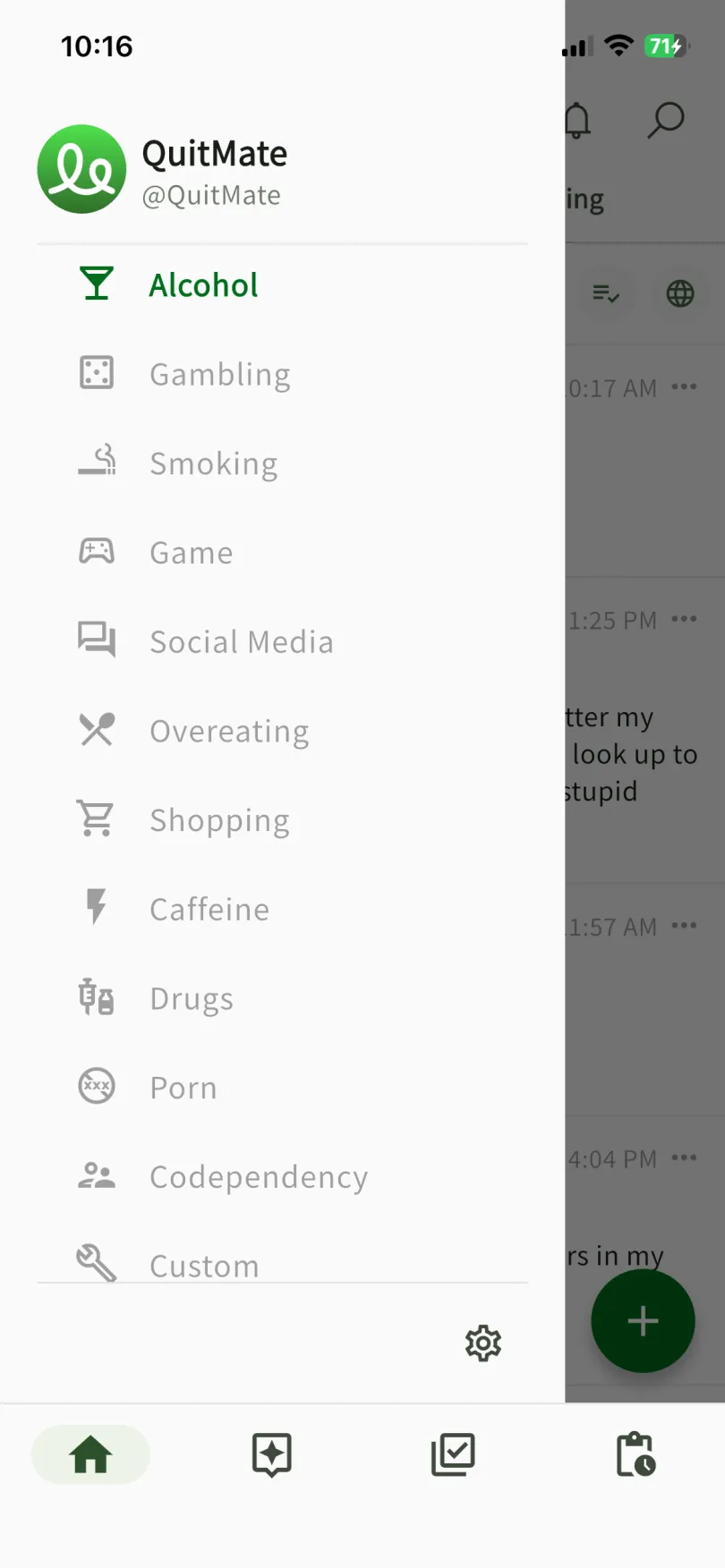
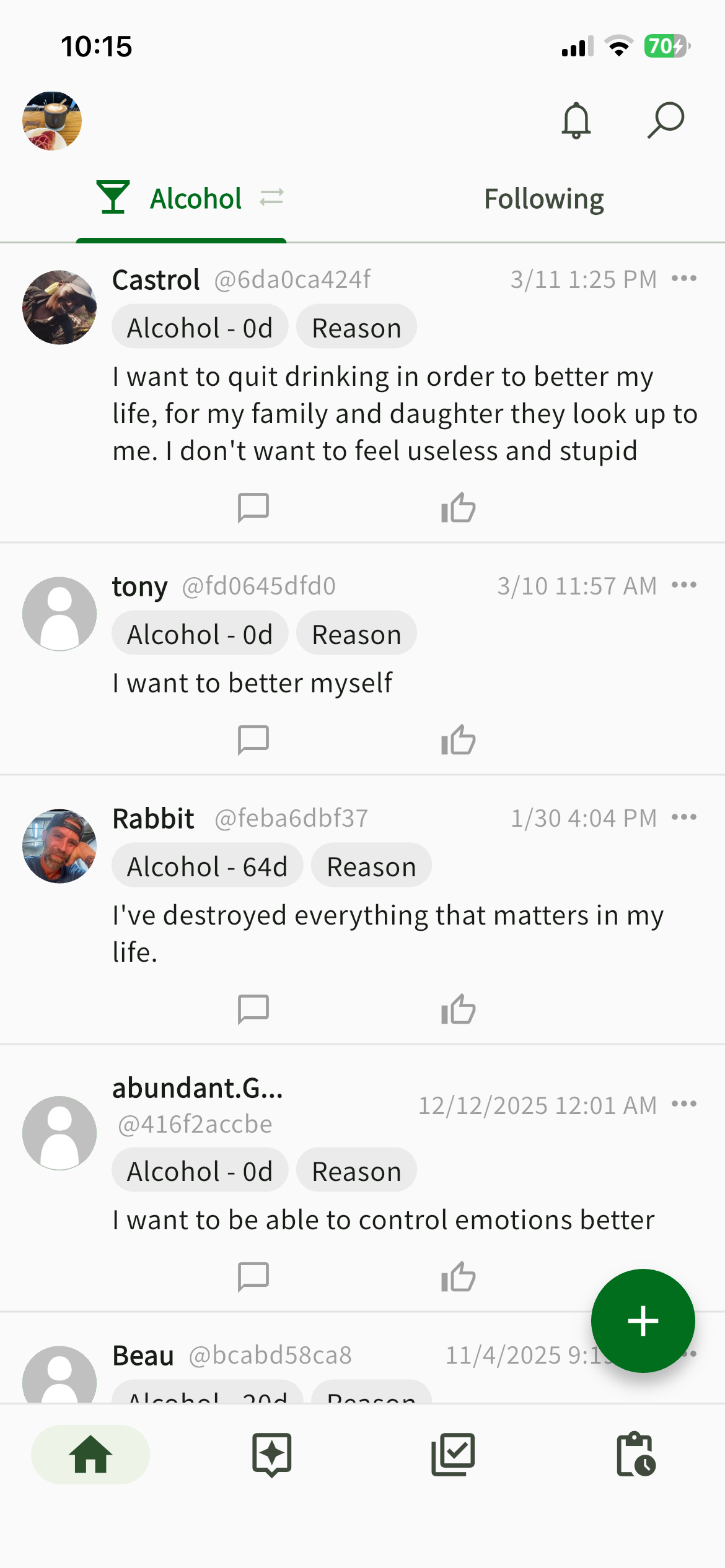
For a place to record what you want to discuss, QuitMate is one option. A short note about today can be useful without becoming a verdict on your whole recovery.
You may also like
NoFap Day 30: Reviewing a Month Without Porn
A month is enough to look at the habits you changed. Review sleep, time, urges, and remaining difficulties without treating day 30 as a medical milestone.
The NoFap Flatline: How Long It Lasts and When to Get Help
No libido, no morning erections, no motivation, feeling nothing at all. These experiences are often called the NoFap flatline. We look at what the term means, why there is no fixed recovery timeline, and when symptoms need medical attention.

The NoFap Timeline, Day by Day: What Actually Changes, and When
Day 7 testosterone spikes, day 14 superpowers, day 30 transformation. The timelines online read like a schedule nobody actually follows. Here's what people really report, week by week, including the walls and the flatline that the hype charts leave out.

Porn and Erectile Dysfunction: What the Evidence Can Tell You
Erection difficulties with a partner can have several causes. We examine research on pornography and ED, the limits of recovery stories, and what to discuss with a clinician.

QuitMate
Together, you can quit
Connect anonymously with others who share your struggle. Whether it's alcohol, smoking, gambling, or other habits, you're not alone.