Can the Brain Wiring That Drives Addiction Also Drive Recovery?
You unlock your phone. Nothing. Lock it. A moment later, you unlock it again. Still nothing.
Most people do this without thinking. You meant to put the phone down, but your fingers reached for it before you noticed.
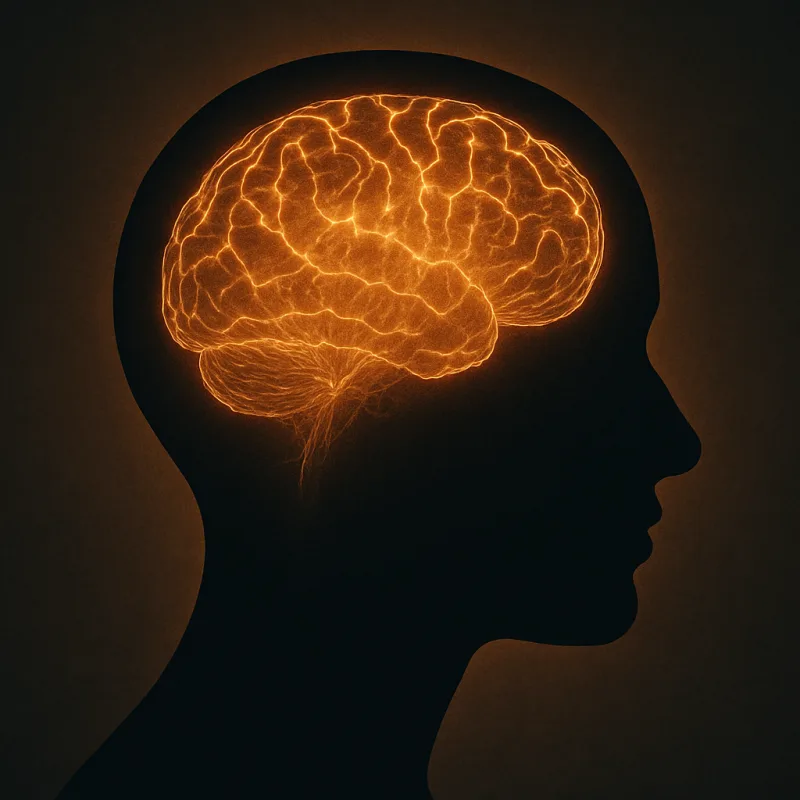
At the brain level, that loop looks almost identical to what’s happening for someone sitting in front of a slot machine.

Slot machines and social media run on the same circuitry
The reward pattern that most powerfully sustains a behavior is well established: it’s when the timing and size of the reward are both random. Psychologists call this variable ratio reinforcement.
This is, almost literally, the design of a slot machine. Every spin, your brain predicts “maybe this one.” Because the actual outcome is random, prediction and reality keep mismatching, and dopamine gets released each time. The release peaks not when you actually win, but at the moment you think you might be about to (more on this here).
Smartphone social feeds run on essentially the same design. Will this post get likes? How many? When will the next notification come? All random, all unpredictable. So you keep checking the app. Short-form video feeds are the same. You can’t tell whether the next clip is going to be interesting until you watch it. So the scroll never stops.
Pull-to-refresh on news apps, loot boxes in mobile games, live-stream chat. All of them ride the same dopamine circuit that slot machines exploit.
The research backs this up. People who use social media more heavily show a dampened dopamine response in the brain’s reward system, in a pattern that resembles what’s seen in long-term substance dependence.
If the wiring is the same, can it run in reverse?
It’s becoming clear that addiction runs on a specific neural circuit. Which raises a natural question: could that same circuit be redirected toward recovery?
This sounds strange, but people have been doing something similar for a long time. Chewing nicotine gum to quit smoking. Drinking coffee or non-alcoholic beer in place of alcohol. Taking up running. Each of these tries to redirect the energy and habit-loop that was going toward addiction onto something else.
What’s new is that technology can make that redirection more precise.
It’s not quitting. It’s substitution.
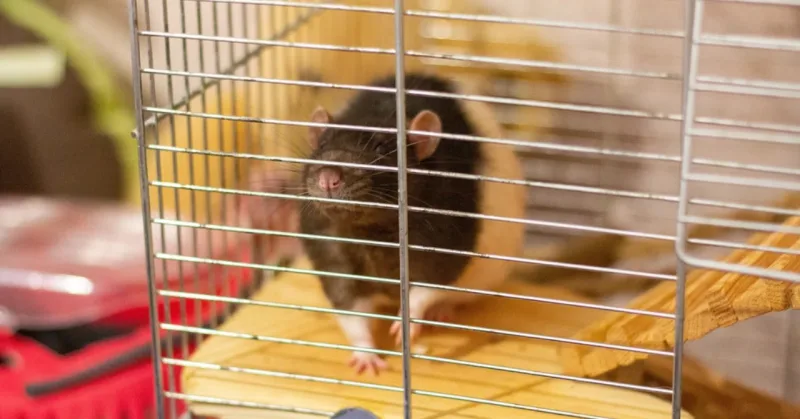
The Rat Park experiment is one of the more famous starting points in addiction research. The 1970s study found that rats kept in solitary cages drank drug-laced water continuously, while rats living in a wide enclosure with companions barely touched it.
Interpretations of the experiment still vary. But one thing many researchers have taken from it is this: simply removing the substance leaves a void where the brain was getting something it needed (stimulation, connection, a sense of progress), and something else slips into that void.
The self-medication framework points in the same direction. Addictive behavior often starts as an awkward way of coping with emotional pain. Alcohol or gambling functions as a temporary “medication” against loneliness, anxiety, or depression. Just removing the medication doesn’t make the pain disappear. Something has to take its place.
Recovery from addiction looks less like quitting and more like swapping one thing for another.
What QuitMate is doing
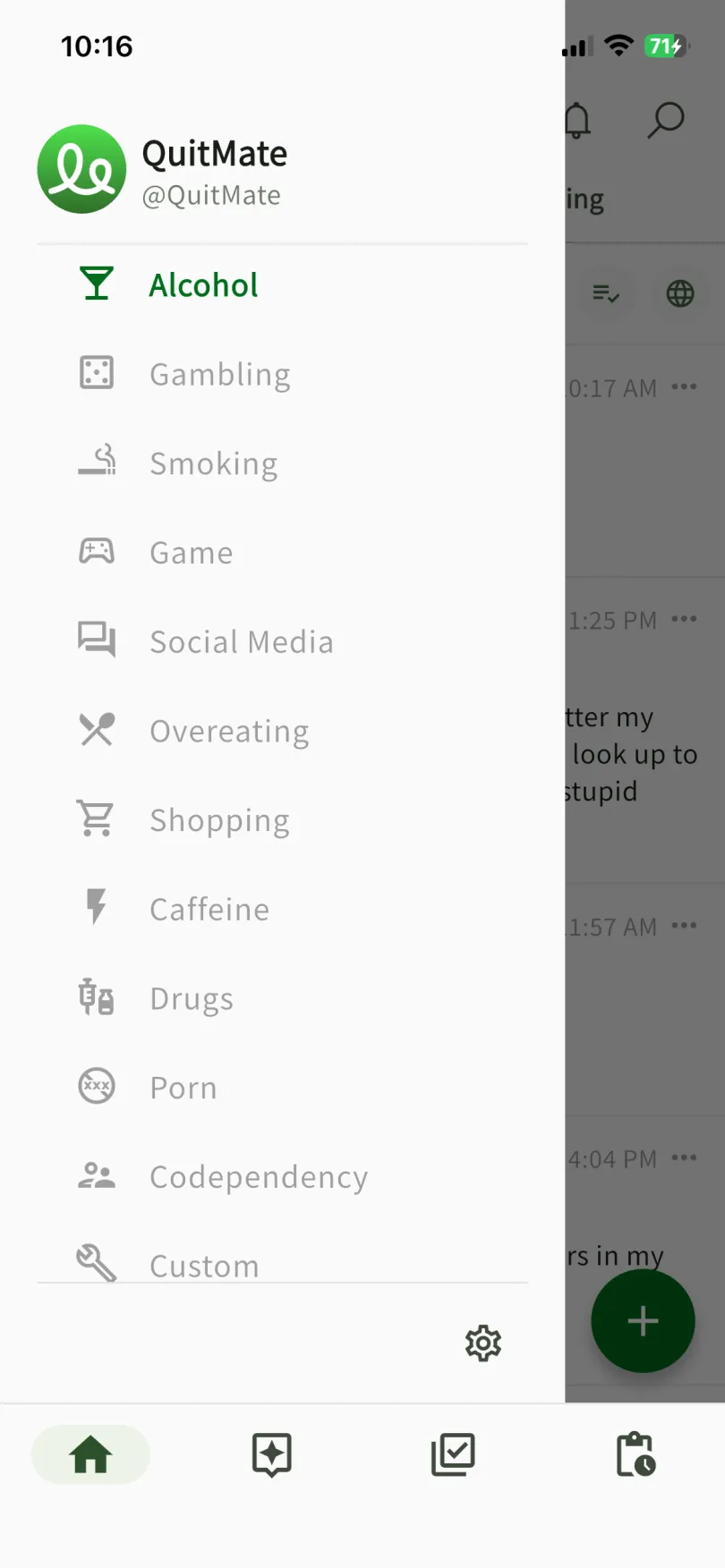
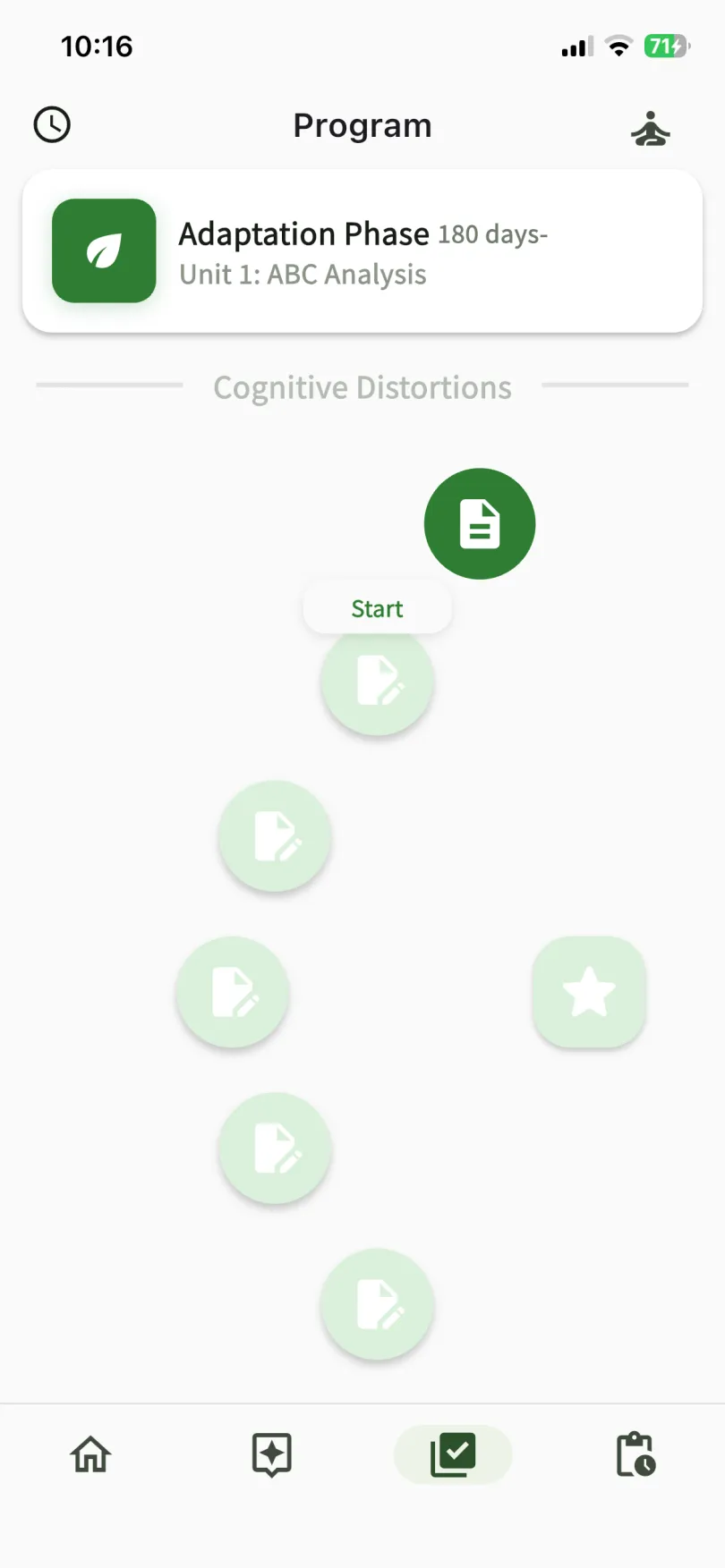
QuitMate, a social network app for addiction recovery, runs on smartphones. Smartphones are also, as we’ve seen, on the addiction-creating side. This looks like a contradiction, but on closer inspection it isn’t.
QuitMate uses the same dopamine circuit that slot machines and ordinary social feeds use. The difference is which behavior the circuit ends up reinforcing.
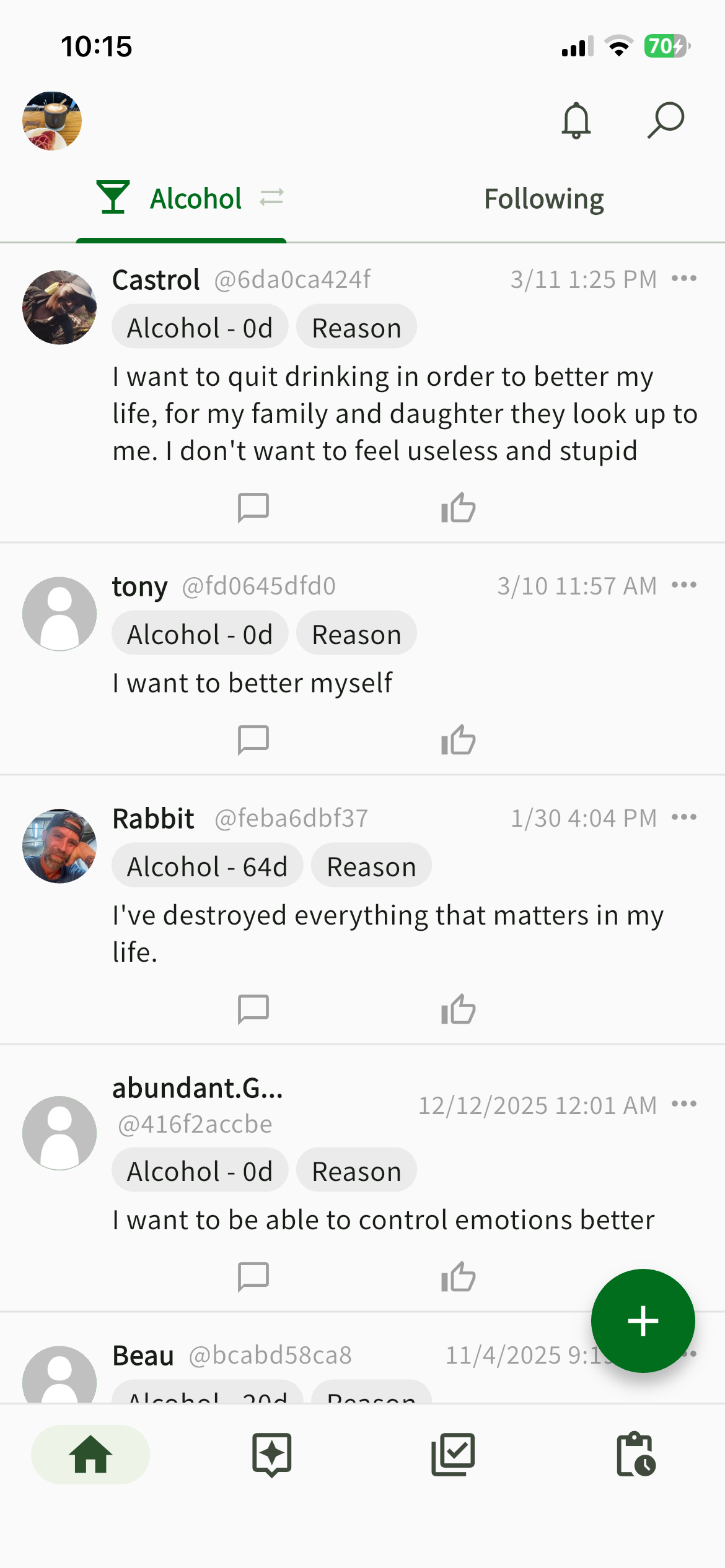
The day-counter for sober days creates a desire to see the number grow. One day clean adds one. If you slip, you reset and start again from one. Different from “when will the win hit,” but using the same reward system to give the brain a sense of forward motion.
Comments on others’ posts run on the variable-ratio side. How many comments will your post get? Who will respond? What will they say? Unpredictable. That’s structurally identical to likes on regular social media. The difference is what’s flowing through the channel: stories of people still hanging on, of people who slipped and are getting back up.
Anonymity lowers the barrier to disclosure. On real-name social media, you can’t write about your addiction. The things you can’t tell your family or your friends, you can write inside an anonymous app. The more often you write, the more often you put your state into words. The practice of seeing yourself from the outside gets built into your daily routine.
These are all ways of running the addiction-strengthening mechanism in reverse.
What 599 users and the 2025 meta-analysis point to
QuitMate’s app data shows what’s actually happening.
Among 599 active users, divided into four groups by how many comments they wrote on other people’s posts, the median streak length differed sharply (details here).
| Comments on others’ posts | Median streak (days) |
|---|---|
| 0 | 29 |
| 1-2 | 36 |
| 3-9 | 77 |
| 10+ | 114 |
People who write more comments stick with recovery longer. The gap between zero comments and ten-or-more is about 4x.
This alone doesn’t prove causation. People who write may be more motivated to begin with. But the interpretation that the writing itself supports recovery is consistent with AA’s twelfth step (“carry the message to other alcoholics”) sitting at the end of the program for nearly a century, and with multiple studies linking altruistic behavior to sustained sobriety.
Other research points in the same direction. A 2025 systematic review and meta-analysis published in Addiction combined 34 randomized clinical trials (6,461 participants) and found that adding digital support to in-person treatment reduces relapse risk by about 39%. Digital interventions alone show some effect, but combining digital with in-person is the most robust use right now.
Get the design wrong, and it inverts
Two cautions are worth flagging.
First, technology alone has limited treatment effect. The FDA-approved reSET-O, a prescription digital therapeutic for opioid use disorder, raised treatment retention to 82.4%, but didn’t reduce substance use itself any more than standard treatment did. Apps tend to work on the side of keeping people in treatment. They tend to be weak at directly reducing symptoms.
Second, recovery apps can themselves replicate the very problem they’re trying to address. Too many notifications, aggressive monetization, ranking features that pressure users to compete — these can create their own version of dependence rather than support recovery. As the research has shown, excessive social media use changes the brain on its own. Just because something is “for recovery” doesn’t mean increasing screen time is a good idea.
The idea of using the same mechanism in reverse is sound, but it doesn’t hold up without design ethics. A recovery app exists to help users return to their daily life, not to keep them inside the app.
Closing
Addiction is what happens when the brain learns a particular circuit too well. If you can run that same circuit in the opposite direction, the learning may get rewritten. This is still closer to a hypothesis than an established fact, but the data is starting to point that way.
Recovery from addiction looks less like quitting and more like substitution. What you substitute, and how, is the next question.
References
- Schoofs N, et al. “Striatal dopamine synthesis capacity reflects smartphone social activity.” iScience. 2021;24(5):102383.
- Kwan I, et al. “How effective are remote and/or digital interventions as part of alcohol and drug treatment and recovery support? A systematic review and meta-analysis.” Addiction. 2025.
- Pagano ME, et al. “Helping other alcoholics in Alcoholics Anonymous and drinking outcomes.” Journal of Studies on Alcohol and Drugs. 2004;65(6):766-773.
- Volkow ND, Morales M. “The brain on drugs: From reward to addiction.” Cell. 2015;162(3):403-413.
- Skinner BF. Science and Human Behavior. Macmillan, 1953.
You may also like
What If Addiction Isn't the Problem, But a Solution? The Self-Medication Hypothesis Explained
Psychiatrist Edward Khantzian's self-medication hypothesis reframes addiction as a coping response to emotional pain. This article examines the theory alongside the ACE study on adverse childhood experiences and what both suggest about recovery.
Why Do People Get Addicted? How the Brain and Mind Work
Addiction isn't about weak willpower. It's the result of dopamine-driven reward learning, a weakened prefrontal cortex, genetic predisposition, and stress. This article walks through the neuroscience of how addiction develops and what the research says about recovery.
What Is the Rat Park Experiment? The Surprising Link Between Loneliness and Addiction
Psychologist Bruce Alexander's 1970s Rat Park experiment challenged decades of addiction science by showing that environment, not just drug exposure, shaped addictive behavior. This article covers the experiment, its results, its limitations, and what it means for recovery.
The Suffering of Gambling Addiction Stays Hidden
The U.S. has roughly 2.5 million adults with severe gambling problems. Less than 10% will ever seek treatment. The rest live without showing it to anyone. What's happening inside that hidden majority, and what can be done?