
Porn and Erectile Dysfunction: What the Evidence Can Tell You

An erection that is reliable during masturbation but difficult to maintain with a partner is a pattern worth discussing with a clinician. It does not identify the cause on its own. Anxiety, relationship circumstances, health conditions, medicines, and sexual habits may all be relevant.
“Porn-induced erectile dysfunction,” often shortened to PIED, is a label used in online discussions. The difficult part is the word induced: noticing porn use and erection difficulties together does not establish that one caused the other.
What research has found
In a 2019 study by Grubbs and Gola, self-reported problematic porn use was associated with erection difficulties in cross-sectional analyses. Viewing frequency alone did not show a consistent association. The longitudinal analysis did not establish a causal relationship. The study relied on self-reports and did not control for medical conditions that could affect erections.
Case reports can describe improvement after someone changes their viewing habits, but cannot separate that change from anxiety, treatment, relationship changes, or other factors. Brain-imaging findings about responses to sexual cues also cannot diagnose the cause of an individual’s ED.
This leaves room to discuss porn as part of a person’s sexual life, without assuming that viewing has damaged their capacity for partnered sex.
Does stopping porn help?
Some people describe improvement. One account already published in QuitMate’s blog says:
Day 122. At the worst of it, I couldn’t get hard naturally no matter how extreme the porn was. Now, with no porn and no fantasy, just physically, I can. I’m amazed how far I’ve come back.
The writer experienced a change by day 122. That date is not a treatment duration or a prediction for someone else. Their account does not tell us which other factors changed or whether the problem was medically assessed.
If porn use feels hard to control or interferes with sleep, relationships, or sex, changing that pattern may be a worthwhile goal. It does not require promising an ED cure. There is no established 30- or 90-day recovery schedule to follow, and a period of low libido called a “flatline” is not a required step in treatment.
Bring the pattern to an appointment
The NIDDK guidance on ED describes physical and psychological causes, including blood-vessel, nerve, and hormone problems. Being young or having erections in some situations does not rule those out. If difficulties keep happening, arrange an assessment rather than waiting for an abstinence counter to reach a target.
Useful details include when the problem started, whether it happens alone or with a partner, changes in desire, and medicines or alcohol use. Mention porn if it seems connected. You do not need to arrive with a diagnosis or prove that it is the only cause.
Take pressure out of the conversation
With a partner, a plain description is enough: you have noticed difficulty and want to understand it. You do not need to frame them as less stimulating than a screen or turn every intimate moment into a test. Discuss what feels comfortable for both of you, including taking pressure off penetration while you seek advice.
Treatment depends on the causes and may address health conditions, medication effects, anxiety, or relationship difficulties. A clinician can help decide what is appropriate. Separating porn use from masturbation can also make the behavior you want to change more specific.
You may also like
NoFap Day 30: Reviewing a Month Without Porn
A month is enough to look at the habits you changed. Review sleep, time, urges, and remaining difficulties without treating day 30 as a medical milestone.
The NoFap Flatline: How Long It Lasts and When to Get Help
No libido, no morning erections, no motivation, feeling nothing at all. These experiences are often called the NoFap flatline. We look at what the term means, why there is no fixed recovery timeline, and when symptoms need medical attention.

The NoFap Timeline, Day by Day: What Actually Changes, and When
Day 7 testosterone spikes, day 14 superpowers, day 30 transformation. The timelines online read like a schedule nobody actually follows. Here's what people really report, week by week, including the walls and the flatline that the hype charts leave out.

Does NoFap Work? Separating Porn Use, Masturbation, and Daily Life
The answer depends on what you want to change. Look at loss of control and disruption to daily life, and separate those concerns from claims about testosterone or semen retention.
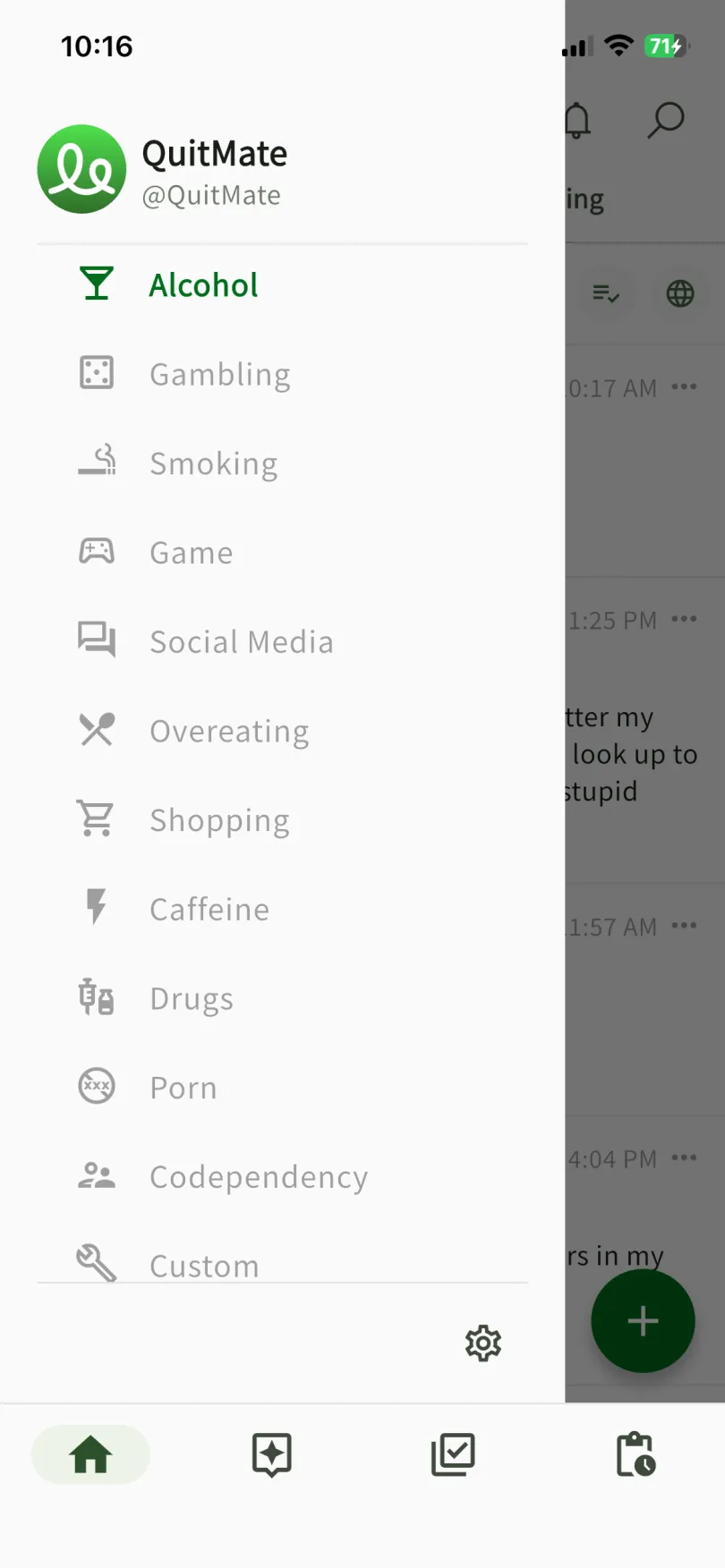
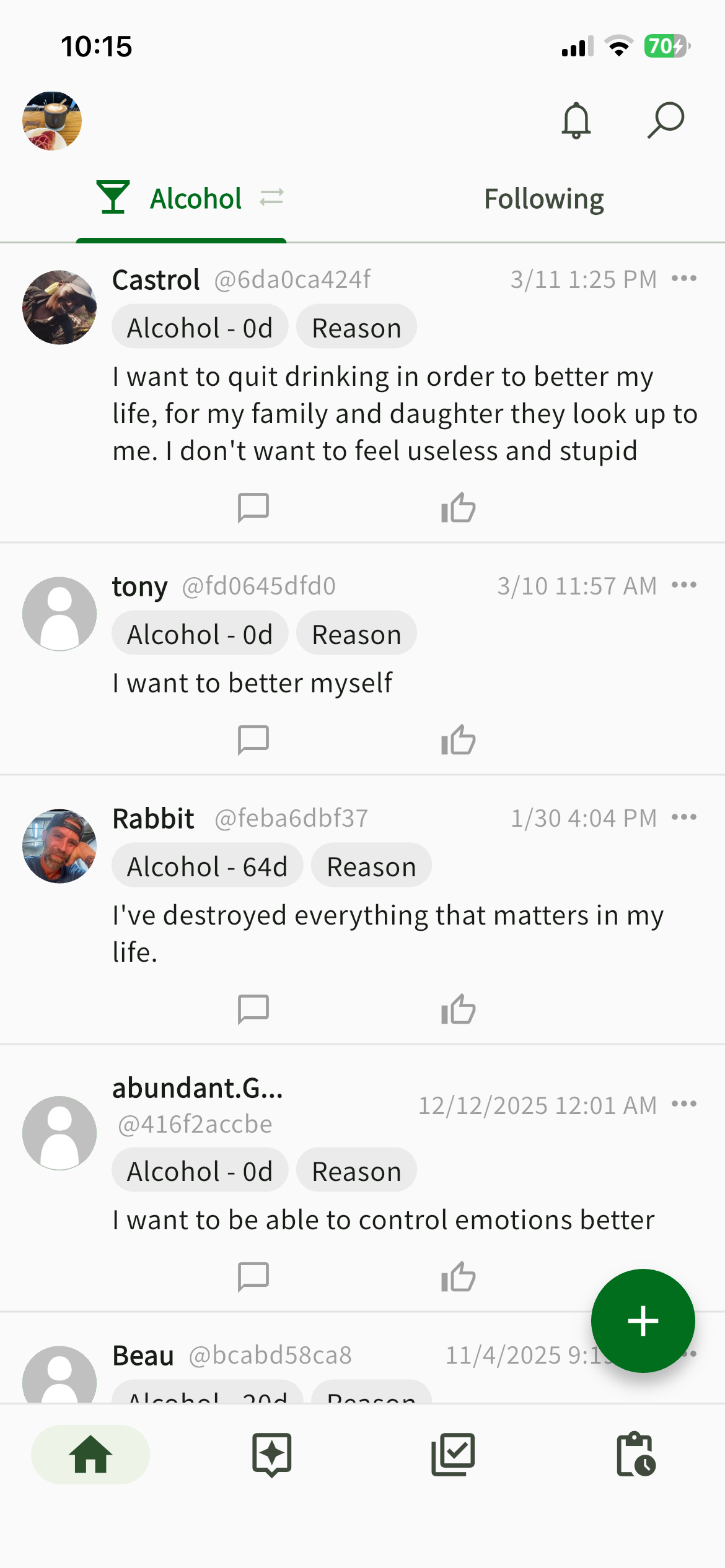

QuitMate
Together, you can quit
Connect anonymously with others who share your struggle. Whether it's alcohol, smoking, gambling, or other habits, you're not alone.