
Is 'Winning Overall' at Gambling Just an Illusion? The Dangerous Tricks Your Brain Plays
Try this experiment at your next dinner party: ask everyone at the table whether they consider themselves an above-average driver. In most groups, over 80% will say yes. Psychologists have been documenting this effect since the 1980s, and it extends well beyond driving. People consistently overestimate their own performance, especially in areas where feedback is ambiguous. Gambling is one of those areas, and the distortions run deep.
“Between pachinko and the horses, I’m up overall.” You hear it at parties, on social media, even in addiction recovery communities. The person isn’t lying, at least not intentionally. In their memory, it really is true. But memory and reality are often telling very different stories.
How Gambling Actually Works

Every form of gambling has what’s called a “house edge,” the percentage the house takes before anything else happens.
For pachinko and slot machines, that’s 15-20% of what you put in. For horse racing, about 25%. For lotteries, more than half of the money never comes back. In other words, every time you bet 100 yen, somewhere between 15 and 50 yen is gone before the game even starts.
You can win once or twice on luck alone. But over 100 bets, 1,000 bets, that invisible fee piles up and your balance steadily drifts into the red. In mathematics, this is called the “law of large numbers”: the more you play, the closer your results converge to the theoretical average. Yet people tend to believe this convergence applies even to small samples. Tversky & Kahneman (1971) called this the “belief in the law of small numbers.”
This is exactly why the idea of “if I just keep going, I’ll win it back” doesn’t hold up structurally.
How Your Brain Creates the Illusion of Winning
People still feel like they’re “up overall,” and that’s not because they lack willpower. It’s because of quirks in the brain that psychologists call cognitive biases.
Wins Get Remembered, Losses Get Forgotten
The day you won 50,000 yen? You can recall what you had for dinner that night. But the day you lost 30,000? “Eh, just an off day,” barely a trace left in memory.
This is confirmation bias, the brain’s tendency to latch onto information that supports what you already believe while filtering out anything inconvenient (Nickerson, 1998). Even if the net result is a 40,000-yen loss, it still feels like you’re winning. Memory isn’t a ledger. It gets edited to tell the story you want to hear.
”I’ve Lost Five Times in a Row, So I’m Due”
If black comes up ten times in a row on the roulette wheel, it’s tempting to think red must be next. But the roulette wheel has no memory. The odds of red on the next spin are exactly the same, no matter how many times black has come up.
This thinking pattern is called the gambler’s fallacy. That baseless feeling of “it’s bound to hit soon” becomes the fuel that keeps people betting.
”I’ve Put in Too Much to Stop Now”
After spending 100,000 yen, you think, “If I quit now, that money was all for nothing,” and throw in another 50,000. Rationally, that 100,000 is gone whether you keep playing or not. You know this in your head. But the emotions won’t let you stop.
This is the sunk cost fallacy. The fear of “cutting your losses” ends up leading to even bigger ones.
As covered in Why Can’t You Stop Gambling?, these biases are built into the structure of the brain itself. They aren’t something that only happens to certain people.
Why People Cling to the “Winning Overall” Story
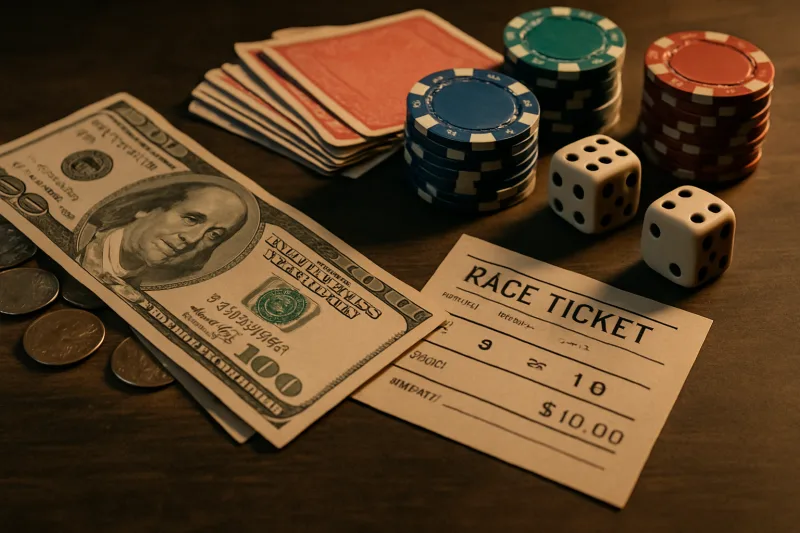
The deeper someone falls into gambling addiction, the more fiercely they tend to insist they’re “up overall.”
The reason is protective. As long as they believe they’re winning, they don’t have to see their behavior as a problem. “I’m ahead, so it’s fine.” “The losses are temporary.” “I’ll make it back next time.” These phrases work as a shield.
At its core, addiction often starts as a “solution” rather than a “problem”, a way to temporarily escape anxiety, stress, loneliness, or boredom. When gambling serves that function, “I’m winning overall” becomes the ultimate justification for continuing. And the more you repeat that justification, the more the debt grows and the addiction deepens, creating a cycle where the exit keeps getting further away.
The Rare Exceptions
A tiny handful of professional bettors in horse racing and sports betting do maintain a positive balance, through exhaustive analysis and emotion-free bankroll management.
But their lives look nothing like what you’d imagine. They pour enormous amounts of time into data analysis and absorb significant losses during cold streaks. They operate on an entirely different level from the average gambler, with deep knowledge of the structural risks of sports betting. Thinking “I can win overall too” is like a weekend softball player watching the pros on TV and thinking, “I could do that.”
And even if someone is technically in the black financially, what about the time spent, the sleep lost, the relationships strained? Factor all of that in and the answer starts to shift.
Getting Past the Illusion
Write Down Every Single Transaction
Illusions thrive when you rely on memory. Use an app, a notebook, whatever works, and record everything down to the last yen. Include the transportation costs, the meals, the hours spent at the pachinko parlor. When you lay the numbers out side by side, the gap between memory and reality becomes visible.
Get an Outside Perspective
The tricky thing about cognitive bias is that it’s nearly impossible to spot on your own. Show your records to someone you trust, or listen to the stories of people who’ve been through the same thing on peer communities like QuitMate.
Look at What’s Really Behind the Gambling
Is it about making money? Killing boredom? Running from something? The real reason people turn to gambling is different for everyone. But just asking yourself the question can be enough to start shifting something.
The Numbers Tell the Real Story
“I’m winning overall.” The next time those words come to mind, pause.
Confirmation bias. The gambler’s fallacy. The sunk cost fallacy. The names sound academic, but what they describe is simple: your brain writing a story that makes you feel good. This is a feature built into every human brain. There’s nothing unusual about it.
But whether or not you can recognize the illusion makes a real difference in the choices ahead. Writing down your actual numbers might be a painful exercise, but it also means knowing exactly where you stand.
References
- Tversky, A., & Kahneman, D. (1971). Belief in the law of small numbers. Psychological Bulletin, 76(2), 105-110.
- Nickerson, R. S. (1998). Confirmation bias: A ubiquitous phenomenon in many guises. Review of General Psychology, 2(2), 175-220.
- Clark, L., et al. (2013). Pathological choice: the neuroscience of gambling and gambling addiction. The Journal of Neuroscience, 33(45), 17617-17623.
- WHO (2019). International Classification of Diseases 11th Revision (ICD-11): Gambling disorder (6C50).
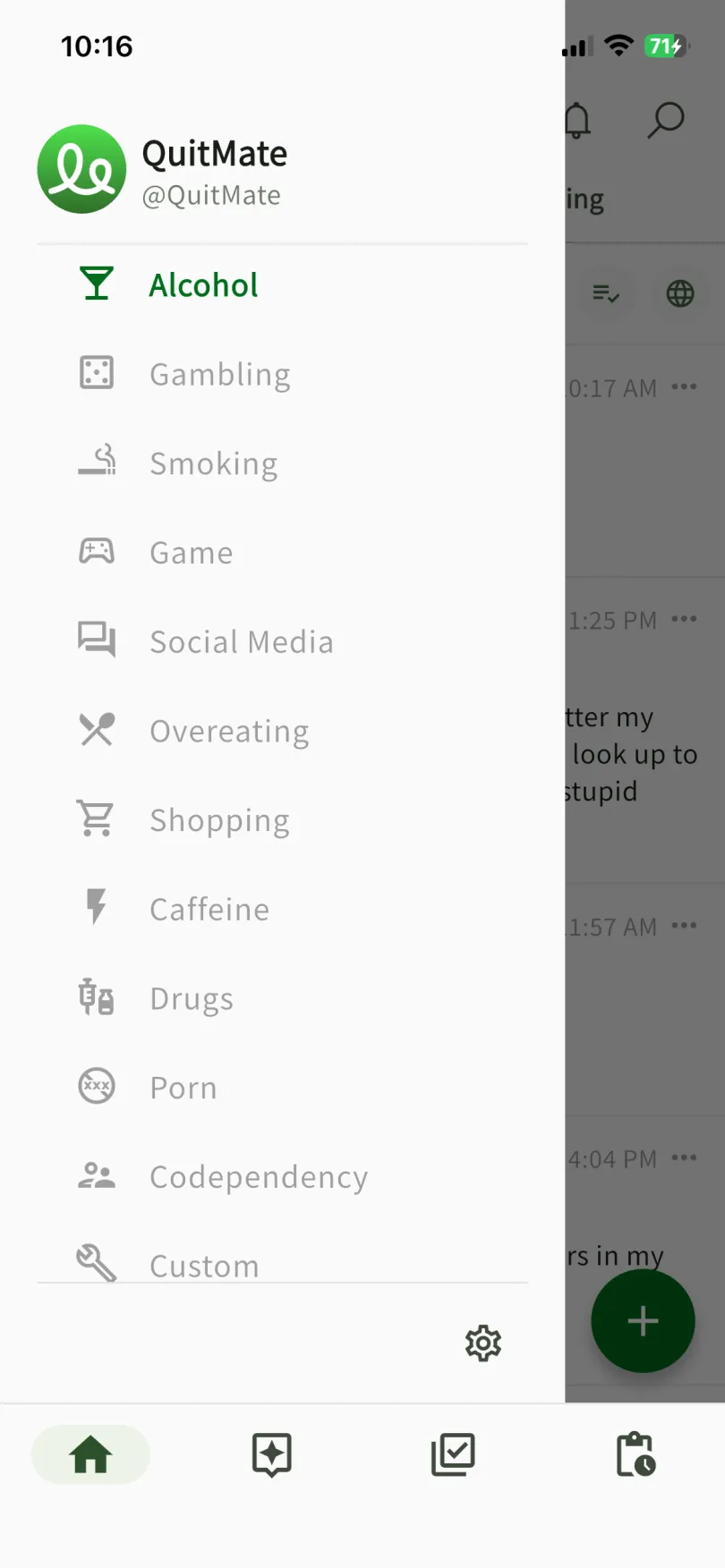
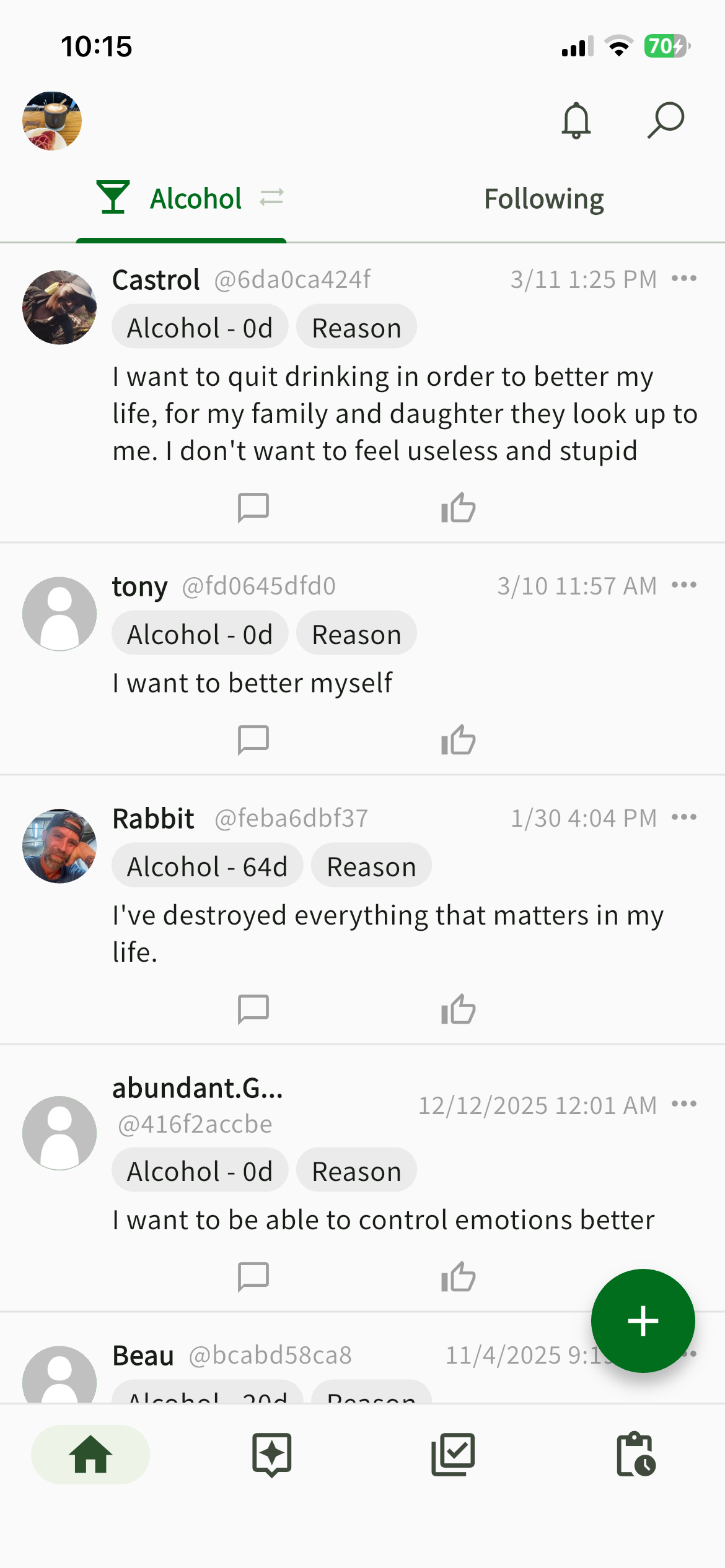

QuitMate
Together, you can quit
Connect anonymously with others who share your struggle. Whether it's alcohol, smoking, gambling, or other habits, you're not alone.