
What Is Peer Support? The Power of Fellowship in Addiction Recovery, Backed by Science
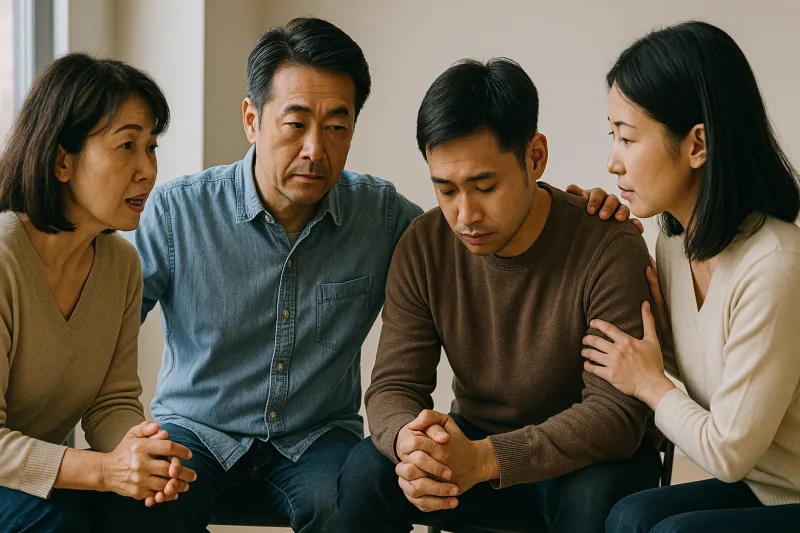
In the early days of Alcoholics Anonymous, the founders noticed something that didn’t fit the medical model of the time. Doctors could explain the biology of dependence, but the thing that actually kept people sober was talking to another person who had been through the same thing. A doctor saying “you can recover” and a former addict saying “I’ve been there too” were, neurologically and emotionally, landing in completely different places. Eight decades later, research has started to explain why.
What peer support actually is
Professional counseling has clear strengths. But peer support operates on a different mechanism: the shared experience of someone who has been through the same thing. When a person in early recovery hears “I’ve been there too” from someone further along, it registers differently than clinical advice.
In the Rat Park experiment, rats in a social environment barely touched drugs. The variable wasn’t willpower; it was connection. Having a sense of belonging, rather than isolation, was enough to change behavior. Human addiction is more complex than rat studies, of course, but the directional finding holds up across species.
The self-efficacy effect
A systematic review by Eddie et al. (2025) found that treatment retention rates improved by roughly 1.4 times among people who participated in peer support. The researchers attribute much of this to a boost in self-efficacy, the belief that “if someone like me can do it, so can I.”
This makes intuitive sense. Seeing someone who was struggling three years ago now functioning well provides a concrete reference point that abstract statistics cannot. Recovery stops being theoretical and becomes observable.
Family members benefit too
Addiction puts enormous strain on families. An online family program conducted in Australia (Peart et al., 2023) studied 78 participating spouses and parents. Of those, 90% reported that their sense of loneliness eased, and family self-efficacy improved significantly. Relapse rates among the family members’ loved ones also dropped.
If addiction is not the “problem” but a “solution” to inner pain, it follows that when the atmosphere at home softens, the person in recovery has more room to find healthier coping mechanisms.
What the research consistently finds
Several patterns show up repeatedly in the peer support literature.
Declaring a small, specific goal to peers (for example, “I’m not drinking today”) improves follow-through. The accountability doesn’t need to be dramatic. Just the sense that someone else knows your intention provides an extra push.
For people who can’t easily get to in-person meetings, data suggests a hybrid approach (combining in-person and online participation) is particularly effective. Using both formats, rather than sticking to just one, makes sustained engagement more likely.
When hospitals or clinics employ staff with lived recovery experience, outpatient retention goes up and emergency visits go down (Smelson et al., 2024). The mechanism appears to be similar to the self-efficacy effect: seeing someone who has been through it carries weight on its own.
Across studies, the consistent finding is that perfection isn’t the goal. Showing up just to listen counts. A short session once a week is sufficient. The real variable is staying connected over time, even minimally.
The policy landscape
Government backing for peer support is gradually expanding. In the United States, more than 30 states now cover peer support under public insurance (Bao et al., 2024). In Japan, a “Peer Support System Add-On” was introduced in 2021. The movement to place people with recovery experience in hospitals and community facilities is gaining ground in both countries.
AI-powered projects are also underway that use wearable heart-rate and sleep data to detect early signs of relapse (Yang et al., 2025). The technology is promising, but when an alert fires, what matters is whether there’s a person available to check in. Detection without human follow-up has limited value.

Where to find peer support
Options include local sobriety groups, GA meetings (which allow anonymous attendance), and online communities like QuitMate. The barrier to entry is low: listening without speaking is a perfectly valid form of participation. Many people start by simply observing before engaging more actively.
The research is clear that addiction involves both neurological and psychological mechanisms, and carrying it alone makes recovery harder than it needs to be.
References
- Eddie D. et al. “Peer Recovery Support Services and Recovery Coaching for Substance Use Disorder: A Systematic Review.” Curr Addiction Rep, 2025.
- Bao Y. et al. “Medicaid-Covered Peer Support Services Used by Enrollees With Opioid Use Disorder.” JAMA Netw Open, 2024.
- Peart A. et al. “Online Peer-Led Support Program for Affected Family Members of People Living with Addiction.” Int J Ment Health Addict, 2023.
- Smelson D. et al. “Peer Recovery Specialist-Delivered Behavioral Activation Intervention (pilot trial).” Addict Sci Clin Pract, 2024.
- Yang N. et al. “AI-Driven Digital Interventions in Mental Health Care: A Scoping Review.” Healthcare, 2025.
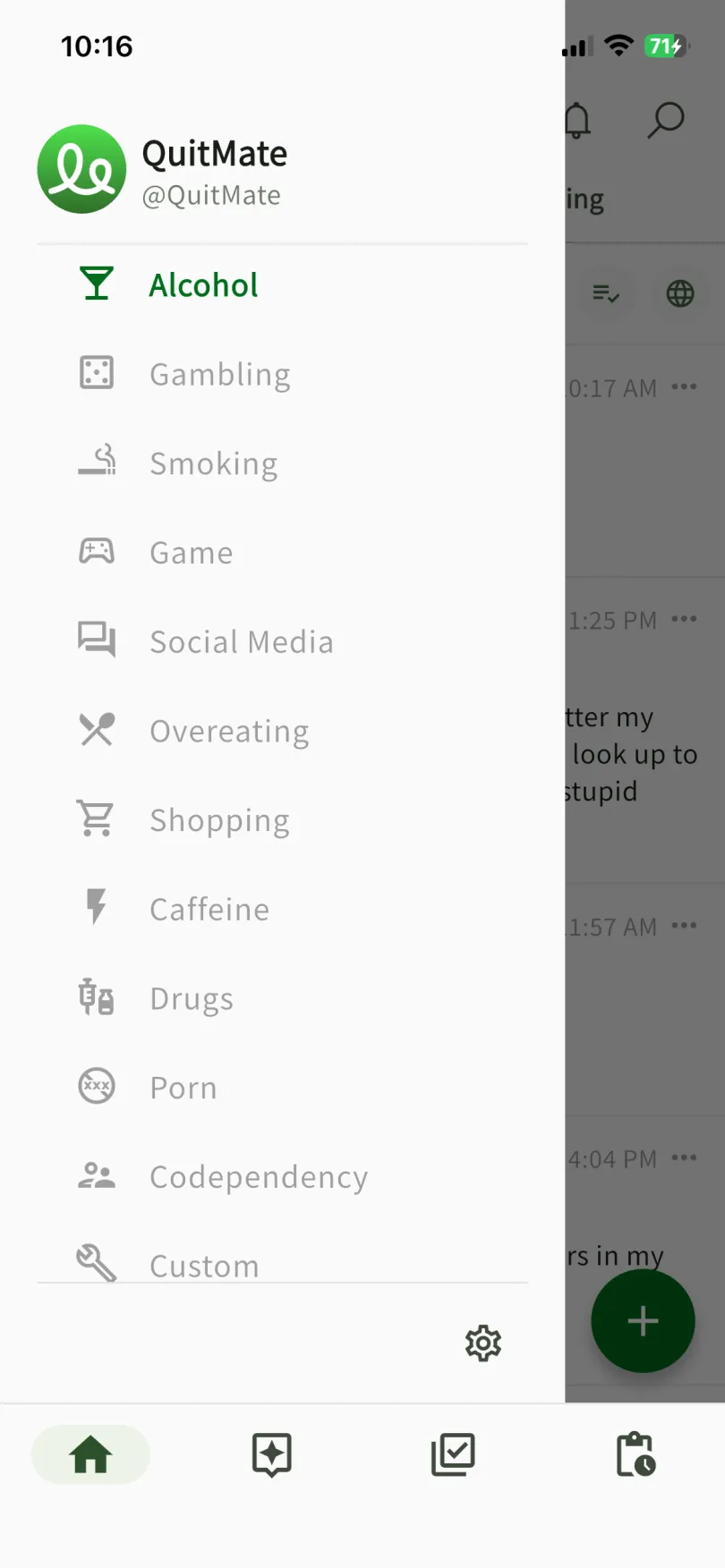
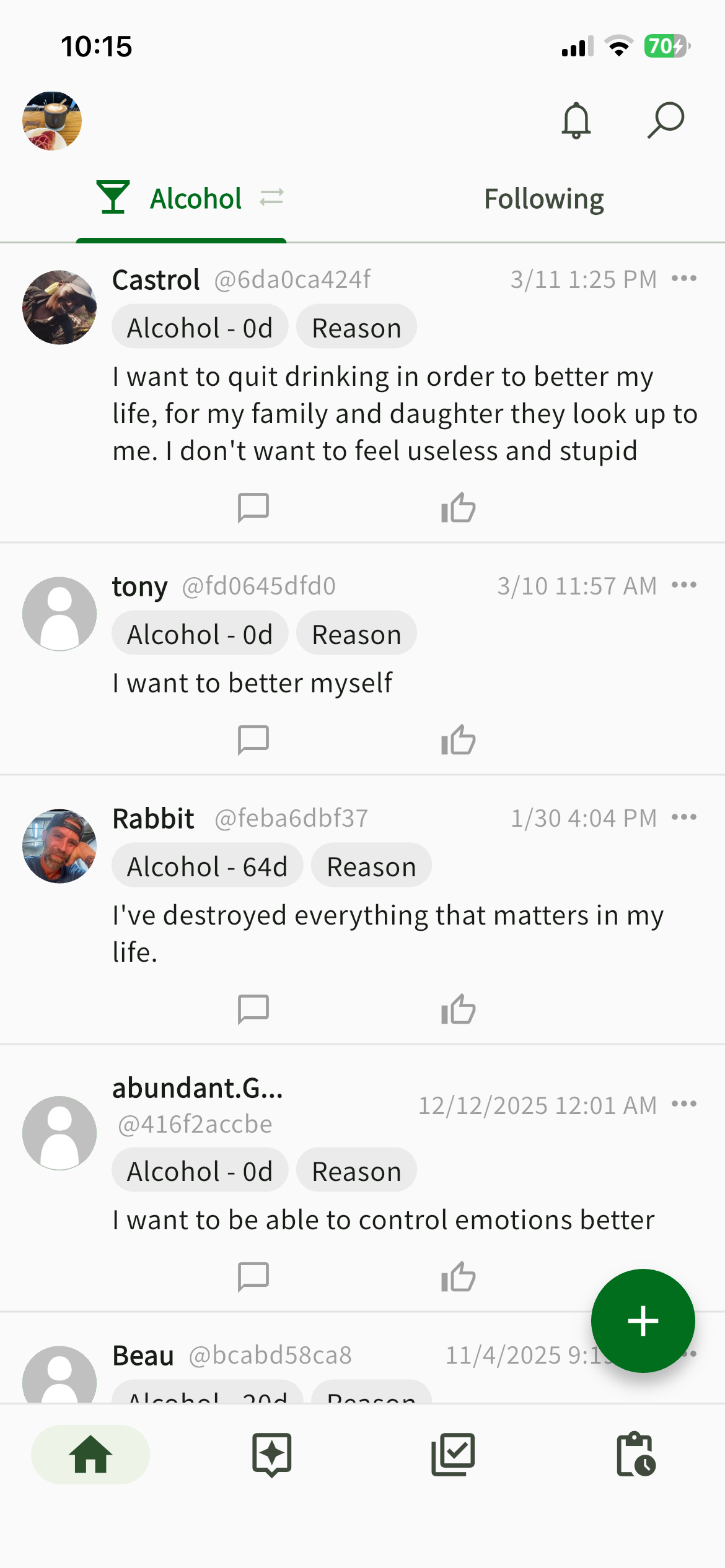
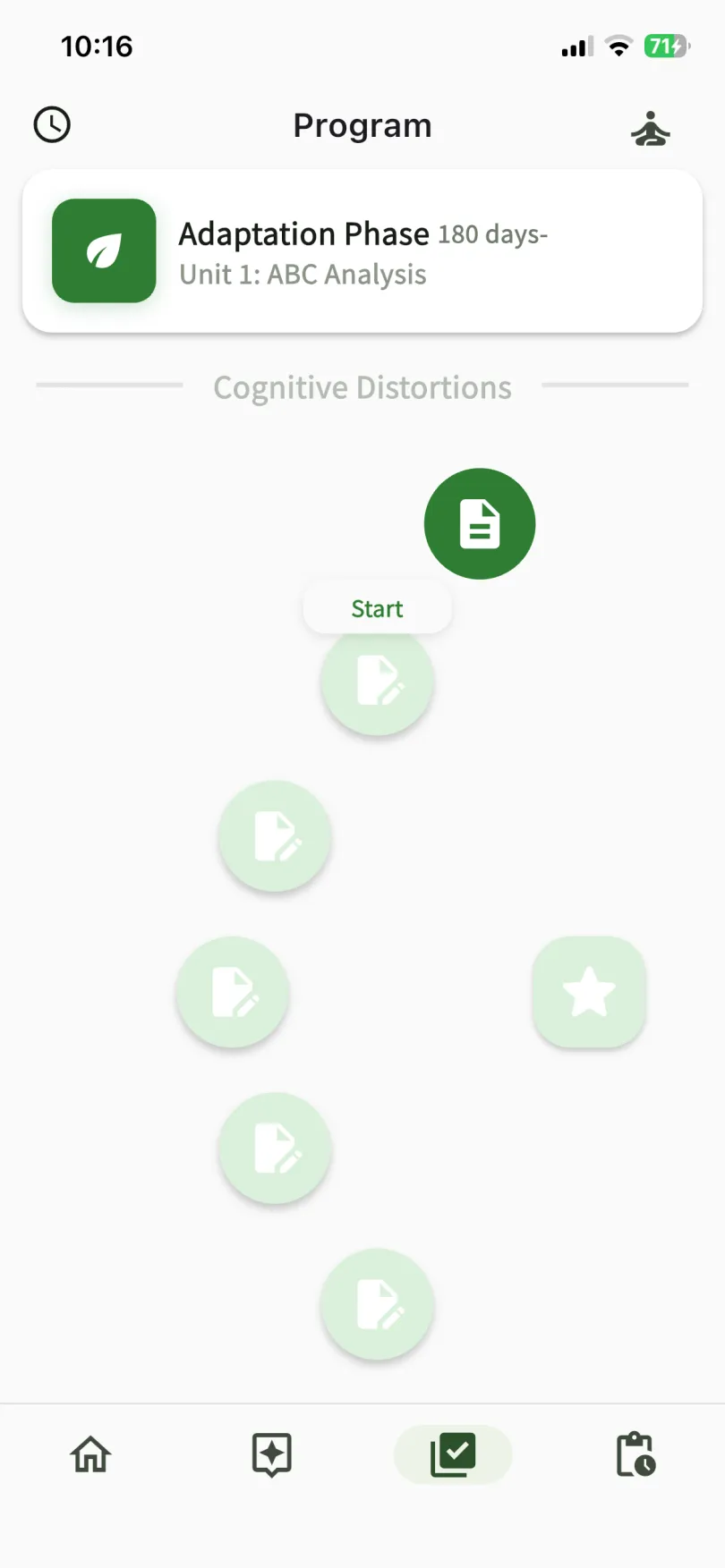

QuitMate
Together, you can quit
Connect anonymously with others who share your struggle. Whether it's alcohol, smoking, gambling, or other habits, you're not alone.