Effects of 3 Weeks to 1 Month Without Alcohol & How to Overcome the 'Week 3 Wall' [Data Analysis]
Three weeks without alcohol. Your body feels better. Withdrawal symptoms have faded. You can get up in the morning.
The data from QuitMate confirms this in numbers. Looking at the timing distribution of all resets (instances where someone broke their streak), here’s what we see:
- First 3 days: 57.8%
- Late week 1 (days 3-6): 19.0%
- Week 2: 10.2%
- Week 3: 3.6%
- Week 4: 3.0%
The reset rate in week 3 is just 3.6%. If you’ve made it this far, the odds are overwhelmingly in your favor.
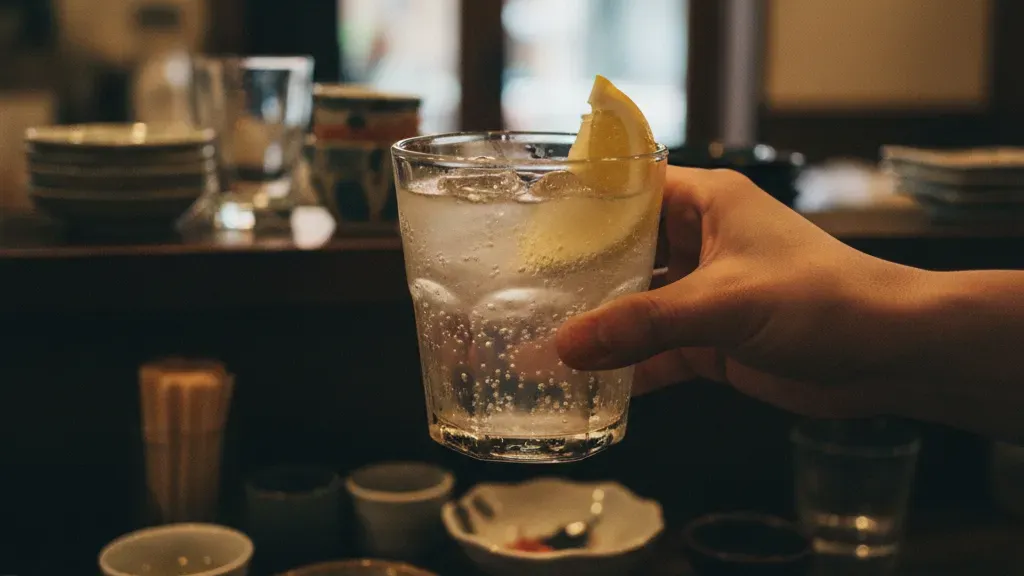
But right when things start feeling easier, a thought quietly surfaces: “One drink wouldn’t hurt, right?” It’s a thought that never appeared during those brutal first two weeks. It sneaks in precisely because your body feels good again. That’s the real risk from week 3 onward.
Why the “Week 3 Wall” Happens
Behavior change happens in stages. In psychology, it’s called the “Stages of Change” model, progressing from “thinking about quitting” to “preparing” to “taking action” to “maintaining.”
Week 3 of sobriety falls right at the transition from the “action stage” to the “maintenance stage.”
During the action stage, changes are visible. Your weight shifts, your skin improves, your sleep gets better. Your brain registers these changes as “rewards,” fueling motivation. But once you enter the maintenance stage, those changes become the new normal. The rewards disappear. You think, “This is just how things are now.”
One user wrote this on day 18:
“I was so bored that alcohol cravings hit me, so I went to a hot spring spa at 10 PM. The heated stone sauna felt amazing, and I ended up just zoning out there until they closed at 2 AM.”
And on day 20, another shared:
“I’m hanging on by a thread. If I drink, 20 days of willpower go to waste. If I hit the reset button on this app, I know I’ll spiral and drink myself into the ground.”
When you stop noticing changes, it’s not a sign of failure. It’s a sign you’ve moved to the next stage. Your brain just hasn’t caught up yet.
On the other hand, posts from people who pushed past this phase carry a completely different tone. Here’s one from day 24:
“I’ve learned how to just relax and take it easy. In the evening, I meditate, journal, read a book, and there’s this sense of spaciousness. I open the window and the autumn breeze feels wonderful. My mind is at peace. When you’re free from addiction, even boredom is beautiful.”
“Even boredom is beautiful.” When you start feeling that way, you’re in a much better place.
What’s Happening Inside Your Body at 3 Weeks to 1 Month
Even as surface-level changes plateau, your organs are still repairing. In fact, this is when the real recovery kicks into gear.
Liver Function Numbers Drop Noticeably
Gamma-GTP, ALT, AST. These markers tend to run high in regular drinkers, and they start clearly improving between 2 and 4 weeks of sobriety. Fatty liver in particular responds dramatically — some data shows that about 90% of ALT values return to normal after 4 weeks without alcohol. The liver has remarkable regenerative capacity, and once the burden of alcohol is removed, it repairs itself at an impressive pace.
One user wrote on day 21:
“Just remembered I have a health checkup next month. My blood work always comes back fine, but this is the first time I’ll go into it after this long without drinking. I’m excited to see what my numbers look like. I’ve also lost 3 kilos.”
If you’re hitting the week 3 wall, I’d especially recommend getting tested. Seeing those numbers drop makes it click: “This is actually working.”
Your Immune System Normalizes
This doesn’t get talked about much, but chronic drinking absolutely suppresses your immune system. Alcohol damages the intestinal lining and throws off the balance of gut bacteria. After 3 to 4 weeks of sobriety, the gut wall begins to repair itself and immune function starts returning to normal.
Blood Pressure Gradually Decreases
A meta-analysis found that quitting alcohol lowered systolic blood pressure by an average of 3.3 mmHg. That might sound trivial, but it’s equivalent to the effect of one blood pressure medication. That result, without a single pill.
The “I Quit Drinking But I’m Not Losing Weight” Problem
This one can’t be ignored. Some of you may have found this article by searching “quit drinking not losing weight.”
The cause is in your brain.
Alcohol forcibly stimulates the brain’s dopamine system. When you quit, that stimulation vanishes. Your brain falls into a dopamine deficit and reaches for the quickest fix available: sugar.
When people quit drinking and start craving sweets, it’s the brain trying to balance its dopamine books. On QuitMate, reports of sugar cravings during this period are extremely common.
Here’s what’s important to remember: this sugar craving is temporary. It subsides as the dopamine system normalizes. So for the first 2 to 3 weeks, don’t beat yourself up for reaching for something sweet. Staying sober is the priority. Weight can wait.
That said, if the sweets aren’t tapering off after 3 weeks, it’s worth making a conscious switch. Looking at user posts, many people around this time start substituting with tomato juice, sparkling water with lemon, or fruit. One person wrote on day 26: “I think I might be addicted to tomato juice at this point (ha). But thanks to that, I’ve had zero cravings for alcohol lately.”
The Brain Science Behind “Just One Drink”
Around the 3-week mark, another kind of thought emerges: “I’ve come this far, so one drink should be fine, right?”
This is the most dangerous one.
“I thought I was past it, but suddenly I want to drink so badly. I know that if I take one sip, I won’t stop until the next day is ruined. I’ve realized that cravings hit hardest when I’m in a self-destructive mood.” (Day 16)
“Every weekend, the thought crosses my mind: ‘Tomorrow’s a day off, so it’d be fine to drink.’ It’s not exactly a craving — I think it comes from that weekend sense of freedom and relief.” (Day 22)
Relapse research categorizes triggers into three main types.
The first is familiar drinking situations. The time of day you always drank, your regular bar, the people you drank with. When you encounter these cues, your brain’s reward system fires automatically, triggering cravings. The “weekend sense of freedom” from the day 22 post is a textbook example.
The second is negative emotions. Anger, anxiety, loneliness, boredom. One person wrote on day 29: “I’m getting nowhere at work. I can’t think of anything else that lifts my mood as instantly and effortlessly as alcohol, so I keep wanting to drink. I really have no mental bandwidth left.” Research has found that over 30% of relapse episodes were triggered by negative emotional states.
The third is the priming effect of that first drink. The moment even a small amount of alcohol hits your system, the brain’s reward circuitry snaps wide awake and starts demanding more. A day 21 post was telling: “The cravings in the week right after I reset were really rough. Knowing I’d have to go through that pain every time I had an ‘occasional drink’ made me realize that full sobriety is actually easier.”
“Just one drink” is dangerous because it activates this third mechanism. That single drink becomes a signal, and the brain starts demanding more. It’s not a matter of willpower. It’s a matter of neural circuitry.
What People Who Got Past Week 3 Were Doing
Looking at posts from people who made it through weeks 3 and 4, clear patterns emerge.
Having a Ready-Made Reason Not to Drink
Social gatherings and dining out are the highest-risk situations. But people who got through this phase didn’t go in passively — they went in with a strategy.
“Two weeks down! Survived tonight’s drinking party by insisting I was the designated driver!” (Day 15)
“A friend offered me a drink, but I turned it down and claimed victory with a C.C. Lemon soda instead.” (Day 25)
“Went to a baseball game, then hit up a yakitori restaurant, and didn’t drink!!!” (Day 25)
Have your reason not to drink ready in advance. Designated driver, on medication, health checkup coming up. The reason doesn’t matter. What matters is not making the decision in the moment.
Using the Day Counter as an Anchor
This post from day 22 really stood out:
“Not wanting to reset my streak counter back to zero was enough to beat the craving!”
The higher the count, the greater the “cost” of resetting. One person on day 16 wrote, “I almost deleted the app and went for a drink, but I bought a non-alcoholic beer instead.” The counter probably caught their eye before they could hit delete.
One Slip Doesn’t Erase What You’ve Built
Having one drink and going back to old habits are two very different things.
One person wrote on day 29: “I ended up having sparkling wine with my husband at dinner. Two glasses in total. Strangely, I didn’t feel much regret, but I was terrified of the post-drinking blues and the cravings that would follow. But the next day, no blues at all, and I’ve had zero cravings since.”
Even if you have a drink, stopping there means your 3 weeks of progress aren’t lost. Reflect on what triggered it and think about what you’ll do differently next time. Every time you push through a moment of temptation, the feeling of “I can do this” grows stronger, and the next time gets easier. Once that loop starts turning, you’ve won.
Takeaway
Three weeks to one month. The visible changes slow down. But inside your body, your liver is regenerating, your immune system is recovering, and your blood pressure is settling. Your brain’s reward system is gradually returning to normal too.
90% of people who make it past 2 weeks continue to 3 weeks, and roughly 90% of those who pass 3 weeks reach 1 month. If you’ve come this far, you are no longer someone who “can’t quit.”
One person wrote on day 30:
“Today marks 30 days. In over 24 years, this is a first in my life. Thank you to QuitMate, to everyone here, to my family, and to my doctor. Truly, thank you.”
When you stop seeing changes, it doesn’t mean you’ve stalled. It just means you’ve moved to the next stage.
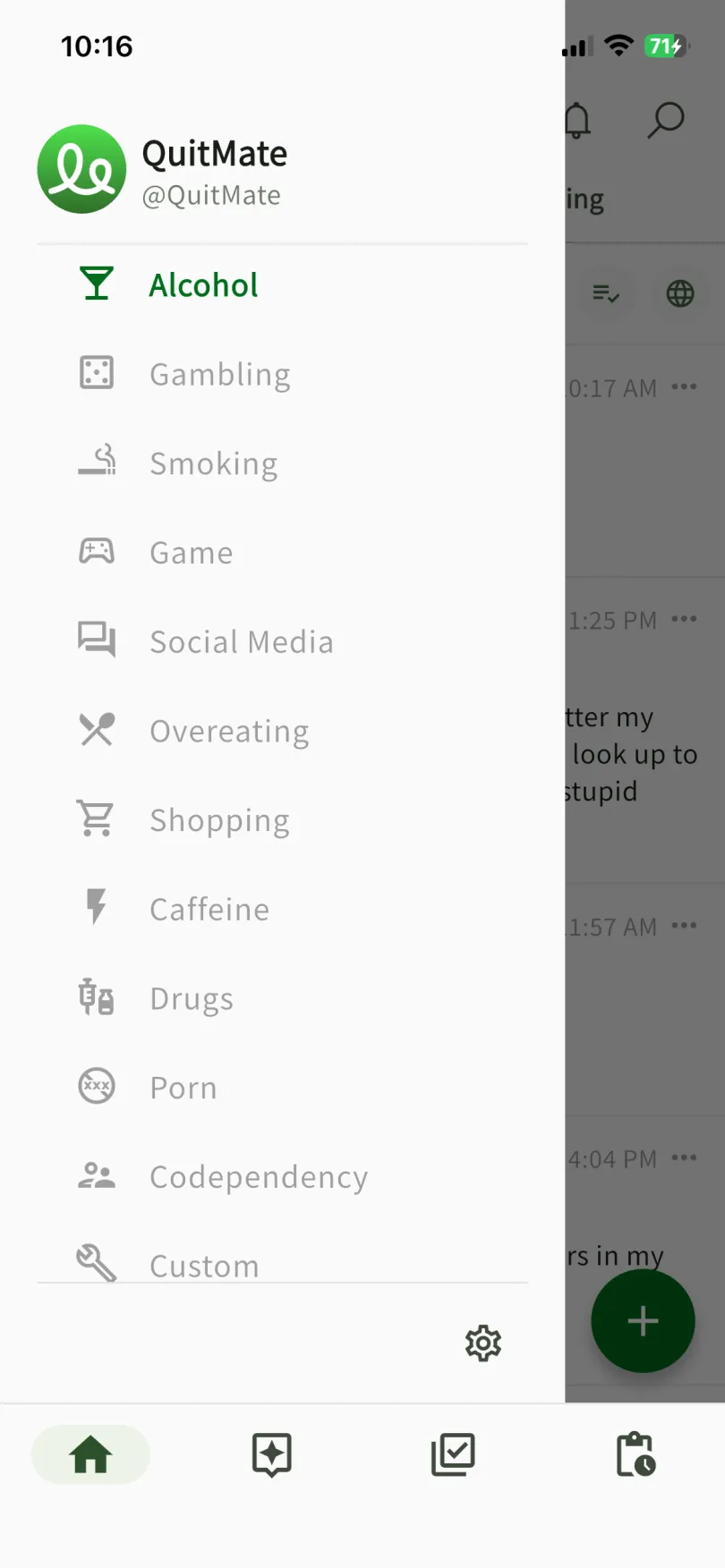
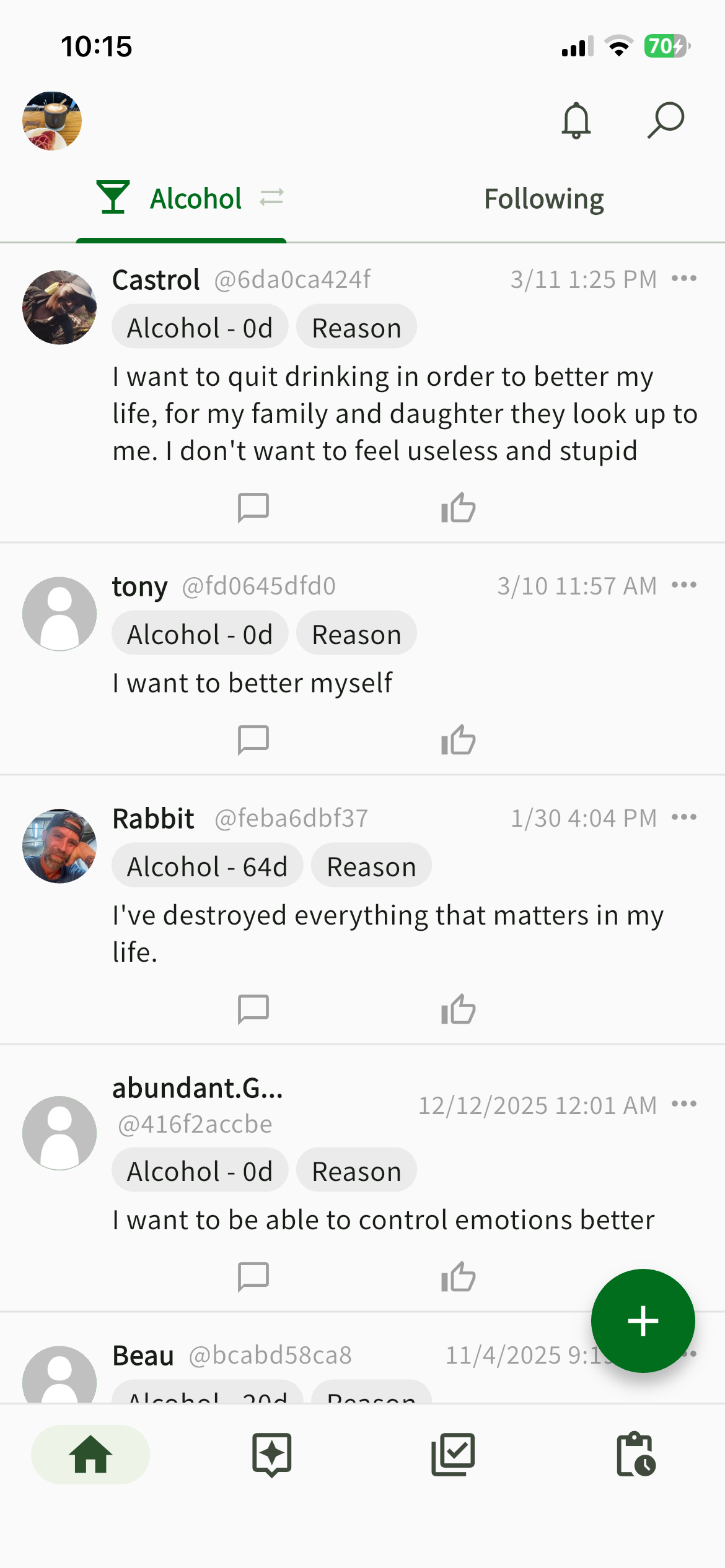

QuitMate
Together, you can quit
Connect anonymously with others who share your struggle. Whether it's alcohol, smoking, gambling, or other habits, you're not alone.